


A rectal thermometer is still the best choice for confirming a fever in a newborn. A forehead thermometer is helpful for quick checks, especially when your baby is asleep, while ear thermometers are usually not the best pick this early. In this guide, we’ll compare accuracy, ease of use, and the situations where each type makes sense, so you know what to use before you need it at 2 a.m.

Which Thermometer Type Is Best for Newborns?
For most newborns, the best thermometer depends on the job. Use a rectal thermometer when you need the most reliable answer. Use a forehead thermometer for fast screening and repeat checks. Avoid relying on an ear thermometer for a newborn, because very small ear canals make correct placement harder and readings less dependable.
Here is the short version:
-
Best For Fever Confirmation: Rectal
-
Best For Quick Checks: Forehead
-
Usually Not The First Choice For Newborns: Ear
-
Smart Baby Thermometer: armpit

For most families, the real goal is not finding one “perfect” thermometer for every moment. It is knowing which tool to trust when the reading may change what you do next.
How Do Rectal, Forehead, and Ear Thermometers Compare for Newborns?
For newborns, rectal thermometers are the most dependable, forehead thermometers are the most practical for quick checks, and ear thermometers are usually better saved for later. HealthyChildren notes that rectal temperatures are the most accurate, forehead temperatures are the next most accurate, and ear temperatures are not accurate before 6 months of age.
A simple comparison looks like this:
-
Rectal Thermometers: Best for confirming fever and making medical decisions
-
Forehead Thermometers: Best for fast screening and repeat checks
-
Ear Thermometers: Better suited to older babies, not newborns
-
Wearable Underarm Monitors: Useful for trend tracking, but not the best choice for confirming a fever
Why does this matter? Because parents do not always need the same kind of reading.
Sometimes you need the most accurate number. Sometimes you need a quick check without waking your baby. Sometimes you want to watch for changes overnight. Those are different jobs, and one thermometer does not handle all of them equally well.

When Should You Confirm a Reading With a Rectal Thermometer?
Confirm the reading with a rectal thermometer when the result may affect what you do next.
That is the safest rule for newborns. In babies under 3 months, a confirmed fever matters because a rectal temperature of 100.4°F (38°C) or higher is the threshold that should prompt a call to your pediatrician right away. Both HealthyChildren and Mayo Clinic use that same threshold for young infants.
Use a rectal thermometer when:
- It Is Your Newborn’s First Possible Fever
- Your Baby Is Under 3 Months Old
- A Forehead Reading Seems High
- Readings Change A Lot In A Short Time
- Your Baby Looks Ill Even If The Number Seems Borderline
- A Wearable Monitor Alerts Overnight
For newborns, the action line is simple: if a rectal reading is 100.4°F (38°C) or higher, call your pediatrician right away.
What Should Parents Look for in a Newborn Thermometer?
Choose a newborn thermometer based on accuracy, ease of use, and the moment you expect to use it.
For fever confirmation, dependability comes first. For daytime checks, repeat checks, or overnight monitoring, convenience matters more. A thermometer that is easy to use when you are tired is often more helpful than one with a long feature list.
Before you buy, think about these five points:
-
Your Baby’s Age: Newborns need a method you can trust for fever confirmation
-
Why You Are Checking: A possible fever, a quick recheck, and overnight tracking are not the same job
-
Your Comfort Level: You need a device you can use correctly when you are stressed or half asleep
-
Night Readability: A clear display matters more than most parents expect
-
One Device Or Two: Many families do better with one rectal thermometer for confirmation and one easier option for quick checks
For many newborn families, a two-thermometer setup is the most practical answer: one rectal thermometer for confirmation and one forehead or wearable option for convenience.
How Do You Use Each Thermometer Type Safely on a Newborn?
Safe thermometer use starts with using the right method for the right purpose. For newborns, rectal is still the best method for confirmation, while forehead thermometers work well for quick checks. Ear thermometers are usually not the best option in this age group.

How To Use a Rectal Thermometer Safely
Use a digital thermometer intended for rectal use. Add a small amount of lubricant to the tip, hold your baby securely, insert the thermometer gently, and stop if you feel resistance. Never leave your baby alone during the reading, and clean the thermometer before and after use. These are consistent points across pediatric guidance on rectal temperature taking.
How To Use a Forehead Thermometer Correctly
Follow the product instructions closely. Make sure the forehead is dry, place the sensor in the correct area, and do not rush the scan. Forehead thermometers are convenient, but technique still matters. Sweat, poor positioning, and a warm room can all affect the result. HealthyChildren notes that forehead thermometers can be used at any age, but they must be used correctly.
What About Ear Thermometers?
If you already own an ear thermometer, read the instructions carefully. But for a newborn, it is usually better not to rely on it. HealthyChildren says ear temperatures are not accurate before 6 months of age, largely because correct positioning is harder in very small ear canals.
Common Mistakes That Can Throw Off the Reading
A wrong number is often a method problem, not a device problem. The most common mistakes include:
-
Measuring Right After Swaddling: Your baby may be temporarily overheated
-
Using a Forehead Thermometer On Sweaty Skin: Moisture can affect the reading
-
Misplacing the Ear Probe: This is especially common in very small ear canals
-
Treating One Odd Reading As Final: Recheck if the number seems high or does not fit the situation
-
Forgetting To Note How The Temperature Was Taken: The method matters when you talk to your pediatrician
That last point is easy to miss. A rectal 100.4°F is not the same kind of information as a forehead or underarm reading. When you call your doctor, give both the number and the method used. Mayo Clinic specifically notes that different methods can vary and that less accurate methods may need confirmation.
When Is a Fever in a Newborn an Emergency?
For a newborn, a fever needs prompt attention.
If your baby is 3 months old or younger and has a rectal temperature of 100.4°F (38°C) or higher, call your pediatrician right away. That threshold is consistent across HealthyChildren and Mayo Clinic guidance.

Seek medical care promptly if your newborn also:
-
Is Hard To Wake
-
Feeds Poorly
-
Breathes Differently
-
Vomits Repeatedly
-
Looks Very Ill
-
Has A Rash Or Other Concerning Symptoms
A thermometer only helps if you know what the number means. For newborns, the action line is simple: confirm the fever, then call.
What Thermometer Setup Makes Sense for Different Families?
The best setup depends on what kind of reassurance you want at home.
Best If You Want The Most Accurate Fever Confirmation
Choose a rectal thermometer. It is still the most dependable choice for confirming a newborn fever.
Best If You Want Fast Daytime Checks
Choose a forehead thermometer. It is quicker, easier, and less disruptive than a rectal check, especially during naps or overnight checks. HealthyChildren identifies forehead readings as the next most accurate option after rectal readings.
Best If You Want Overnight Monitoring
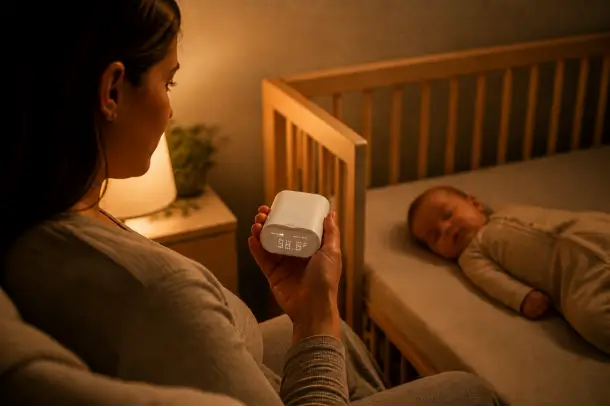
Why is VAVA's Wearable Thermometer the Best Option for Continuous Monitoring?
For parents who want continuous temperature monitoring, VAVA's wearable thermometer is an innovative solution that provides a unique advantage over traditional thermometers. Unlike rectal or forehead thermometers, which require manual measurement, this wearable thermometer tracks your baby’s temperature discreetly and continuously, offering peace of mind, especially during nighttime monitoring. Here’s why it’s a great choice for newborns:
-
Continuous monitoring: VAVA’s wearable thermometer allows parents to track their newborn’s temperature without waking them up or disturbing their rest. This is especially important for parents who need peace of mind overnight or during long sleep sessions.

-
Comfort and convenience: The thermometer is lightweight and comfortable for your newborn, making it easy to wear without causing any discomfort.
-
Real-time alerts: With this device, you can receive real-time temperature alerts on your smartphone, so you’ll know immediately if your baby’s temperature rises above normal, allowing you to act quickly.
Conclusion
For newborns, a rectal thermometer is still the best choice for confirming a fever. A forehead thermometer is useful for quick checks, especially when your baby is asleep, and ear thermometers are usually better saved for later. For most families, the simplest setup is one thermometer for confirmation and one for convenience. Read our guide on how to take a newborn’s temperature safely, compare baby thermometers by use case, or explore our wearable baby thermometer for overnight monitoring.
FAQ
Can I Use a Forehead Thermometer on a Sleeping Newborn?
Yes. A forehead thermometer is a practical way to do a quick, less disruptive check while your baby sleeps. If the reading is high or your baby seems unwell, confirm it with a rectal thermometer.
Why Do I Get Different Readings From Different Thermometer Types?
Different thermometers measure different body sites, and each method has its own accuracy limits. Forehead and ear readings can vary more with positioning and conditions, while rectal readings are the most dependable in young infants.
Should I Keep Both a Rectal Thermometer and a Wearable Baby Thermometer at Home?
For many families, yes. One device can confirm a fever, and the other can help with repeat checks or overnight tracking. That gives you both dependable confirmation and more everyday convenience.
What Should I Do If My Newborn Feels Hot but the Reading Looks Normal?
Recheck the temperature with a dependable method, especially if your baby is under 3 months old or looks unwell. If you get a rectal reading of 100.4°F (38°C) or higher, call your pediatrician right away.

Share: