


If you need to know how to tell if your baby has a fever without a thermometer, start by checking more than skin warmth. Look at your baby’s chest or back, breathing, alertness, feeding, and wet diapers together. These signs can show that your baby needs closer attention, but touch alone cannot confirm a fever. The American Academy of Pediatrics recommends getting an accurate temperature reading as soon as possible, especially for babies under 3 months.
If your baby is hard to wake, struggling to breathe, unusually weak, or under 3 months old and may have a fever, contact a healthcare professional promptly. The guide below explains what to check, how overheating can affect what you feel, and when home observation is not enough.

What Does a Fever Actually Mean in a Baby?
A fever in a baby usually means the body is responding to an infection or another trigger, not that the fever itself is the illness.
In babies, a temperature of 100.4°F (38°C) or higher is generally considered a fever. The measurement method can affect how the reading should be interpreted.
For many parents, though, a fever can feel like an alarm bell. That reaction is understandable, especially when your baby cannot tell you how they feel.
But in most cases, a fever does not mean your baby’s body is being harmed by the temperature itself. The number is only part of the picture. A baby with a lower temperature who is hard to wake, breathing fast, or refusing feeds can be more concerning than a baby with a higher fever who is still alert and responsive.
That is why the goal is not to focus on the thermometer alone. At home, what matters most is how your baby looks and acts.
How Can You Check for a Fever Without a Thermometer?
You cannot confirm a baby’s fever by touch alone. If your baby feels warm and you do not have a thermometer, check the signs below together to decide whether your baby needs closer attention or medical help.
A checklist is especially useful at night, while traveling, or when another caregiver is helping.
- Neck and Chest Warmth: Check whether your baby’s neck or chest feels warmer than usual. Use this as an early clue, not a temperature reading.
- Skin Color: Look for unusual paleness, bluish color, grayness, or flushing.
- Breathing Speed and Effort: Notice whether breathing is much faster than usual or takes extra effort.
- Alertness and Behavior: Check whether your baby responds normally, makes eye contact, and settles as usual.
- Feeding: Notice whether your baby is feeding normally or taking much less than usual.
- Wet Diapers: Fewer or noticeably less wet diapers can suggest dehydration.
Warmth by itself can be misleading. Your baby may feel warm after crying, feeding, or spending time in a hot room. But warmth combined with poor feeding, fewer wet diapers, unusual sleepiness, or labored breathing is more concerning. The American Academy of Pediatrics explains that touch is not an accurate way to confirm a baby’s fever, so use these signs to decide what to do next and get a temperature reading as soon as possible.
For a quick reference, download the printable checklist below.
When Feeling Hot May Not Mean a True Fever
A baby may feel warm without having a fever after being overdressed, wrapped too heavily, crying, or spending time in a hot room. Overheating may also cause sweating, damp hair, flushed cheeks, or faster breathing. The AAP lists overheating as one reason a baby may feel unusually warm.
Remove extra layers, loosen heavy swaddling, and move your baby to a comfortable room. Then see whether your baby settles and feels less warm. This can suggest that the environment contributed to the warmth, but it does not confirm that your baby does not have a fever.
If your baby remains warm and is also fussier than usual, feeding less, having fewer wet diapers, or breathing with effort, contact a healthcare professional instead of relying on touch alone.

What Should You Do Right Away If You Think Your Baby Has a Fever?
If your baby seems unwell, keep the next steps focused and avoid trying several home remedies at once.
- Offer Breast Milk or Formula More Often: Continue normal feeds and offer smaller amounts more frequently if your baby is willing. Follow your healthcare professional’s advice about other fluids.
- Remove Extra Layers: Keep your baby in comfortable clothing and remove thick blankets or heavy swaddling. Do not try to make your baby sweat.
- Keep the Room Comfortable: Move your baby away from a hot room or direct heat. Avoid ice packs, cold baths, and alcohol rubs.
- Watch How Your Baby Acts: Pay attention to feeding, wet diapers, breathing, alertness, and how easily your baby can be comforted.
These steps may help your baby stay comfortable while you arrange a temperature reading. The NHS advises parents to avoid over-wrapping a child with a high temperature.
Seek medical help if your baby is hard to wake, breathing with difficulty, feeding much less than usual, or showing signs of dehydration.
When Should You Call a Doctor or Seek Medical Help Right Away?
Call a doctor or seek medical help right away if your baby has trouble breathing, is difficult to wake, refuses to feed, shows signs of dehydration, or seems seriously unwell. Babies under 3 months need prompt medical advice whenever you suspect a fever, even if you do not have a thermometer.
Babies Under 3 Months
Contact your pediatrician immediately if you think your baby has a fever, even if you cannot measure their temperature. The NHS recommends urgent medical advice for babies under 3 months with a measured or suspected high temperature.
Do not wait to see whether removing extra layers or offering a feed makes the warmth go away. If you cannot reach your pediatrician promptly, seek urgent medical care.

Breathing or Wakefulness Red Flags
Call emergency services if your baby:
- Is struggling for each breath.
- Has blue or gray lips or tongue.
- Cannot be woken or is unresponsive.
A baby who is difficult to wake or has less severe breathing trouble still needs urgent medical assessment. HealthyChildren.org distinguishes these urgent symptoms from emergencies that require calling 911.
Do not wait to find a thermometer before acting.
Feeding, Dehydration, and Crying Red Flags
Contact your pediatrician promptly if your baby:
- Refuses feeds or takes much less than usual.
- Has noticeably fewer wet diapers or a very dry mouth.
- Cries continuously and cannot be comforted, especially when the cry sounds different from usual.
You do not need to wait for several of these signs to appear together. Suspected dehydration or persistent, inconsolable crying is enough reason to seek advice, according to HealthyChildren.org.

Trust Your Instincts
If your baby just does not look right to you, even if you cannot explain exactly why, call your pediatrician.
When you call, tell them your baby’s age, when you first noticed a change, how feeding and wet diapers compare with usual, and whether breathing or alertness has changed.
Say that you do not have a temperature reading. These details give the clinician a clearer picture of what you are seeing.
How Can a Baby Monitor Help You Observe Symptoms at Night?
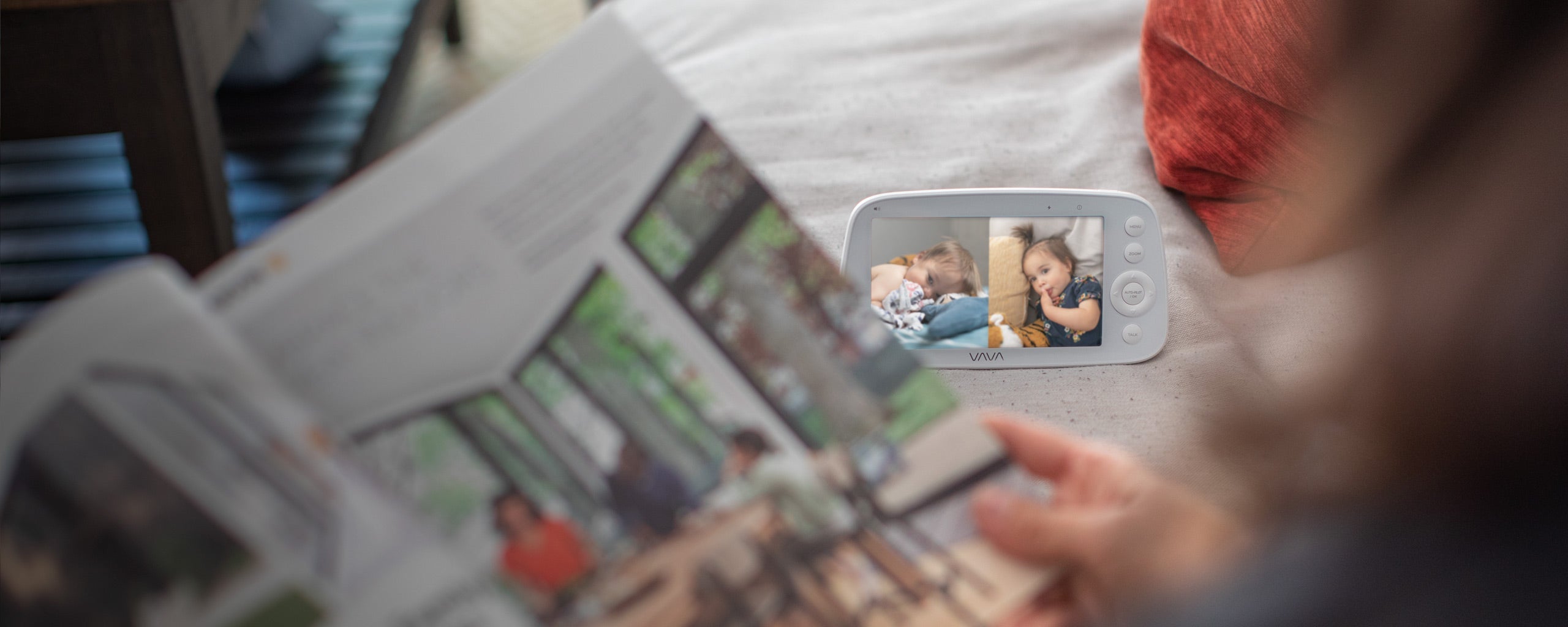
A baby monitor cannot measure a fever, but it can make overnight observation easier. While your baby is sleeping, you may notice unusual restlessness, more frequent crying, reduced movement, or a room that feels too warm.
A setup like a VAVA baby monitor can give you a clearer view during naps and overnight sleep, so you can decide whether to check on your baby without waking them for every brief movement or sound.
Use the monitor as an observation aid, not as a replacement for a thermometer or medical advice. If your baby looks unwell, is difficult to wake, or has trouble breathing, go back to the warning signs above and seek medical help.
Conslusion
Without a thermometer, treat touch as an early clue, not a temperature reading. Look at your baby’s warmth, breathing, alertness, feeding, and wet diapers together, then get an accurate temperature as soon as possible.
If your baby is under 3 months old, difficult to wake, struggling to breathe, refusing feeds, or showing signs of dehydration, seek medical help promptly. The American Academy of Pediatrics recommends contacting a healthcare professional when you suspect a fever in a very young baby.
A baby monitor can support overnight observation, but it cannot measure a fever or replace medical advice. If your baby looks seriously unwell, act on those signs rather than waiting for a thermometer reading.
Frequently Asked Questions
1. How Can I Check My Baby’s Fever at Home?
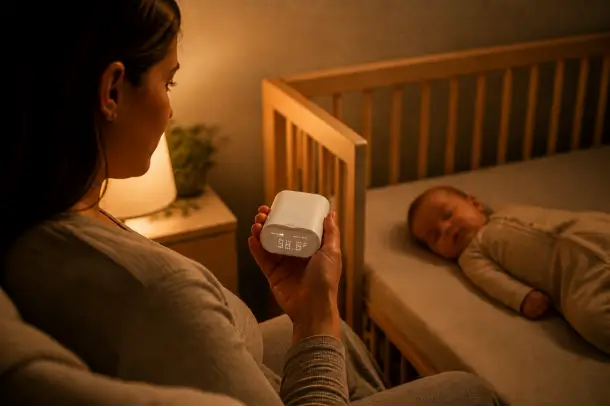
To check your baby’s temperature at home, place the VAVA Smart Baby Thermometer under your baby’s arm, secure the soft sensor with the adhesive patch, and read the temperature on the included monitor while your baby rests. Follow the product instructions for setup and use.
If you do not have a thermometer, feel your baby’s chest or back and check their breathing, alertness, feeding, and wet diapers. These signs can show that your baby may need closer attention, but touch alone cannot confirm a fever. For babies under 3 months, contact a healthcare professional if you suspect a fever.
2. Where Is the Most Accurate Place to Take a Baby’s Temperature?
The right measurement method depends on your baby’s age and the thermometer you use. For the VAVA Smart Baby Thermometer, place the soft sensor under your baby’s arm and follow the product instructions. A rectal reading is generally considered the most reliable for young infants, while ear thermometers may not be accurate for babies under 6 months.
For more detail on measurement sites and setup, see how to take a baby’s temperature accurately. Do not compare readings from different measurement sites as if they were identical.
3. Do I Add a Degree to a Forehead or Underarm Temperature?
No. Do not add or subtract a fixed number unless the thermometer instructions or a healthcare professional tells you to. Readings from different measurement sites are not directly interchangeable.
This guide to different measurement sites explains why two correct readings may not match exactly. When you speak with a pediatrician, tell them the temperature, the measurement site, and the time of the reading.
4. Can My Phone or an App Check My Baby’s Temperature?
A phone or app may record a reading from a separate thermometer, but it cannot confirm a baby’s fever by itself. Do not rely on a phone camera, app, Apple Watch, or other wearable unless it is specifically designed and validated for temperature measurement.
5. What Should I Avoid When My Baby Has a Fever?
Do not overdress or heavily wrap your baby, use ice or alcohol rubs, or give fever medicine without confirming that it is suitable for your baby. Keep offering normal feeds and watch for dehydration. The NHS advises against over-wrapping or sponging a child to cool them.
6. Is It Okay to Let a Baby Sleep With a Fever?
Sleep can be part of recovery, but check that your baby is breathing comfortably and responds normally when gently roused. Seek medical help if your baby is difficult to wake, unusually weak, struggling to breathe, or not feeding.
If repeated nighttime checks are difficult, a wearable baby thermometer can show the current reading without requiring a new manual check each time.
Share: