

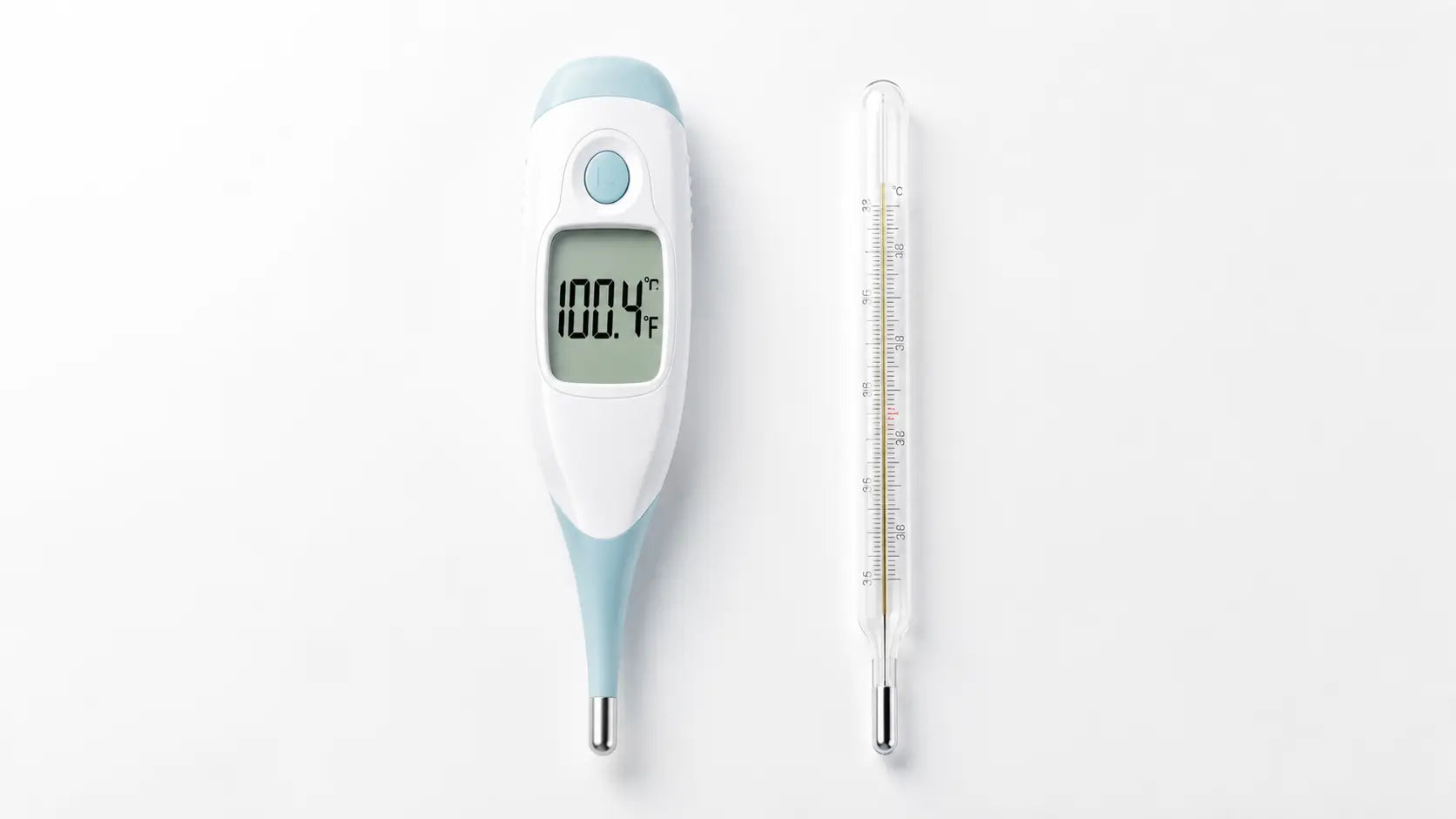

For most homes, a digital thermometer is generally the safer, faster, and easier option for everyday temperature checks. A mercury thermometer is not automatically more accurate. Reliable results depend on the measurement site, correct placement, timing, and following the device instructions.
This guide compares digital and mercury thermometers for accuracy, mercury content, safety, reading time, readability, and daily use. It also explains how to choose a thermometer for routine family checks, young children, and repeated overnight monitoring.
What Is the Difference Between a Digital and Mercury Thermometer?
Both types measure body temperature, but they use different measurement methods and create different demands during home use.
| Feature | Digital Thermometer | Mercury Thermometer |
|---|---|---|
| Measurement method | Electronic heat sensor | Mercury expands inside a glass tube |
| Mercury content | Does not use a mercury column for the temperature reading | Contains mercury in traditional fever thermometer designs |
| Reading time | Often seconds, depending on the model and measurement site | Usually several minutes, according to the product instructions |
| Display | Numeric screen or other electronic display | Thin line read against a glass scale |
| Handling | No glass mercury column to shake down | Fragile glass and manual handling |
| Disposal | Follow local battery or electronic waste rules | Follow local household hazardous waste guidance |
They Measure Temperature in Different Ways
A traditional mercury thermometer uses a glass tube filled with mercury. As the temperature changes, the mercury expands or contracts, and the user reads the result from a scale printed on the glass.
A digital thermometer uses an electronic sensor and displays the result as a number. Digital models include contact thermometers, forehead or ear devices, and wearable formats. You do not need every type. Choose the format that matches the person, measurement site, and situation you expect to handle most often, then follow that model’s instructions consistently.
The Reading Experience Is Not the Same
A mercury thermometer requires steady placement, enough time for the reading to stabilize, and careful visual reading of the glass scale. A digital thermometer usually shows a numeric result and may provide a completion signal, depending on the model.
This difference can make digital thermometers easier to use consistently, especially when a caregiver is checking a child at night or repeating a measurement. It does not mean that every digital thermometer is automatically more accurate. Accuracy still depends on the device, measurement site, placement, timing, and instructions.
They Fit Differently Into Modern Home Use
Even though both types measure temperature, they do not fit the same way into everyday routines. Digital thermometers offer clear readings and fewer handling steps. Mercury thermometers require more patience, careful placement, manual reading, and careful storage.
For most families, a digital thermometer is the more practical choice for routine checks.
Which Thermometer Is Safer for Home Use?
For most households, a digital thermometer is the safer choice because its temperature sensor does not use a mercury column and the device is easier to handle if it is dropped. This matters in homes with children, pets, older adults, or multiple caregivers.

Why Mercury Thermometers Require More Care
Traditional mercury fever thermometers combine fragile glass with mercury. If the glass breaks, the household must deal with both broken glass and a mercury spill. The US EPA’s guidance on mercury thermometers identifies digital thermometers as common mercury-free alternatives and provides guidance for safe handling and disposal.
A mercury thermometer also needs careful handling before, during, and after a temperature check. It must remain in the correct position long enough to produce a reading, and it must be handled carefully when being stored or reset.
Why Digital Thermometers Fit Everyday Family Use
A digital thermometer removes the mercury spill concern from the temperature-sensing process and usually provides a clear numeric result. If the device is dropped, the main concern is damage to the thermometer itself rather than broken glass and a mercury release.
That simpler handling is useful when a caregiver is checking a restless child, taking a reading at night, or passing the thermometer between family members. Digital models are not all identical, so families should still follow the cleaning, battery, and measurement instructions for the model they choose.
How Accurate Are Digital Thermometers in Home Use?
Digital thermometers are a dependable choice for home temperature checks because they provide a clear numeric result and make repeated measurements easier to complete consistently. A mercury thermometer can also provide a useful reading when used correctly, but it requires steady placement, a longer waiting period, and careful manual reading of a thin glass scale.
For most families, the practical question is not which device sounds more accurate in theory. It is which thermometer can be used correctly, read clearly, and repeated in the same way when someone is sick, tired, or caring for a restless child. In everyday home care, a reliable digital thermometer is usually the easier option.
What Affects the Accuracy of a Temperature Reading?
The measurement site affects the result. Rectal, oral, forehead, ear, and underarm readings can show different numbers because they measure temperature at different body sites. Choose a digital thermometer designed for the measurement method you plan to use, then follow that model’s instructions consistently.
Placement and timing also matter. Holding the thermometer in the correct position and waiting for the device to finish helps produce a more dependable result. When tracking a temperature, use the same measurement site and method each time so that readings are easier to compare.
Why Digital Thermometers Are Easier to Use Correctly
A digital thermometer shows the temperature as a number instead of requiring the user to interpret a thin line on glass. Many models also signal when the reading is ready. This can reduce common home-use mistakes and make it easier to read, record, and repeat a measurement.
That advantage matters during nighttime checks, when measuring a young child, or when more than one caregiver may use the same thermometer. Most households only need one suitable digital thermometer. Choose a format that matches the intended user and measurement site, then use it consistently according to the product instructions.
For more guidance on measurement methods and baby thermometer choices, see the most accurate baby thermometer guide.

Which Thermometer Is Faster and Easier to Use?
Digital thermometers are faster and easier for everyday temperature checks, especially when someone is tired, rushed, or caring for a restless child.
Digital Thermometers Save Time When Timing Matters
Many digital thermometers provide a reading in a short time and signal when the measurement is ready. The caregiver can then read a clear number instead of waiting for a liquid column to settle and matching it to a small glass scale.
The exact timing varies by model and measurement site, so follow the instructions for the thermometer you are using. Even when the time difference is only a minute or two, a shorter check can make it easier to keep a young child still and repeat the measurement in the same way.
Mercury Thermometers Require More Patience and Attention
A traditional mercury thermometer usually requires several minutes of steady contact. The user must keep the thermometer in position, keep the child still, read the glass scale correctly, and carefully return the mercury column to its starting position before storing the device.
These extra steps can become a real burden when a family needs repeated checks. A digital thermometer reduces that handling burden and makes routine measurements easier to complete consistently.
Small Inconveniences Add Up in Daily Care
One slow reading may not feel like a problem. But when you are checking a child’s temperature every few hours through the night, every extra minute of holding time, every shake-down, and every struggle to read the scale adds up. Faster, clearer tools make repeated checks less stressful for both the caregiver and the child.
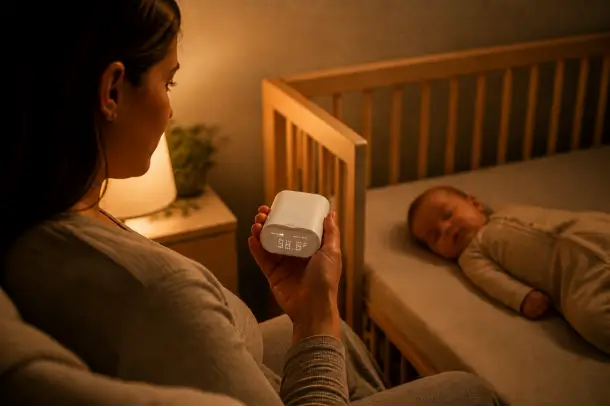
If you need to follow temperature changes repeatedly overnight, the VAVA Smart Baby Thermometer offers a different solution from a basic digital stick thermometer. The separate parent unit lets you check the temperature nearby without opening an app or repeatedly repositioning a traditional thermometer. That can make overnight monitoring less disruptive when you need to follow changes over time.
Which Thermometer Is Easier to Read, Clean, and Maintain?
Digital thermometers fit modern home care better by offering clear displays, easier sanitation, and less daily friction.
Digital Displays Are Easier to Read at a Glance
A digital screen shows a clear number, such as 100.4°F, with no interpretation needed. A mercury thermometer requires you to find the right angle, match a thin mercury line to tiny printed markings, and sometimes second-guess whether you read it correctly. That difference matters at 3 a.m. in a dimly lit nursery.
Everyday Upkeep Is Simpler With Digital Models
Most digital thermometers can be wiped with rubbing alcohol or a damp cloth, making cleaning quick and straightforward between family members. Mercury thermometers need more careful handling to avoid cracking the glass or dislodging the mercury column. With a digital model, upkeep takes a quick wipe and you are done.
For more maintenance guidance, see these baby thermometer maintenance tips.
Convenience Matters More in Shared Family Use
When a thermometer is used by more than one person, a partner, a grandparent, or a babysitter, readability, cleaning, and ease of handling become even more important. A digital thermometer with a large display and a single button is easier for everyone to use correctly, regardless of experience.

Which Digital Thermometer Works Best for Your Family?
A quality digital thermometer covers what most families need for everyday care.
Everyday Checks Made Simple
For routine fever checks at home, a quality digital thermometer handles oral, underarm, and forehead measurements with dependable speed and clarity. It is affordable, portable, and simple enough for anyone in the household to use.
For newborns, doctors may recommend rectal measurement for the highest accuracy during the earliest months. Follow your healthcare professional’s guidance on the appropriate measurement method and when to seek medical advice.
For a broader comparison of measurement formats, see this guide to types of body thermometers.
When Overnight Monitoring Matters
Checking a fever every few hours through the night is exhausting for any caregiver. A device that provides continuous monitoring without repeated wake-ups offers clear advantages over manual checks, especially for babies who need uninterrupted rest.
The VAVA Smart Baby Thermometer is designed for overnight baby temperature monitoring. It uses a soft silicone patch under the baby’s armpit and supports real-time monitoring through a separate parent unit. This setup helps you follow temperature changes without repeatedly repositioning a traditional thermometer. Audio and visual alerts can also make nighttime care easier because you do not have to stare at the screen all night.
The separate parent unit lets you check the temperature nearby without opening an app or repeatedly repositioning a traditional thermometer. That can make overnight monitoring less disruptive when you need to follow changes over time.
For more detail on choosing between a basic and wearable format, see how to choose the best baby thermometer.

Why Are Mercury Thermometers Disappearing From the Market?
Mercury thermometers have been restricted, replaced, or phased out in many places because of breakage, mercury exposure, and disposal concerns. The US EPA’s guidance on mercury thermometers identifies battery-powered digital thermometers as common mercury-free alternatives for fever measurement.
Safety Concerns Changed the Market
Traditional mercury thermometers combine a fragile glass tube with a material that requires special cleanup and disposal if the device breaks. As mercury-free alternatives became easier to find, many households began choosing digital thermometers for routine temperature checks.
Regulations Accelerated the Shift
Restrictions vary by location. Some states and local authorities have limited the manufacture, sale, distribution, or disposal of mercury-containing thermometers. Check current local guidance before buying, selling, or disposing of an older device.
Digital Thermometers Are the Practical Replacement for Most Homes
Digital thermometers are now widely available and offer a mercury-free way to take routine temperature readings. They are not all identical, so families should still choose a format that matches the intended user and measurement site. For most home checks, digital models are the practical replacement for traditional mercury thermometers.
How Should You Dispose of an Old Mercury Thermometer?
If you still have a mercury thermometer at home, do not place it in ordinary household trash. The correct disposal method depends on whether the thermometer is intact or broken.
If the Thermometer Is Intact
Keep the thermometer in a secure place away from children and pets, then contact your local household hazardous waste program or waste authority. Local collection and disposal rules vary, so check the current instructions for your area before transporting or discarding the device.
If the Thermometer Breaks
Move children and pets away from the area, ventilate the room, and avoid spreading the mercury. Do not use a vacuum cleaner or broom. The US EPA’s broken mercury thermometer guidance explains the steps to take and advises contacting local health or waste authorities for disposal instructions.
Do not put broken glass or mercury in ordinary household trash unless your local authority specifically instructs you to do so.

Looking for Continuous Overnight Monitoring?
If you need more than one manual reading overnight, the VAVA Smart Baby Thermometer gives you a less disruptive way to follow temperature changes. The wearable patch supports 24-hour monitoring, and the parent unit alerts you when the temperature rises.
It is a practical fit for parents who want fever alerts without repeatedly waking their baby for manual checks.

Conclusion
The digital vs. mercury thermometer comparison comes down to safety, speed, readability, and daily convenience. Mercury thermometers can measure temperature, but they also bring glass breakage, mercury exposure, slower readings, and special disposal needs.
For most families, a digital thermometer is the better home option. Choose a basic digital stick thermometer for quick checks, a forehead model for less disruptive toddler readings, or a wearable option like the VAVA Smart Baby Thermometer for overnight baby temperature monitoring.
If you still have an old mercury thermometer, contact your local household hazardous waste program before disposing of it. And when a baby’s temperature worries you, check with your pediatrician.
Frequently Asked Questions
1. Are digital thermometers suitable for babies and young children?
Yes. Digital thermometers are widely used for babies and young children. For newborns, doctors may recommend rectal measurement when accuracy is the highest priority. For older babies, forehead and ear thermometers may be easier for quick checks. Always follow the age guidelines for the measurement method you choose.
2. Why do digital and mercury thermometers sometimes show slightly different readings?
Slight differences are normal and usually come down to measurement technique, timing, or the body site used. Following the instructions for your specific thermometer helps ensure the most reliable reading. Make sure you are consistent with the measurement site and method whenever you track a fever.
3. What type of thermometer is best for checking a sleeping baby?
A forehead thermometer or a wearable thermometer is usually the least disruptive option. The VAVA Smart Baby Thermometer allows parents to follow their baby’s temperature continuously without repeatedly waking the baby for manual checks.
4. Do digital thermometers contain mercury?
Most digital body thermometers use an electronic sensor rather than a mercury column, so they do not use mercury to measure temperature. Check the product label and instructions for the specific model, and follow local rules for battery or electronic waste disposal.
5. Are mercury thermometers more accurate than digital thermometers?
Not automatically. A digital thermometer can provide a dependable reading when it is used at the correct measurement site and according to the instructions. Its numeric display also makes the result easier to read and record. Mercury thermometers can provide useful readings when used correctly, but they require careful placement, a longer waiting period, and manual reading of the glass scale.
6. Do all digital thermometers work the same way at different measurement sites?
No. Readings vary by site. Oral, rectal, forehead, ear, and underarm temperatures are not identical. Choose a format designed for the measurement method you plan to use and follow its instructions. Note the measurement method whenever you record a reading, especially when sharing it with your pediatrician.


Share: