


A wearable thermometer is a body-worn device that tracks temperature over time instead of giving only one quick reading. It can help parents, family caregivers, and care teams monitor babies, older adults, or patients who need closer temperature observation.
In this guide, we’ll explain how wearable thermometers work, who they are useful for, where they are commonly used, what features matter most, and when you should still confirm a reading with a regular thermometer or call a doctor.

What Exactly Is a Wearable Thermometer?
A wearable thermometer is a small temperature monitor designed to stay on the body for longer temperature tracking.
Unlike a regular thermometer, it is not mainly used for one quick check. It helps you follow the pattern: is the temperature rising, staying steady, or coming down?
For babies, the most common design is a soft underarm patch. For adults or care settings, wearable thermometers may also come as wrist devices, rings, or clinical-style monitoring devices.
The main value is making longer monitoring easier, especially when repeated manual checks are disruptive or easy to miss.
Wearable vs. Regular Thermometers
|
Feature |
Wearable Thermometer |
Regular Thermometer |
|
Main Use |
Ongoing monitoring |
One-time check |
|
Baby Placement |
Usually underarm |
Forehead, ear, mouth, or underarm |
|
Best Moment |
Sleep, naps, sick days |
Quick checks |
|
Parent Effort |
Lower during long monitoring periods |
Requires repeated manual checks |
|
Main Benefit |
Shows temperature changes over time |
Gives a single reading |
What Types of Wearable Thermometers Are Available?
Wearable thermometers come in patches, wrist devices, rings, and clinical monitors, but underarm patches are the most practical choice for babies.
Different formats work for different people. Adults may use rings or wristbands for wellness tracking. Parents usually need something softer, safer, and easier to keep in place on a sleeping baby.
Underarm Baby Patches
Underarm patches are soft sensors placed under a baby’s arm to monitor temperature while the baby rests.
This format works well because the underarm area stays close to the body and is less exposed to room air than the forehead or wrist. It also lets the sensor remain in place under clothing.
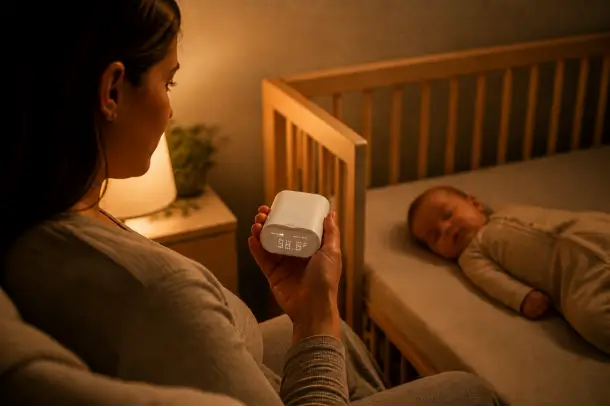
The VAVA Smart Baby Thermometer uses this underarm patch design. The soft silicone patch attaches under the baby’s arm, while the parent unit displays the temperature and sends sound and light alerts when needed.

Parents often like this format because:
- It Helps Protect Sleep: Your baby can keep resting while the thermometer keeps monitoring.
- The Design Is Gentle: The patch avoids repeated ear, mouth, or forehead checks.
- Alerts Are Easy to Notice: Sound and LED alerts help parents respond when the temperature rises.
- It Fits Sick-Day Routines: You can use it during naps, bedtime, or recovery days at home.
Wristbands and Rings
Wristbands and rings are more common for adults than babies.
These devices often track temperature as part of a larger health picture, along with sleep, heart rate, or activity. They are helpful for long-term wellness trends, but they are not ideal for baby fever monitoring.
Babies move often. A small device on the wrist or finger can shift, loosen, or become uncomfortable more easily than an underarm patch.
Clinical and Low-Tech Options
Some temperature wearables are made for hospitals, recovery care, or simple skin checks.
Forehead strips are one example. They change color based on skin warmth, but they do not provide continuous digital readings or fever alerts. Hospital-grade monitors may track patients for longer periods, but they are not designed for everyday nursery use.
For home baby care, the underarm patch gives parents the best mix of comfort, stable placement, and easy monitoring.

How Does a Wearable Thermometer Work?
A wearable thermometer works by sensing temperature at the skin, processing the reading, sending it wirelessly, and alerting the caregiver when the temperature reaches a set point.
From the user’s side, the process is simple. You attach or wear the sensor, keep the receiver or connected device nearby, and monitor the reading over time.
Step 1: The Sensor Measures Temperature
The sensor sits close to the skin and measures body temperature through contact.
For baby care, underarm placement is common because the area stays close to the body and can be covered by normal sleepwear. This helps the patch stay in place while the baby naps or sleeps overnight.
For adults or patients, placement depends on the device type. Some devices sit on the wrist. Others use patches or clinical-style sensors designed for longer observation.
Step 2: The Device Tracks Changes Over Time
The thermometer keeps checking temperature at regular intervals, so caregivers can follow the pattern instead of relying on one isolated reading.
This is useful because body temperature can change during sleep, illness, recovery, or rest. A wearable thermometer helps show whether the reading is moving up, staying stable, or going down.
Step 3: The Reading Reaches a Receiver or Connected Device
The thermometer sends readings wirelessly to a receiver, parent unit, or connected device.
Some wearable thermometers use Bluetooth. The VAVA Smart Baby Thermometer uses patented Sub1G wireless transmission, with a stable connection up to 15m / 49ft. This makes it practical for home baby monitoring when parents are nearby but not always next to the crib.
Step 4: The Alert Lets Caregivers Know
The alert system notifies the caregiver when the temperature reaches the fever point.
For VAVA, the parent unit uses sound and red LED light alerts when the temperature rises above 38°C / about 100°F. This helps parents notice a possible fever without watching the screen all night.
That is the real value of a wearable thermometer: it helps caregivers stay aware while the person being monitored can keep resting.
Who Can Benefit from a Wearable Thermometer?
A wearable thermometer can be helpful for people who need temperature tracking over time, especially when repeated manual checks are hard, disruptive, or easy to miss.
It is often associated with baby fever care, but the same idea can also support older adults, recovering patients, and caregivers who want an easier way to notice temperature changes.
Babies and Young Children
Babies are one of the most common groups for wearable thermometer use because they sleep often and may not tolerate repeated temperature checks well.
For baby care, a soft underarm patch is usually the most practical format. It can stay close to the body under normal sleepwear, while a parent unit shows readings and sends alerts when the temperature rises.
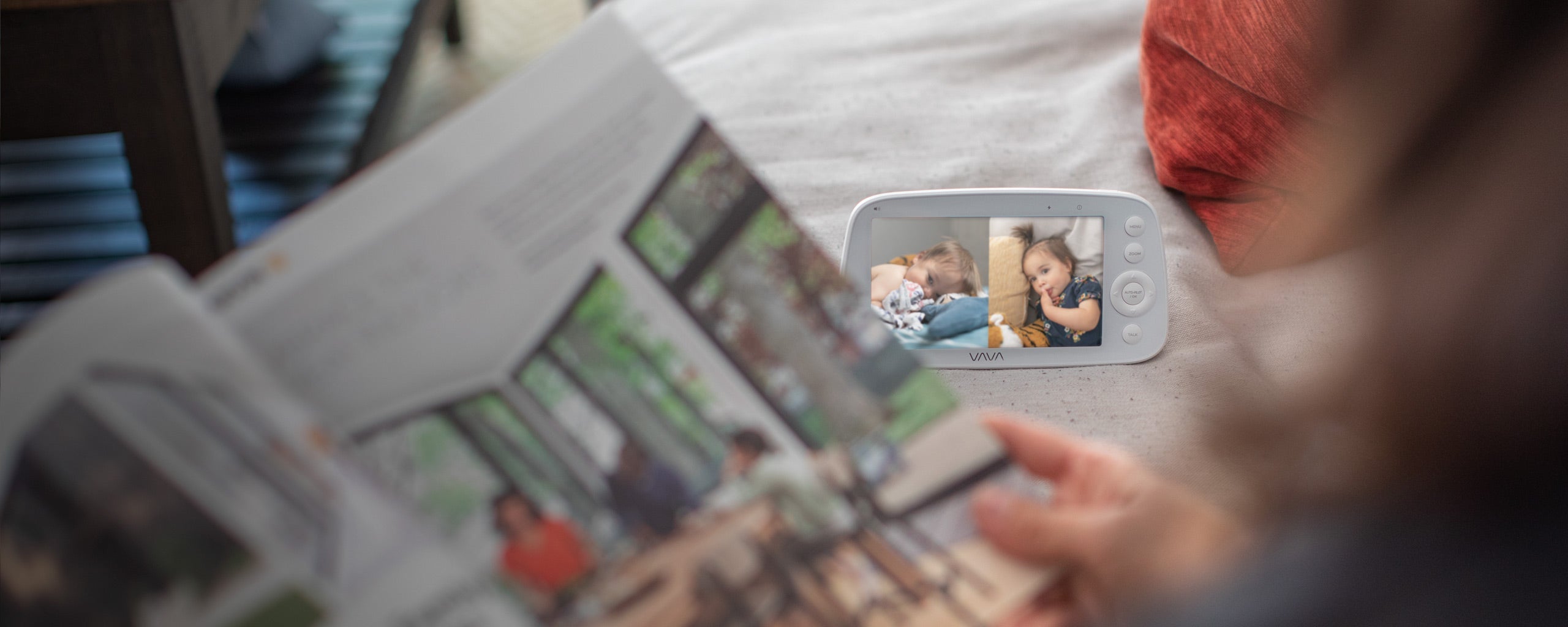
This is where VAVA fits best. The product is designed for baby fever monitoring at home, with a soft silicone underarm patch, real-time readings, audiovisual fever alerts, and a parent unit that helps parents check temperature without waking the baby again and again.
Older Adults
Older adults may also benefit from wearable temperature monitoring, especially when they are resting, recovering from illness, or being cared for by family members.
In elderly care, the main value is not “faster checking.” It is easier observation. A caregiver can notice temperature changes without relying only on occasional manual checks.
This can be helpful when an older adult has limited mobility, sleeps for long periods, or needs extra attention after illness. For this group, comfort, skin safety, battery life, and easy-to-notice alerts matter more than complicated app features.
Patients in Recovery or Ongoing Care
Wearable thermometers can also support patients who need closer temperature tracking during recovery or illness.
For example, a caregiver may want to monitor a patient after a fever, during recovery, or during a period when temperature changes need closer attention. A wearable thermometer can help show whether the temperature is rising, staying stable, or coming down.
Still, wearable temperature data should support decisions, not make decisions by itself. If symptoms look serious or a doctor asks for a confirmed temperature, use a standard thermometer and follow medical guidance.
Where Are Wearable Thermometers Used?
Wearable thermometers are used anywhere caregivers need easier temperature tracking over a longer period, including homes, elderly care settings, and medical or recovery environments.
The best setting depends on the user. A parent at home may care most about sleep-friendly alerts. A care facility may care more about consistent checks. A clinic may use wearable monitoring as one part of a broader health routine.
At Home
At home, wearable thermometers are most useful during fever nights, naps, recovery days, and times when a caregiver wants to avoid repeated manual checks.
For parents, this usually means baby fever monitoring. The thermometer can stay on while the baby rests, and the parent unit can alert the caregiver if the temperature rises. This makes the routine less disruptive, especially overnight.
VAVA’s 24-hour battery life, 1.5-hour patch charging time, 15m / 49ft stable connection, and sound plus LED fever alerts make it most suitable for this kind of home monitoring routine.
In Elderly Care Settings
In elderly care settings, wearable thermometers can help caregivers monitor temperature changes without disturbing rest as often.
This can be useful in family caregiving, assisted living, or care-home routines where someone needs regular temperature observation. A wearable thermometer may reduce the need for frequent wake-ups or repeated manual checks, especially at night.
For this use, the most important features are secure placement, gentle materials, clear alerts, and reliable connection range. A device that is too complicated can create more work instead of less.
In Medical or Recovery Settings
In medical or recovery settings, wearable thermometers can help caregivers track temperature trends over a longer period.
This can be useful after illness, surgery, vaccination, or treatment when temperature changes need closer attention. Instead of relying only on occasional spot checks, care teams can use wearable temperature monitoring to see whether a patient’s temperature is rising, staying stable, or returning to normal.
What Features Matter in a Wearable Thermometer?
The right wearable thermometer depends on who uses it, where it is used, and how long temperature needs to be monitored. A baby at home, an older adult in care, and a recovering patient may need different formats, but a few features matter in almost every case.
Comfortable Wear
Comfort matters most for longer monitoring.
For babies, this usually means a soft underarm patch that stays in place without disturbing sleep. VAVA uses a food-grade silicone patch designed for home baby fever monitoring.
Clear Alerts
A good alert system makes temperature changes easier to notice.
Sound alerts help when the caregiver is nearby but not watching the display. LED alerts are useful at night or in a dark room. VAVA’s parent unit beeps and blinks red when the temperature rises above 38°C / about 100°F.
Stable Connection Range
A stable wireless connection is important when caregivers move around the home.
VAVA uses Sub1G wireless transmission and supports a stable connection up to 15m / 49ft, which suits nearby home monitoring from the bedroom, kitchen, or living room.
Enough Battery Life
Battery life needs to cover the full monitoring period.
VAVA offers 24 hours of continuous use and charges the patch in about 1.5 hours, making it practical for overnight fever checks and daytime recovery monitoring.
Simple Setup
A wearable thermometer should be easy to use when caregivers are tired or busy.
The basic routine should feel simple: attach the sensor, check the display, and respond to alerts when needed. For baby-focused monitoring, VAVA’s baby thermometer for fever monitoring page shows how the product fits real family routines.
When Should Parents Call a Doctor?
Parents or caregivers should call a doctor when the person being monitored is very young, medically fragile, showing serious symptoms, or acting in a way that feels unusual.
A wearable thermometer can help you notice temperature changes, but it does not replace medical advice. For babies, older adults, and patients recovering from illness, the full picture matters: breathing, hydration, skin color, energy level, pain, vomiting, rash, and behavior.
Use the thermometer as a monitoring tool. Use medical care when symptoms or risk factors call for it.
Conclusion
A wearable thermometer helps caregivers monitor temperature changes over time without relying only on repeated manual checks.
For babies, it can make fever nights and naps less disruptive. For older adults, it can support easier observation during rest or recovery. For patients, it can help caregivers follow temperature trends as part of a broader care routine.
The key is to choose the right format for the person and setting. A soft underarm patch like the VAVA Smart Baby Thermometer is most suitable for home baby fever monitoring. Other wearable formats may fit adult wellness, elderly care, or clinical observation better.
A wearable thermometer is helpful, but it does not replace medical judgment. Use it to track patterns, respond to alerts, and know when it is time to confirm a reading or contact a doctor.
FAQ
Q: Can my baby sleep with a wearable thermometer patch on?
A: Yes. A soft underarm patch is designed for sleep and naps. Place it under the arm, then use a fitted onesie or sleepsuit to help keep it in position.
Q: Do wearable thermometers monitor all night?
A: Yes, many wearable thermometers are designed for long monitoring periods. VAVA supports 24 hours of continuous use, which covers overnight sleep and daytime naps.
Q: Do I need to check my baby’s temperature every few hours with a wearable thermometer?
A: A wearable thermometer keeps monitoring continuously, so you do not need to wake your baby for repeated scheduled checks. Many parents using regular thermometers feel they need to check every few hours during fever nights. A wearable patch helps reduce that routine.
Q: What temperature does VAVA alert at?
A: VAVA alerts when the temperature rises above 38°C / 100°F. The parent unit uses sound and red LED light alerts, which makes the alert easier to notice at night.
Q: Can a Wearable Thermometer Be Used for Adults?
A: Yes, wearable thermometers can be used for adults, especially for wellness tracking, recovery monitoring, or elderly care. The best format depends on the person’s comfort, mobility, and monitoring needs.
Q: Can a Wearable Thermometer Be Used in Elderly Care?
A: Yes, wearable thermometers can support elderly care by helping caregivers track temperature changes over time. For this use, comfort, clear alerts, stable connection, and simple operation are especially important.

Share: