

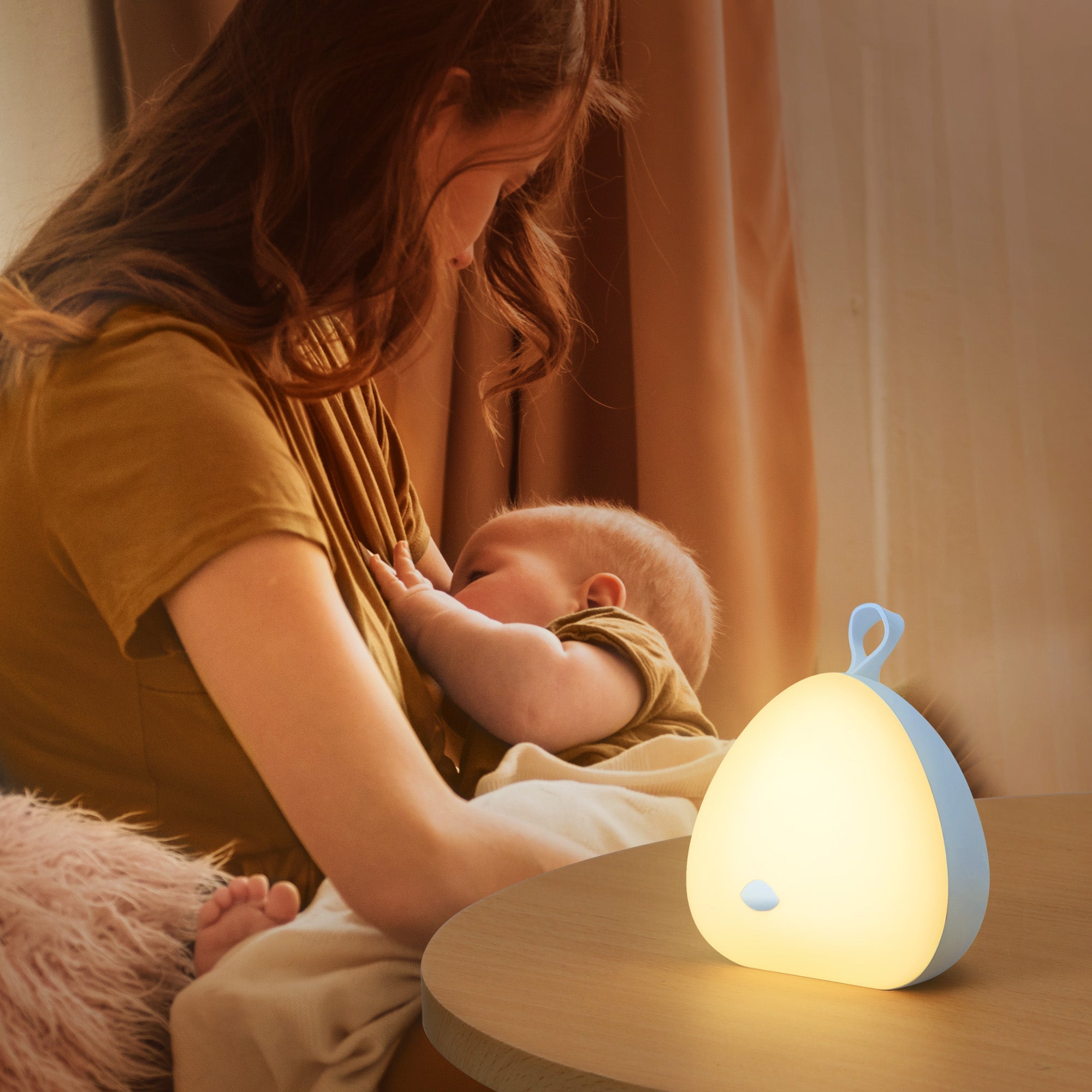
Becoming a parent means suddenly caring about tiny details like how bright the night light should be at 2 a.m. when you’re changing your baby’s diaper. And you must be here because you want to know about nursery lighting that keeps your baby calm, helps you see what you’re doing, and never risks safety.
In short, you need the right baby night light and a few practical tricks to make the perfect environment for your baby to sleep comfortably.
So, let’s learn why safe lighting for babies matters, a few tips to create an adequately lit nursery, and how a baby nightlight can simplify every midnight moment.
Why Safe Lighting Matters in Your Baby’s Room
A newborn’s eyes are still developing. They have extra-wide pupils and very little ability to filter bright wavelengths. Harsh overhead lamps can overstimulate them, while total darkness can make simple chores tricky for you. It also makes it harder for your baby to sleep.
So, the ideal sweet spot is a low-level, warm glow that mimics the brightness of a candle. This way, your baby stays sleepy, and you stay steady-handed.
Fact: The American Academy of Pediatrics recommends keeping the sleep environment dim to support healthy circadian rhythms.
Practical Nursery Lighting Tips for Cozy Surroundings
Create a warm, soothing environment for your baby with thoughtful lighting choices. The right setup can promote better sleep and a calming atmosphere for both baby and parents. Here is how you can do it:
1. Choose Bulbs Wisely
Stick to warm white light as cool daylight LEDs buzz with a blue shade that tells your baby brain, “It’s Morning.” Also, pick dimmable fixtures so brightness can match the task—lowest for midnight feeds and higher for storytime.
Practical Tip: Hold your hand 8 inches from the light. If the shade of your skin is a soft peach, the fixture is likely safe for the baby nursery lighting.
2. Layer Your Light
A single bulb bright enough for every purpose usually ends up too strong for nighttime. Layer instead:
- Ambient baby nightlight for a general glow.
- Task lamp aimed at the nursing chair or changing pad.
- Natural daylight via dimmable shades during the day.
This way, you keep each source low and gentle.
3. Position Lights Safely
Here is how you can position the nursery lights correctly so that your baby’s eyes won’t get irritated and they sleep peacefully:
- Keep lamps below the eye level of the crib mattress so the baby never stares directly at the bulb.
- Aim toward walls; reflected light diffuses through the room.
- Choose cordless, rechargeable lights such as a VAVA baby night light to eliminate strangulation hazards.
Caution: Never drape fairy-light strings inside or above the crib. They look cute in photos, but pose a choking risk once the baby can reach them.
4. Setting Up Nighttime Routines
Consistency teaches your baby the difference between day and night. Try this evening pattern:
- Draw blackout curtains at the same hour each night.
- Finish feeds or night cuddles.
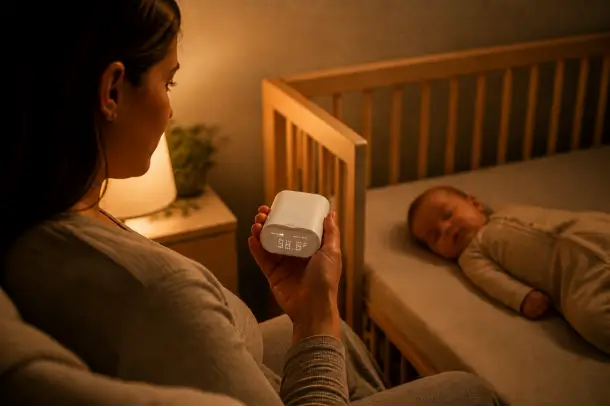
- Switch your babynightlight to its lowest warm setting.
The returning darkness helps melatonin kick back in faster than if a bright lamp stayed on.
Why Is Buying A Baby Night Light A Smart Decision?
Buying a baby night light is smart because a soft, warm glow lets you nurse, change diapers, or peek in on your little one without switching on bright overhead lights that jolt everyone awake. A dim, cordless lamp also keeps late-night walks safer for parents and becomes a familiar, calming cue that helps babies settle themselves when they stir.
If you’d like to try one, consider the VAVA SqueezyGlow Silicone Baby Night Light. It’s soft enough for a toddler to grab yet durable enough to survive a drop. They’re also easy to wipe clean, which is handy when little fingers get sticky.
Here is why parents love it:
- Pinch Control – Gently squeeze to turn it on, off, or change colors (no noisy buttons).
- 8 Color Options – Pick a soft color for bedtime stories or warm white for nighttime feedings.
- Warm 2700 K Output: Matches pediatric recommendations for night feeding.
- Timed Shut-off: A built-in 2-hour timer fades the glow once you’ve shuffled back to bed.
- Cordless Convenience: A 2,000 mAh battery runs up to 100 hours on its dimmest setting.
- Toy-Grade Build – Made from safe, BPA-free silicone that’s soft, sturdy, and baby-safe.
Conclusion
The right nursery lighting is calm, cozy, and safe. A warm, dim baby night light keeps midnight care gentle on sleepy eyes, while cordless silicone options like the VAVA baby night light offer tap-to-glow convenience, built-in timers, and kid-proof construction. Follow the placement and routine tips above, and you’ll create a nursery that feels like a soft lullaby every time the lights come on. Sleep tight!
Frequently Asked Questions
Can I leave a night light on all night?
You can, but pediatric sleep experts suggest complete darkness once the baby is asleep. Use a timer or turn it off after feeds to help both of you settle faster.
Is red light the best?
Red wavelengths don’t disrupt melatonin, but a soft, warm white is more gentle and usually looks more natural for parents.
When should I stop using a baby nightlight?
Whenever you and your child feel ready, some toddlers find comfort in a small glow during toilet-training stages; others sleep fine in pitch dark. Gradually dimming the light over a week helps an older child adjust.
Share: