

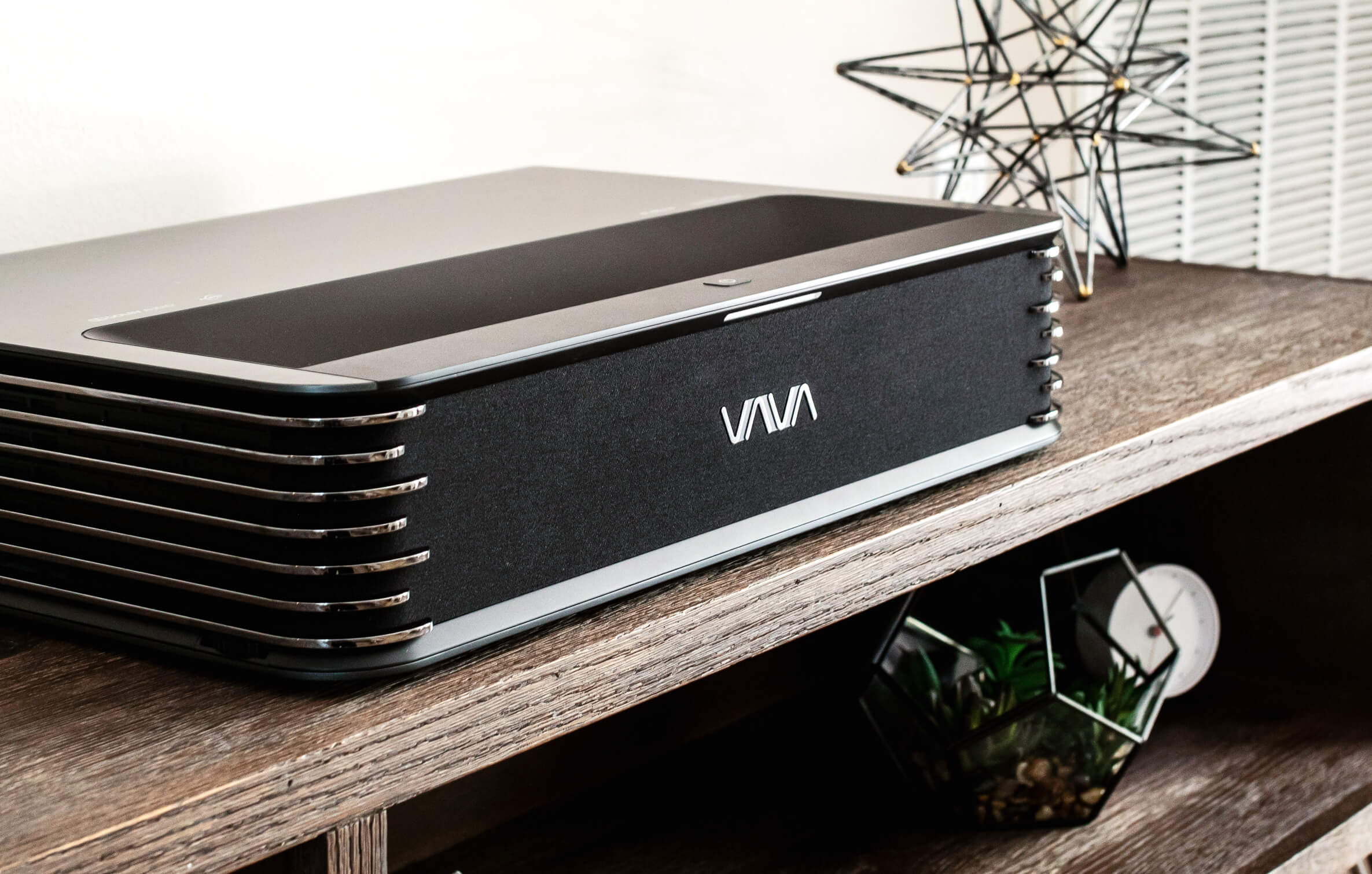
Ultra short throw projection technology has been making waves in the television and cinema industry. This recent evolution from standard projection technology has given many TV tech companies a run for their money. So, what exactly is Ultra Short projection technology? How does it work? How is it better than regular TVs and projectors? Should you consider buying one? These are some of the key questions that we'll answer in this article.
What is ultra short throw technology?
Ultra Short Throw projection, or UST for short, is the latest milestone in projector technology. A standard – long throw – projector is the most common type of projector. They require the largest distance between the projector lens and screen to give a big enough image for viewing. Its throw range can be the size of an entire movie theatre, or your living room.
For a standard projector to create a 100" image (16:9), it will need at least 8 feet between the projector lens and the screen. They are the cheapest and most versatile type of projector. The biggest setback with these standard long-throw projectors is the space they require and the casting of shadows by people and other moving objects between screen and projector lens.
Short throw projectors have a smaller throw than the standard models. They were meant for presenters, to make sure that you don't get the glare from the projection lens while presenting. They work well for classrooms and living rooms, since they don't take up as much space as long throw projectors. A short throw projector can comfortably create a 100" image with a maximum distance of 4 ft.
UST (ultra short throw) projectors are an improvement on short throw projection technology. They’re designed to sit near-flush to the screen, eliminating any possibility of shadows due to traffic between the projector lens and screen. An ultra short throw projector can create a clear 100" image with the lens just 3-20 inches from the screen, depending on the model. With 4k UST models, this technology is rapidly gaining popularity in schools and businesses. They are also slowly being used in place of large flat screen TVs, since many manufacturers are coming up with more affordable UST models.
How does ultra short throw technology work?
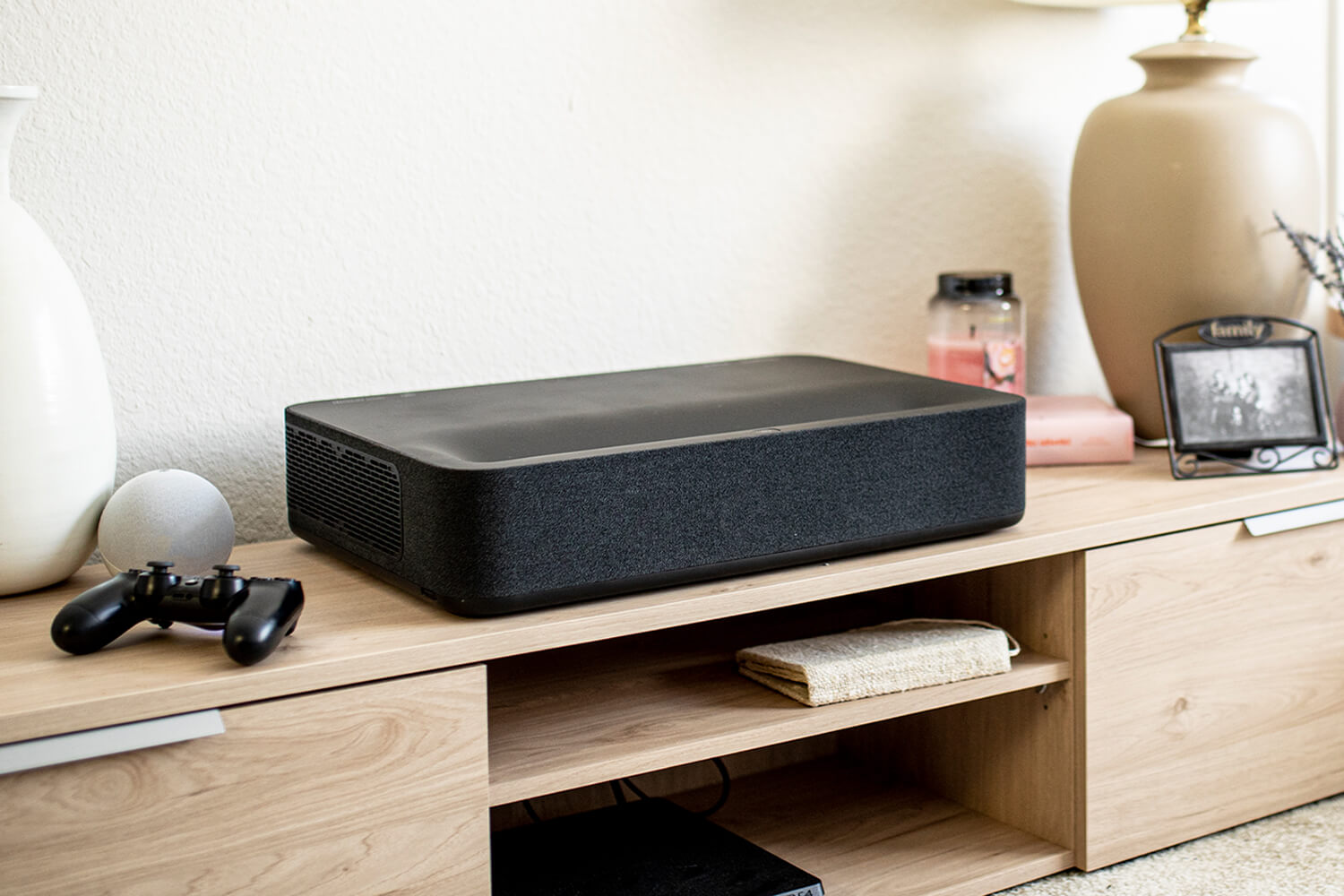
A typical projector uses a combination of lenses, an LCD screen and mirrors to project the image from the light source to the screen. Ultra short throw projection is similar to standard projection technology, although a UST uses special wide-angle lenses, laser projection, and mirrors to project the image from a remarkably steep angle without distorting the image.
The laser technology used means that you can get bright images, even in a moderately lit room. Ultra short-throw projectors are sometimes also called “laser TVs,” “ultra short-throw televisions” or “Laser Projector TVs”.
Advantages of Ultra short-throw projection over standard projectors and regular TVs
If you are still wondering why the UST stands out from standard projectors, here are some compelling reasons:
Long Lasting
A standard projector lamp has between 2,000 and 3,000 hours of projection in it. Compare this to the 20,000 hours provided by the solid state laser or LED light engines in laser TVs. If you watch TV for 10 hours a day, this projector can last you nearly 6 years. Unlike standard projectors, laser projectors have a more reliable light source that takes much longer to degrade. This means that you won't see the colors fading with time or images getting dimmer, as with long-throw projectors.
Great Resolution
There are tons of options on the market today. If you are looking for a good laser projector, we recommend getting one with a 4k display. The 4K resolution is 3840 x 2160 pixels. Compare this with the 1080p display, which has 1920 x 1080 pixels. 4K resolution has four times the pixels, meaning that it has clearer defined imaging, giving you an immersive entertainment experience. When it comes to a home cinema device, choose a 4K laser projector TV for crystal clear picture quality and sharp image focus.
Short Throw Distance
This is probably the biggest advantage of Ultra Short-throw projection technology. While standard projectors need to be mounted across the room, laser projectors can work with your existing furniture and don't need any special mounting equipment. You can have your laser projector as close to the screen as possible, eliminating the risk of glare from the lens and shadows cast by foot traffic between the screen and lens.
The image on the screen will shine bright and clear, even with your Ultra short-throw projector so close to the screen. This convenience is what makes laser TVs applicable for home entertainment in your living room. The clear picture quality, large screen and short throw distance give the laser TV a chance against regular slim TVs.
Works in Bright Rooms
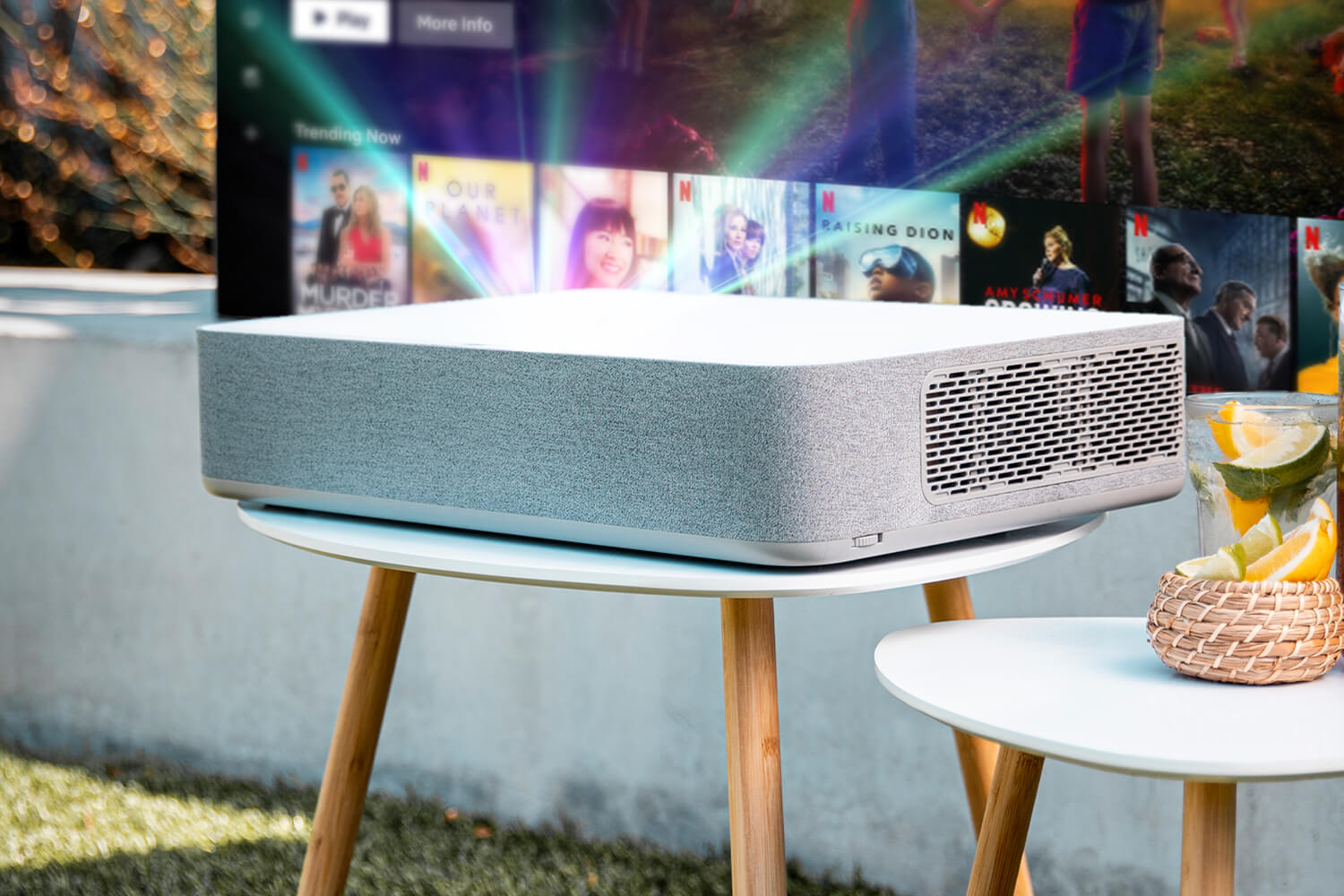
Laser projectors were designed to work just as well in areas with a lot of ambient light from windows. Standard projectors may have dim images, but not the USP. All laser TVs are built with extra bright light sources, which offer at least 2,000 ANSI lumens. This is sufficient for any bright room and a laser projector will still give clear pictures.
In addition to this, Ultra short-throw projectors are designed to work best with dedicated laser projector screens. These screens filter out any ambient light that comes perpendicular to the screen. They also prevent laser light emitted by the projector from bouncing off the screen to the walls or ceiling. This reduces the amount of excess light that comes from reflection.
Economic Space Usage
Since UST projectors can be placed so close to the screen, you don't have to invest in any extra-long HDMI cables to connect the connecting source to the projector. You can place the source right next to the laser projector. Also, laser TVs eliminate the risk of tripping over cables that run across a room, keeping you and other viewers safe.
Laser TVs are the future of home theater technology. They are a great investment if you want cinema-quality images in the comfort of your home. Contact us today for more information on this and other home theater technology.


Share: