

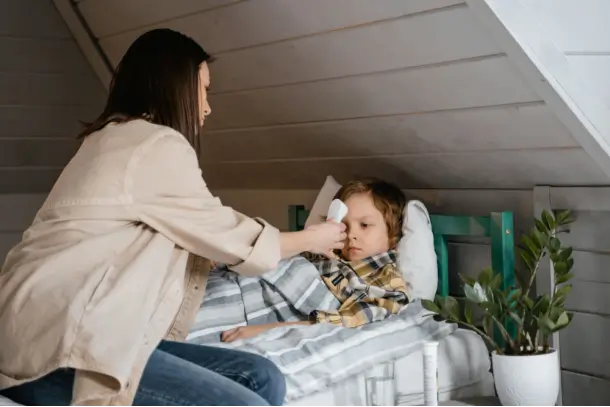
A forehead thermometer is designed for the moment you need one temperature reading now. A wearable baby thermometer is designed for the times you expect to check again and want the current reading available after the device is already in place.
That difference becomes clear in everyday care. After a nap, before leaving home, or when your baby suddenly feels warm, a quick forehead check may be all you need. During a longer stretch of rest or a night when you plan to keep an eye on temperature more than once, repeatedly reaching for a forehead thermometer can become another task in an already busy routine.
The choice is simpler than it sounds. Choose a forehead thermometer when you need a quick reading for a specific moment, such as after a nap or before leaving home. Consider a wearable thermometer when repeated checks would better fit a longer stretch of rest or overnight care.
This guide compares the two formats, explains the practical differences in everyday use, and helps you decide which setup fits your family’s routine.

When Is a Forehead Thermometer the Better Fit?
A forehead thermometer is the better fit when you need one reading at one particular moment. You may want to check your baby after a nap, before leaving for child care, or when they suddenly feel warmer than usual. The task is simple: take a reading, note how your child is doing, and decide whether you need to keep watching, repeat the check, or take the next step recommended for their age.
Quick Checks Without a New Setup
This format suits families who do not expect to monitor temperature continuously. You keep the thermometer nearby, use it when a specific moment calls for it, then put it away. That can be especially helpful with a sleepy or fussy child, when you want a brief check without adding a patch or receiver to the routine.
The American Academy of Pediatrics notes that temporal artery thermometers can be used at all ages. What changes from model to model is how you use it: some are scanned across the forehead, while others are held at a stated distance. That is why the instructions belong beside the thermometer, not buried in a drawer.
For a complete technique walkthrough, read how to use a temporal thermometer safely.
The Conditions Behind a Useful Reading
For a non-contact infrared thermometer, the FDA advises using the device at its specified distance, with a clean, dry, uncovered forehead and away from drafts, direct sunlight, and radiant heat. Those details are what make a quick check useful when you need to compare it with the next reading or describe it to your child’s clinician.
If your child has just come in from cold weather or their forehead is damp after sleep, pause long enough to follow the model’s preparation instructions before treating the displayed number as the basis for your next decision.
Age Changes the Next Step
The same quick check can lead to a different next step depending on your child’s age. With an older baby or child, a forehead reading may help you decide whether to keep an eye on symptoms, offer fluids, or contact the pediatrician. With a baby younger than 3 months, a fever requires more prompt attention: the AAP’s fever guidance advises contacting a pediatrician immediately for a rectal temperature of 100.4°F (38°C) or higher.

Source: https://www.pexels.com/
When Is a Wearable Baby Thermometer the Better Fit?
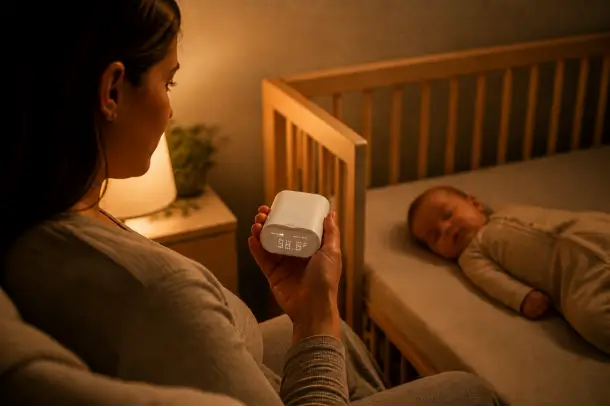
A wearable baby thermometer is the better fit when you expect to check temperature more than once over the same stretch of time. Instead of deciding to take a new reading every time, you set up the patch before the period you want to watch and keep the current temperature available for later checks.
That can make a difference on a fever night, during a long nap, or when you are the only adult caring for a baby and still need to move between feeding, settling, meals, and the rest of the household. You can set up the device before your baby rests, then glance at the receiver later without recreating the entire measuring routine. The advantage is that you have an easier way to follow the same concern over several hours.
Longer Periods of Observation
A forehead thermometer is useful when you need an answer now. A wearable format becomes more useful when you already know that you will probably want to check again later.
For example, a parent might do one quick check when a baby feels warm after dinner. If the child is otherwise comfortable and the family does not expect to check again soon, that may be enough. If the child is unwell and likely to sleep for several hours, placing a wearable device before settling them can be more convenient than returning repeatedly for another manual reading.
For a more detailed evening setup, see best thermometer for night monitoring.
One-Caregiver and Shared-Care Routines
A wearable device can help a solo caregiver keep the current temperature within reach while moving through the rest of the evening. It can also help when care changes hands. A grandparent, partner, or overnight caregiver can see the available reading without needing to repeat the exact forehead-measurement routine used earlier.
In either situation, the receiver lets you check the available reading without taking a new manual measurement each time.
VAVA Features That Support Ongoing Checks
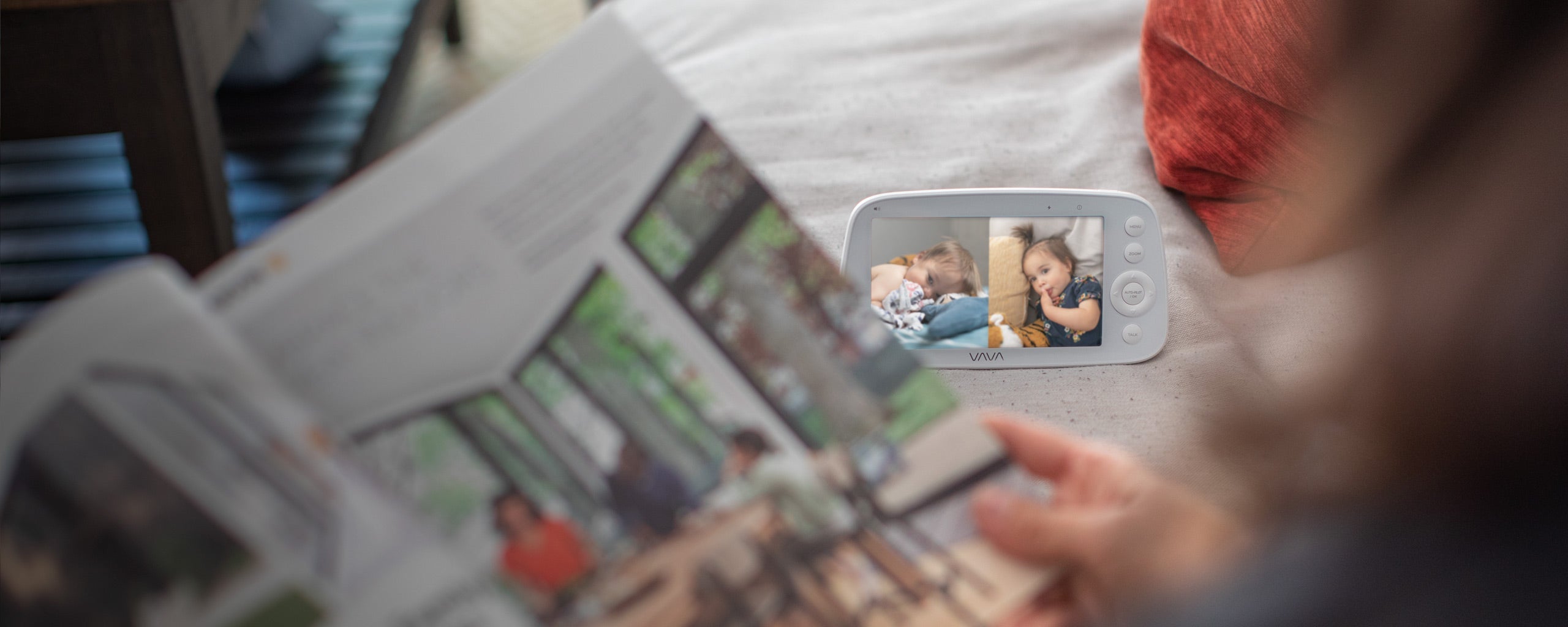
The VAVA Smart Baby Thermometer combines an underarm silicone patch with a separate display unit. It provides real-time temperature measurement, audio and visual fever alerts, up to 24 hours of battery life, and a Sub1G wireless connection with a range of up to 15 m (49 ft).
You can place the patch during a feeding, diaper change, or bedtime routine, then keep the display where you are likely to be later. The separate receiver lets you check the reading without unlocking a phone or opening an app each time.

Using Alerts Within Your Care Routine
An alert can make it easier to notice that it is time to look more closely, especially when you are resting or caring for another child. When one appears, look at your baby, consider their age and symptoms, and follow the action plan your pediatrician has given you.
The FDA advises caregivers not to let an infant-monitoring device replace appropriate clinical guidance when medical care depends on accurate monitoring. Here, the practical role of the wearable thermometer is to make ongoing home checks easier while helping the caregiver notice when a closer check is needed.
Practical Checks Before Buying
Before choosing a wearable model, check how the patch is placed, what the display shows, how alerts work, how the device is charged, what accessories are included, and whether its operating range fits your home. Those details determine whether the device will genuinely simplify the periods when you expect to check temperature more than once.
Which Thermometer Fits the Way You Need to Check?
The main difference between a forehead thermometer and a wearable baby thermometer is what happens after the first reading. A forehead thermometer helps you check your child’s temperature once. If you need to check again later, you repeat the same process. A wearable thermometer is designed for the times when you expect that first check to become an evening or overnight routine.
This is why the choice is not mainly about which format is faster or more accurate in the abstract. It is about whether you need one answer now, or a way to keep seeing your baby’s temperature after the first check.
|
What is happening at home? |
How a forehead thermometer fits |
How a wearable thermometer fits |
|
You only want to know whether your child feels warm right now. |
Take one forehead reading and decide whether you need to keep watching. |
A wearable setup may be more than you need for one isolated check. |
|
You take a quick reading, then realize you will probably want to check again later. |
Each later check means picking up the thermometer and measuring again. |
You can place the patch before your baby rests, then keep the current temperature available for later checks. |
|
Your baby is unwell and you expect to monitor through a nap, a fever night, or several hours of rest. |
It can still provide individual readings, but the caregiver needs to begin a new measurement each time. |
Once the device is in place, the temperature remains visible on the receiver without repeated manual scans. |
|
You want to notice a rise in temperature without choosing a fixed schedule for manual checks. |
You need to decide when to take each new reading. |
VAVA provides real-time temperature measurement and audio and visual fever alerts, helping you notice when it is time to check in. |
A simple way to decide is to think about the second and third check, not only the first one. If you expect one quick answer, a forehead thermometer may be enough. If you expect repeated checks, a wearable format can make the rest of the routine easier by keeping the temperature visible after the patch is already in place.
For a fuller guide to measurement methods, read How to Take a Baby’s Temperature Accurately.

How Do You Choose Between a Forehead and Wearable Baby Thermometer?
The main question is how often you expect to take a reading.
A forehead thermometer is a practical choice when you want one quick temperature check. A wearable thermometer can be more useful when you expect to check again during a nap, an evening of rest, or overnight.
Start with the situation you are trying to handle, then compare the features that support it.
1. Decide whether you need one check or ongoing visibility.
Choose a forehead thermometer when you expect to take one reading and move on with the next step in your routine. Choose a wearable thermometer when you expect to look again during the next few hours and want the temperature available without taking a new manual measurement each time.
2. Think about the time of day and your child’s routine.
A quick forehead check can fit a short, specific moment, such as after a nap or before leaving home. A wearable format may fit better before a long nap, bedtime, or another period when you already expect repeated checks.
3. Match the format to your child’s age and the job you need it to do.
For newborns and babies under 3 months, keep the temperature-checking method your pediatrician recommends for confirming a fever. A wearable thermometer can still be useful when you want to keep an eye on temperature during rest, but it works alongside that confirmation plan rather than replacing it.
4. Check whether the product setup fits your home.
Once you know which format suits the task, look at the details that will affect daily use. For a forehead thermometer, that means the measuring method and instructions. For a wearable thermometer, look at patch placement, display visibility, alert settings, charging, included adhesives, and whether the receiver’s range fits the rooms where you spend time.
For age-specific setup, see Which Thermometer Type Is Best for Newborns? and How to Choose the Best Baby Thermometer in 2026.
You do not need to choose one format as the winner for every situation. A forehead thermometer can cover occasional quick checks, while a wearable thermometer can make a longer monitoring period easier to manage.

Conclusion
Choosing between a forehead thermometer and a wearable baby thermometer starts with what you expect to need after the first reading.
If you usually want one quick answer at a particular moment, a forehead thermometer keeps the process simple. If you expect to check again through a long nap, an evening, or a fever night, a wearable format can keep the temperature available without asking you to begin a new manual check each time.
Many families do not need to treat this as a strict either-or choice. A forehead thermometer can cover quick checks, while a wearable option can support the periods when you want ongoing visibility. For newborns and younger babies, make sure that plan also includes the temperature-confirmation method your pediatrician recommends.
When your baby is unwell, the goal is not to create a more complicated routine. It is to make the next few hours feel more manageable. If ongoing temperature checks are the part you want to simplify, explore the VAVA Smart Baby Thermometer and see whether its wearable patch, separate receiver, and alert features fit the way your family cares for your child.
FAQs
1. Can I Keep Both a Forehead and Wearable Thermometer at Home?
Yes. The two formats can handle different parts of the same routine. A forehead thermometer can help with a quick first check, while a wearable thermometer can make it easier to keep watching when you expect to look again over the next few hours.
If you are also comparing other formats, see Types of Body Thermometers.
2. Which Format Is Better for One Quick Check?
A forehead thermometer is usually the simpler choice when you only need one reading after a nap, before leaving home, or when your child suddenly feels warm. You take the reading, note the time and method, and decide whether you need to check again later.
3. Which Format Makes More Sense for a Fever Night?
A wearable thermometer makes more sense when you expect repeated checks through the night. Once the patch is in place, you can view the current temperature on the receiver instead of taking a new forehead reading each time. The VAVA Smart Baby Thermometer also provides audio and visual fever alerts to help you notice when it is time to check in.
4. Can a Wearable Thermometer Replace the Method Recommended for a Newborn?
No. For a newborn or baby younger than 3 months, keep the method your pediatrician recommends for confirming a fever. A wearable thermometer can support ongoing observation during rest, but it should be part of a broader age-appropriate plan.
5. What Should I Do if I Want to Check Again Later?
First decide whether the second check is likely to become several checks. If you only need one more reading, use the method you already have. If you expect to keep looking through a nap, evening, or night, a wearable format can reduce the need to restart the measuring process each time.
6. What Details Should I Record When My Baby Has a Temperature Check?
Write down the time, the temperature shown, and the method you used, such as forehead or wearable underarm monitoring. This gives you a clearer picture of what has changed and helps you explain the readings if you later speak with your child’s clinician.
For more reading tips, visit how to read a thermometer correctly.
Resources
- HealthyChildren: How to Take Your Child’s Temperature
- FDA: Non-contact Infrared Thermometers
- HealthyChildren: Fever and Your Baby
- FDA: Unauthorized Infant Devices for Monitoring Vital Signs

Share: