


Your child feels warm, but the forehead thermometer says 97.8°F. You scan again and get 98.1°F. Now you are wondering whether the thermometer is wrong, your technique is off, or the number simply means something different than you expected.
Reading a thermometer correctly comes down to 3 things: using the right placement, waiting for the reading to finish, and comparing the number to the right body site.
This guide covers common home thermometer types, the mistakes that skew readings, and what to do when a result does not look right.

Why Does Reading a Thermometer Correctly Matter?
A thermometer can give a misleading number even when the device works fine , if the method is wrong. The reading itself is only half the story. How you take the temperature and where you take it fill in the rest.
Correct Use Gives the Number Meaning
Temperature readings vary depending on which body site you use, and you need an accurate measurement to know if a fever is present. A forehead reading of 99.0°F and an armpit reading of 99.0°F do not mean the same thing.
A temperature taken by mouth over 100°F is considered a fever, while an armpit temperature over 99°F is considered a fever , and a rectal, ear, or forehead temperature over 100.4°F is the threshold.
If you judge both readings by the same standard, you may either miss a real fever or worry over a number that falls within a normal range for that site. Understanding normal ranges by location is the first step toward an accurate reading.
What Is a Normal Body Temperature, and How Does It Vary by Site?
There is no single "normal" number that applies the same way to every thermometer reading. In healthy adults, the average oral temperature is about 37°C (98.6°F), but a normal range is typically 36.5 -- 37.5°C (97.7 -- 99.5°F). The number you see on the display shifts depending on where you measure.
Normal Ranges by Measurement Site
Here is how temperature readings typically compare across common body sites:
|
Measurement Site |
Typical Normal Range |
Compared to Oral |
|---|---|---|
|
Rectal |
97.9–100.4°F (36.6–38.0°C) |
About 0.5–1°F higher |
|
Oral |
97.6–99.6°F (36.4–37.6°C) |
Baseline |
|
Ear (tympanic) |
96.4–100.4°F (35.8–38.0°C) |
About 0.5–1°F higher |
|
Forehead (temporal) |
97.2–99.0°F (36.2–37.2°C) |
About 0.5–1°F lower |
|
Armpit (axillary) |
96.6–98.0°F (35.9–36.7°C) |
About 0.5–1°F lower |
According to Mount Sinai's health library, the average normal oral temperature is 98.6°F (37°C); a rectal temperature is 0.5–1°F higher, an ear temperature is 0.5–1°F higher, an armpit temperature is most often 0.5–1°F lower, and a forehead scanner is most often 0.5–1°F lower than an oral reading.
A note on older adults: older adults often have a slightly lower baseline (around 36°C or 96.8°F), so an elderly person with a "normal" reading of 37°C might actually have a mild fever relative to their usual state. When you care for an aging parent or grandparent, their personal pattern may tell you more than one textbook cutoff.
Fever Thresholds by Method
These are widely accepted fever markers based on measurement site:
- Rectal, Ear, or Forehead: 100.4°F (38°C) or higher.
- Oral: 100°F (37.8°C) or higher.
- Armpit: 99°F (37.2°C) or higher.
For babies under 3 months, a rectal temperature of 100.4°F (38°C) or higher should prompt immediate contact with your pediatrician.
Now that you know what a normal range looks like at each body site, the next step is learning how to take each type of reading correctly.
How Can You Use Each Type of Thermometer Correctly?
Each thermometer type needs a slightly different approach, but the goal is the same: place the sensor correctly, wait for the reading to finish or display, and compare the number to the right body site.
Forehead Thermometer Technique
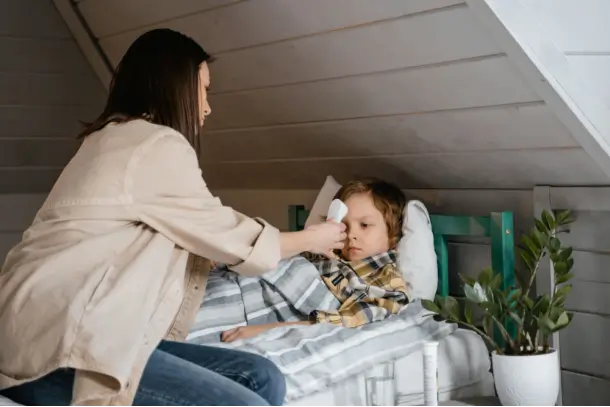
A non-contact forehead thermometer reads infrared heat from the forehead area. Aim at the center of the forehead and hold the thermometer about 0.5–2 inches (1.3–5 cm) from the skin, unless your model gives a different distance.
Keep the forehead clean and dry before scanning. Sweat, hair, hats, blankets, or cold outdoor air can affect the surface temperature and make the reading look lower than expected.
If the person just came inside from cold weather, wait about 10–15 minutes before scanning.

Ear Thermometer
An ear thermometer uses an infrared sensor aimed toward the eardrum. Gently place the covered probe in the ear canal, aim it correctly, and wait until the reading is complete.
Earwax, moisture, poor positioning, or sleeping on one ear can affect the result. If a child has been lying on one side, use the other ear or wait a few minutes before checking.
Ear thermometers are generally not recommended for babies under 6 months because small ear canals make placement harder.
Oral Thermometer
Place the thermometer tip under one side of the tongue, toward the back of the mouth. Keep the lips closed and breathe through the nose until the reading finishes.
Wait at least 15 minutes after eating, drinking, or chewing gum. Hot or cold food and drinks can change the mouth temperature and make the reading less reliable.
Armpit Thermometer
Place the thermometer tip in the center of a dry armpit. Hold the arm snugly against the chest so the sensor stays covered by skin until the thermometer signals that the reading is done.
Armpit readings are easy to take, but they can read lower if the arm is loose or the sensor is exposed to room air.
Wearable Thermometer
A wearable thermometer is used for longer home monitoring, not one quick spot check.
For a patch-based wearable thermometer, clean and dry the underarm area first. Apply a fresh adhesive patch, place the sensor flat under the arm, and keep the receiver nearby so you can check the current body temperature without taking another manual reading.
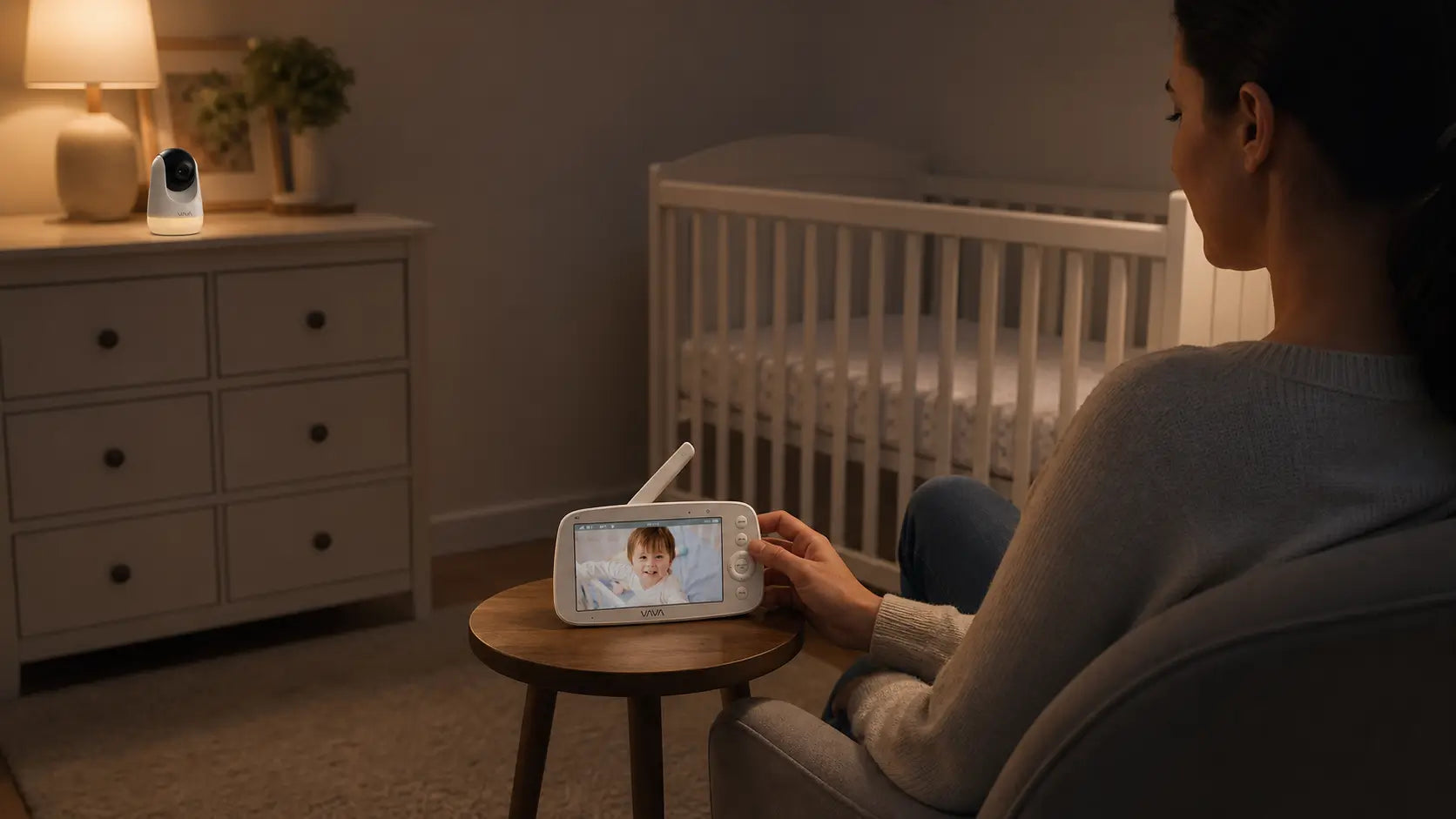
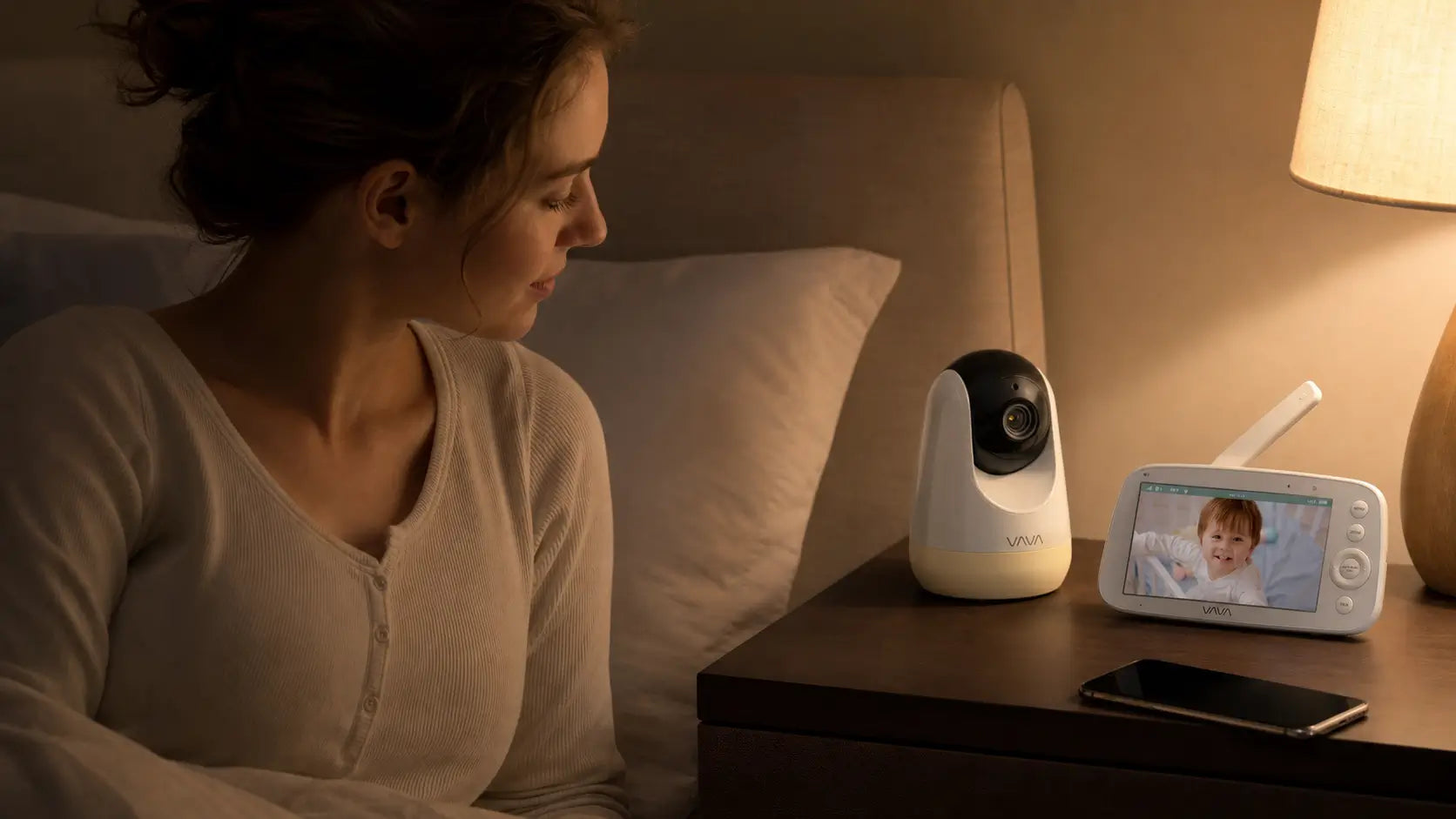
For example, the VAVA Smart Baby Thermometer uses a soft underarm patch and receiver to show real-time body temperature, with audio and visual fever alerts when the reading crosses the preset alert level.

Rectal Thermometer
A rectal thermometer is often used when a more accurate temperature is needed for a baby. Apply a small amount of petroleum jelly to the tip, place the baby safely on their back, lift the thighs, and insert the lubricated thermometer about ½ to 1 inch (1.3–2.5 cm) into the rectum.
Hold it in place until the reading finishes. Use a separate digital thermometer for rectal readings and label it clearly so it is never used orally.
Glass Thermometer Reading Basics
If you still use a mercury-free glass thermometer, read it carefully after removal. Look for the line of fluid between the numbers and the vertical marks, then read the number closest to where the fluid column ends.
The American Academy of Pediatrics recommends not using glass thermometers with mercury because the glass can break and mercury is poisonous. Mercury-free glass thermometers exist, but digital thermometers are easier and safer for most families.
What Are the Most Common Thermometer Reading Mistakes?
Even when your thermometer works perfectly, user errors are the most common reason for a reading that seems off. Here are the mistakes that trip people up the most , and how to correct each one.

Placement and Timing Mistakes
|
Mistake |
Why It Skews the Reading |
How to Fix It |
|---|---|---|
|
Scanning forehead from too far away |
Sensor misses skin heat; reading drops |
Hold about 0.5–2 inches (1.3–5 cm) from clean, dry skin, unless your device recommends a different distance. |
|
Removing oral thermometer too early |
Sensor has not stabilized; reading is low |
Wait for the beep or hold for 3 minutes (glass) |
|
Loose arm during armpit reading |
Air reaches the sensor; result drops |
Press elbow against chest until the beep |
|
Ear probe aimed at canal wall |
Misses eardrum heat; reading is inaccurate |
Pull ear back and up, point toward opposite eye |
|
Not waiting after food or drink |
Mouth temperature is altered |
Wait at least 15 minutes before oral check |
Technique and Handling Mistakes
A few technique habits cause repeated bad readings:
- Dirty Sensor or Lens: A smudged forehead thermometer lens can distort the infrared signal. Clean the sensor with a soft cloth or alcohol wipe before use.
- Low Battery: A weak battery can produce erratic results. Batteries in thermometers should be replaced periodically. Keep spares on hand.
- Checking Right After Being Outside: Cold air lowers your skin temperature temporarily. Readings can be affected by external factors, including drafts, wind, indoor heating, and direct sunlight. Wait 15 minutes indoors before scanning.
- Using the Wrong Thermometer for the Age: Due to the size of the ear canal, tympanic thermometers aren't recommended for infants under 6 months old.
Comparison and Repeat-Check Mistakes
One of the biggest sources of confusion at home is comparing numbers taken from different body sites.
There's no exact way to add or subtract a degree to make readings match when temperatures are taken from different parts of the body. For this reason, it's best to compare readings taken the same way each time.
If you check the forehead, then the ear, then the armpit and get three different numbers, the difference may come from the body site, not from a faulty thermometer. For repeated checks, try to use the same thermometer type and the same body site when possible. This does not mean the temperature should stay the same. It simply reduces extra confusion caused by switching methods.
Repeated manual checks can also become tiring, especially during overnight care. A wearable thermometer can help by showing the current body temperature from one underarm placement.
What Should You Do When a Thermometer Reading Seems Wrong?
Before blaming the thermometer, run through this short troubleshooting checklist:
- Was the sensor clean and dry?
- Was the thermometer held in the correct position long enough?
- Had the person eaten, had a drink, been outside, or been bundled up recently?
- Is the battery fresh?
- Am I comparing the reading to the correct fever threshold for this body site?
If you answer "yes" to all five and the number still seems off, try one of the steps below.
Unexpectedly Low Readings
A reading that seems too low usually points to a technique issue. The further you get from your body's core, the cooler the temperature tends to be, according to Nebraska Medicine. Common causes include:
- Scanning the forehead through sweat or hair.
- Not closing the armpit fully.
- Taking an oral reading after a cold drink.
- Being outdoors in cold weather right before checking.
Repeat the check after correcting the issue, using the same body site and waiting at least 2 minutes between readings.
Unexpectedly High Readings
A number that seems higher than expected can be caused by:
- Taking a reading right after exercise, vigorous play, or a warm bath.
- Oral temperatures are influenced by drinking, chewing, smoking, and breathing with the mouth open. Hot drinks, hot food, chewing, and smoking raise oral temperatures.
- Wearing heavy clothing or being wrapped in blankets before a forehead scan.
Remove obvious heat sources, such as heavy blankets or a warm room, and recheck with the same method when the situation is not urgent.
For babies under 3 months, older adults with unusual symptoms, or anyone who looks very unwell, follow medical guidance instead of waiting to see if the number changes.
Inconsistent Repeat Readings
The body temperature of a healthy person varies during the day by about 0.5°C (0.9°F) with lower temperatures in the morning and higher temperatures in the late afternoon and evening. A difference of 0.5–1°F between two readings taken an hour apart may be normal circadian fluctuation , not an error.
Small differences between repeat readings are common. Body temperature can shift during the day, and readings can also vary when you switch between forehead, ear, mouth, and armpit methods.
NIH clinical references note that body temperature is often lowest around 4 a.m. and highest around 6 p.m., with normal daily variation around 0.5°C / 0.9°F.
When you compare readings, use the same method whenever possible. Write down the time, body site, and number. That gives you a cleaner picture than switching methods and trying to compare numbers that were never meant to match exactly.
When Should You Replace or Check Your Thermometer?
Most digital thermometers last several years with normal home use, but they do not last forever.
Replacement Warning Signs
Replace your thermometer if you notice any of these:
- Inconsistent Results: Readings vary by more than 1°F on the same person within a few seconds, even with correct technique.
- Dim or Flickering Display: This usually means the battery is dying, but if a fresh battery does not fix it, the device may be failing.
- Physical Damage: Cracks in the probe, a loose tip, or a water-damaged screen can all affect accuracy.
- No Reading at All: If the thermometer does not register after multiple attempts, it is time to replace it.
Basic Home Accuracy Checks
If you want to test your digital thermometer at home, you can try a simple comparison. Take two or three readings on the same person, at the same site, within a 5-minute window. The results should be within 0.3–0.5°F of each other. If they swing widely, the sensor may need replacement.
If the thermometer passes this basic check, focus on technique first. Use the same body site, wait for the reading to finish, and keep the sensor clean. If readings still vary widely under the same conditions, check the device instructions or contact the manufacturer for support.

Conclusion
Reading a thermometer correctly starts with 3 habits: use the right placement, wait for the reading to finish, and compare the number to the fever threshold for that body site. Small differences between readings can be normal, especially when you switch methods or check at different times of day.
For families and caregivers who need repeated temperature checks, a wearable thermometer can make home monitoring easier. The VAVA Smart Baby Thermometer shows real-time body temperature on a receiver and uses audio and visual fever alerts when the reading crosses the preset alert level.
Contact your pediatrician or healthcare provider if a reading concerns you, especially for infants under 3 months, older adults with unusual symptoms, or anyone with a weakened immune system.
Frequently Asked Questions
1. Can stress or crying affect a temperature reading?
Yes. Vigorous crying, emotional distress, and physical agitation can temporarily raise body temperature. If your child has been crying hard, wait 10–15 minutes after they calm down before checking. This helps you get a reading that reflects their baseline rather than the temporary spike from exertion.
2. Can I use the same thermometer for oral and armpit readings?
You can use the same digital thermometer model for both, but keep hygiene in mind. If you plan to use a digital thermometer to take a rectal temperature, get another digital thermometer for oral use and label each thermometer. Never use a thermometer rectally and then orally without a second dedicated device. For oral and armpit use, clean the probe with soap and water or an alcohol wipe between uses.
3. Why does my temperature seem lower in the morning and higher at night?
This is normal. The nadir in body temperature usually occurs at about 4 a.m. and the peak at about 6 p.m. according to NIH clinical references. This circadian rhythm can create a swing of about 1°F (0.5°C) during the day. It does not mean your thermometer is broken.
4. Is 98.6°F always the "normal" temperature?
Not exactly. That widely accepted number originated from a study done in the mid-1800s, but newer studies suggest the average person today actually runs a little cooler, somewhere between 97.5°F and 97.9°F.
Normal ranges vary by person, time of day, age, and measurement site. That is why a single number like 98.6°F should be treated as a reference point, not a fixed rule for every reading.
To compare reading methods, see our guide to the most accurate baby thermometer by method.
5. Why do my repeat temperature readings change?
Temperature can rise and fall during a fever, so some change is normal. But readings can also shift when you switch between forehead, ear, oral, and armpit methods because each body site reads differently.
For repeated checks, note the time, body site, and reading. If someone needs closer home monitoring, a wearable thermometer like VAVA can also help by showing the current body temperature from the same underarm placement, reducing extra manual checks for babies, older adults, or recovering family members at home.
Share: