


You don’t have to leave a night light on all night for your baby. A dim light can help you see during nighttime feeds and diaper changes, but you can switch it off afterward if you no longer need it. Using a light for care doesn’t mean keeping it on until morning.
Whether to leave some light on between feeds depends on your family’s needs. We’ll explain when it can be useful, whether babies need light for comfort, and how to choose its brightness, color, and position.

Does Your Baby Need a Night Light On All Night?
No, you don’t need to leave a night light on all night for your baby. But a soft glow can be helpful when you want to see your baby or move around the bedroom while they sleep.
Raising Children Network explains that a dim room can help your baby settle by reducing stimulation. A gentle night light lets you keep that restful atmosphere while giving you light to see by. You can find your way to the crib or reach for something beside your bed without switching on a bright overhead light.
A baby night light can be useful without staying on until morning. How long you leave it on depends on when you need that light.
Do Babies Need a Night Light to Feel Secure?
A night light can comfort a toddler who is afraid of the dark, but a young baby waking or crying at night doesn’t automatically mean they need light for reassurance. Your child’s age and what they’re showing you matter more than assuming darkness is the problem.
Newborns and Young Babies
When your baby cries soon after you turn out the light, it’s understandable to wonder whether the darkness upset them. But the timing alone doesn’t tell you why they’re crying. As the NHS explains, newborns wake frequently, including for feeds, and their sleep patterns are still developing.
Before changing the lighting, consider what your baby may need: a feed, a diaper change, or some comforting contact with you. A baby who settles when you pick them up hasn’t necessarily been frightened by the dark. Responding to their needs gives you a better starting point than treating the light itself as the answer.
Toddlers Who Are Afraid of the Dark
Your toddler may tell you the room feels scary or ask you to leave a light on. Ask what worries them and give them time to explain. Something that looks ordinary to you can feel frightening to your child, so a calm response is more helpful than dismissing the fear.
A gentle night light can help your child feel more at ease if they’re afraid of the dark, as Cincinnati Children’s suggests. You can offer it alongside a few reassuring words, such as letting them know you’re nearby. The light provides a comforting glow, while your response shows them that you’re listening.

When Should You Turn the Night Light On or Off?
Feeds and diaper changes are natural times to use your night light. Afterward, you may prefer darkness, or you may still appreciate a little glow while your baby settles or you rest beside them.
During Feeds and Diaper Changes
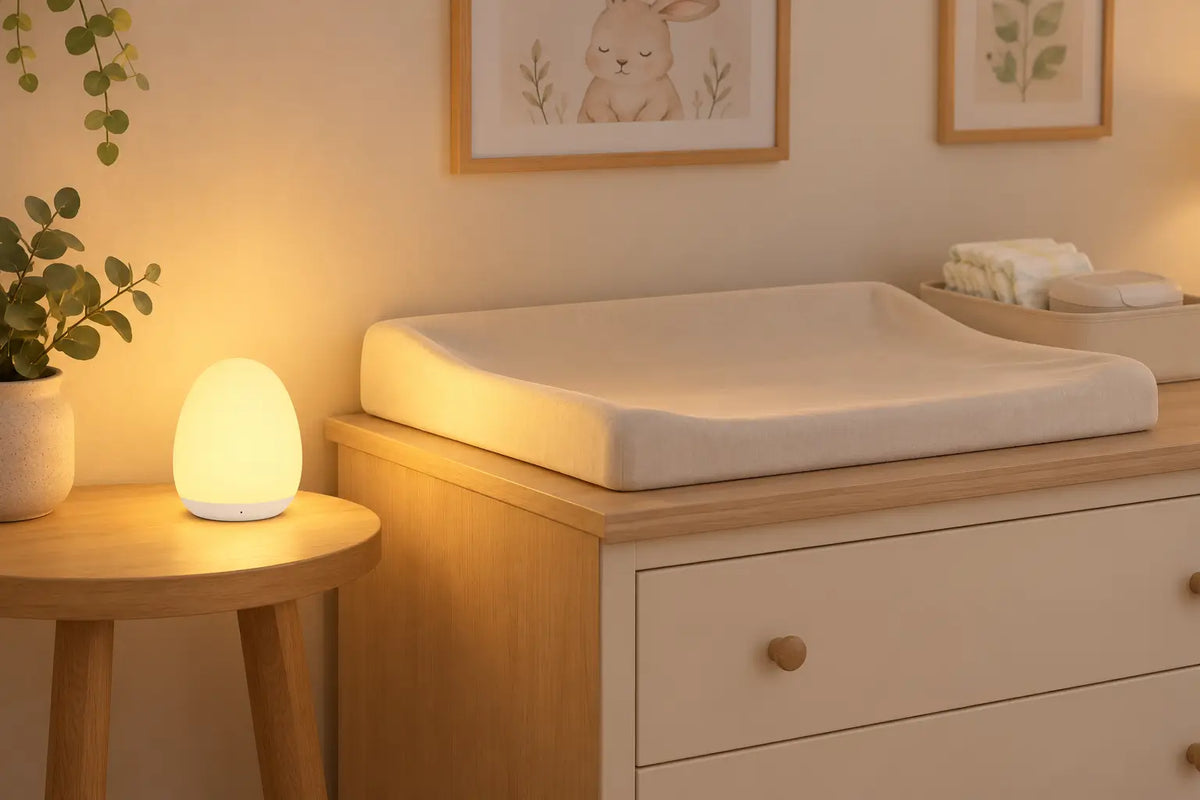
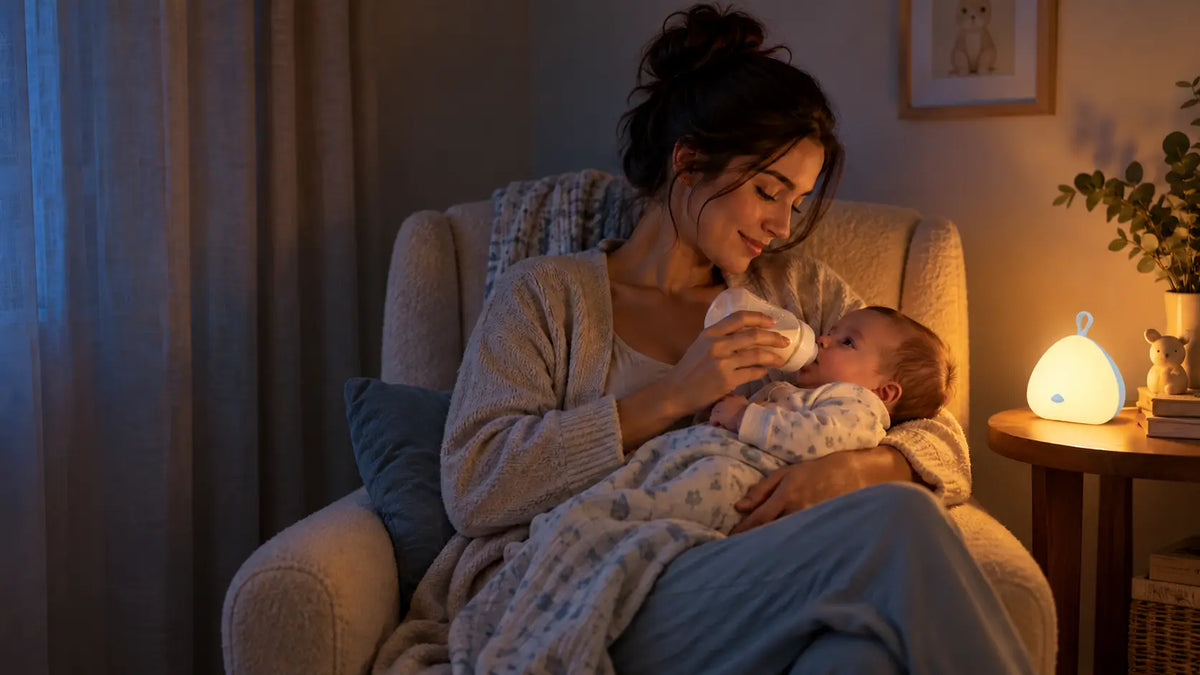
When you’re half asleep and your baby is ready for a feed, you want to get comfortable together without reaching for the ceiling light. A night light gives you a gentler option for feeding or settling.
You may need to see how your baby is positioned in your arms or find the clean diaper beside you. These are the moments when a little light is especially useful, with your attention on your baby rather than on finding things in the dark.
Easy controls also help when one hand is busy holding your baby. The VAVA Silicone Baby Night Light uses squeeze controls, so you don’t have to find a small switch in the dark.

After Nighttime Care
Some nights, your baby settles soon after a feed. Other nights, you spend a little longer holding and comforting them. The light can stay with you through that extra time; finishing the feed doesn’t have to mean sitting in darkness.
Once your baby is back in their crib and you’re ready to rest, switching it off may feel right. If you’re still awake and tending to them, there’s no need to rush.
Between Feeds in a Shared Room
You may wake briefly and want to glance at your baby without getting out of bed. A soft glow can make that easier, especially during nights when you’re up often.
Your own rest matters too. If you find it easier to sleep in darkness, you can use the light when you get up instead. If a little light makes the room more comfortable for you and your partner, keeping it available may suit your nights better.

How Should You Set Up a Night Light for Overnight Care?
Choose a brightness that lets you see comfortably, with the light falling on the area you’re using rather than directly toward your baby’s face. The best arrangement will depend on where you sit, what you need to see, and how the light reaches that spot.
If you’re still choosing a lamp, our nursery night light guide compares portable, plug-in, and light-and-sound options.
Brightness You Can Use
The lowest setting isn’t always the most useful one. A faint glow might show you where the diaper bag is, but fastening a diaper or checking your baby’s position may need a little more light. You should be able to see those details without leaning closer or guessing.
An adjustable light gives you room to find that balance. If you can see comfortably where you’re sitting, the far side of the bedroom doesn’t need to be equally bright. Judge the light from your usual care spot, rather than by how bright the room looks from the doorway.
Light Color
Warm white, amber, and soft red are options you can consider for a gentle nighttime glow. Choose a color you find comfortable to use, rather than assuming one particular shade will help your baby sleep.
You may have seen red lights promoted for sleep, but Raising Children Network notes that there is currently no good-quality evidence that red light helps babies sleep. There’s no need to seek out red specifically for that promise. A warm light that lets you see clearly can be a practical choice for care.

Placement and Reach
A bedside table or another stable surface near your care spot can keep the light convenient without putting it beside your baby’s face. If your shoulder casts a shadow over the area you’re trying to see, moving the lamp to the other side may help more than increasing the brightness.
The lamp belongs outside the crib and beyond your baby’s reach. Cords should stay well away from the crib, and the light needs space around it, clear of bedding and curtains, as the AAP advises. A spot that’s easy for you to reach also saves you from leaning across your baby to adjust it.

A Practical Option for Night Feeds
When you’re holding your baby, being able to adjust a nearby lamp by touch can make things easier. The VAVA Baby Night Light offers touch-adjustable warm light, so you can gradually bring the brightness to a level that suits what you’re doing. Its separate night light mode provides a low glow for moments when you only need a little light.
The rechargeable design also lets you use it away from an outlet. You can have it beside your feeding chair one evening and move it to another care spot when needed, without keeping it connected to a power cord during use. An optional one-hour auto-off timer adds convenience when you’d like the lamp to switch off automatically.
If sound is already part of your bedtime routine, the VAVA Baby Night Light with White Noise combines adjustable light and built-in sounds in one device.

Conclusion
You don’t have to leave a night light on until morning, but a gentle glow can be a welcome part of your nights together. What matters is having light that suits your family, whether you need it briefly or prefer it nearby between feeds.
The last feed, a little more cuddling, then your baby back in their crib and you back in bed: these everyday moments deserve a little ease. If you’re choosing a light for them, the VAVA Baby Night Light is worth considering. Its adjustable warm glow keeps the focus on caring for your baby, with room for your own rest too.
FAQs
1. Does My Baby Need a Night Light for Daytime Naps?
No, you don’t need to add a night light for naps. If daylight makes the room too bright for your baby to settle, drawing the curtains may help. Mayo Clinic recommends a dark, quiet room for naps. Daylight and normal activity can remain part of your baby’s awake time.
2. Will Sleeping in a Dark Room Make My Baby Unable to Nap Elsewhere?
Not necessarily. Finding it easier to sleep in a dark room doesn’t mean your baby will be unable to nap anywhere else. A different setting may take some adjustment, though. Raising Children Network suggests sharing your child’s usual sleep routine with other caregivers. Familiar cues can help when your baby naps at child care or with family, even when the room isn’t exactly like home.
3. Should I Change the Lighting If My Baby Already Sleeps Well?
You don’t need to change it just to match someone else’s routine. If your baby settles well and the lighting is comfortable for you too, there may be nothing to adjust. Reconsider it if your needs change or the light seems distracting, rather than feeling you have to achieve a perfectly dark room.
4. Can I Leave a Rechargeable Night Light On While It’s Charging?
That depends on the model, so check your light’s instructions for guidance on use while charging. For everyday convenience, you can charge it during the day and use it cordless at night, keeping it close to where you feed or change your baby.
5. Does a Baby Monitor Need a Night Light to See My Baby?
No, a monitor with built-in infrared night vision can show your baby in a dark room without a separate night light. Check that your model has this feature and that it’s enabled. The monitor helps you see on its screen; a night light helps you see when you’re in the room.
6. Can I Use My Phone’s Flashlight for Night Feeds?
You can use it for a brief look, but holding and aiming a phone can be awkward when you’re also holding your baby. Keep the beam directed at what you need to see rather than toward their face. For regular feeds, a freestanding night light leaves your hands available and gives you a consistent place to find light.
Share: