

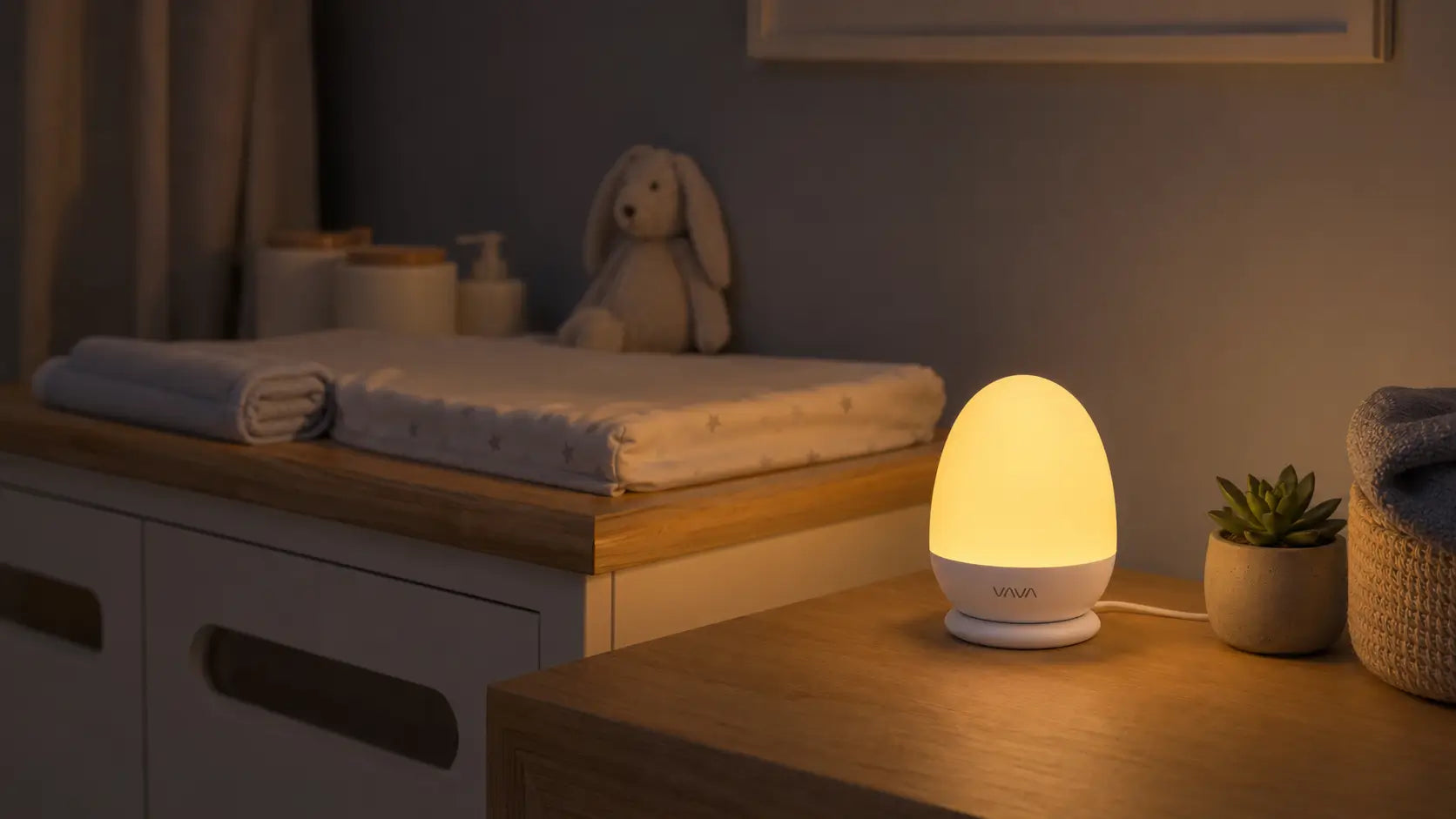
Your baby wakes up at 2 a.m., and you are half-awake with a bottle, diaper, or pacifier in hand. You need enough light to see what you are doing, but not so much that the whole nursery feels awake. The best night light for nursery use gives you a dim, warm glow, simple controls, and enough brightness for feeds, diaper changes, and quick check-ins.
The right choice depends on your routine, from portable silicone lights near the changing table to fixed wall lights, toddler-friendly animal lights, or light-and-sound options for bedtime. This guide will help you compare brightness, color, controls, materials, placement, and night light types, plus the common mistakes to avoid.

What Makes a Good Nursery Night Light?
A good nursery night light gives you enough visibility for feeds, diaper changes, and quick check-ins without turning the nursery into a fully lit room. Parents still need to see a diaper tab, pacifier, bottle mark, or crib area, but babies do not need bright light for nighttime care.
The best nursery night lights usually have these features:
- A Dim, Warm Glow: Warm amber, soft orange, or dim red tones usually feel gentler at night than cool white or blue-heavy light. The room does not need to stay pitch black, but the light should stay low enough for sleep hours.
- Adjustable Brightness: One fixed brightness level rarely works for every moment. You may need more light for a diaper change and much less for a feed or quick check-in.
- Safe, Easy-to-Clean Materials: Soft silicone lights are popular because they feel gentle, wipe clean easily, and are easier to grab during a night feed than a hard lamp.
- Portable or Safely Placed Design: A rechargeable light works well if you move between the feeding chair, changing table, hallway, or travel bag. A plug-in wall light can also work if you want a fixed glow that stays out of reach.
- Simple Controls: Tap controls, touch controls, simple dimming, or an auto-off timer can help you use the light without searching for tiny buttons in the dark.
The best choice is usually not the brightest light. It is the one you can keep low, adjust quickly, place safely, and use without making the room feel fully awake. If you are still planning the room setup, these nursery lighting tips can help with softer lighting and safer placement.

What Mistakes Should You Avoid When Choosing a Nursery Night Light?
A nursery night light should be soft enough for sleep hours and practical enough for real nighttime care. Before choosing one, watch for these common mistakes:
- Choosing a Light That Is Too Bright: A nursery light should help you see your hands, not light the whole room. Adjustable brightness is useful because you can keep the glow low for feeds and raise it slightly for diaper changes.
- Ignoring How Easy It Is to Control in the Dark: Tiny switches or confusing modes can be frustrating when you are half-awake. Tap controls, touch controls, or simple dimming are easier to use during night feeds and check-ins.
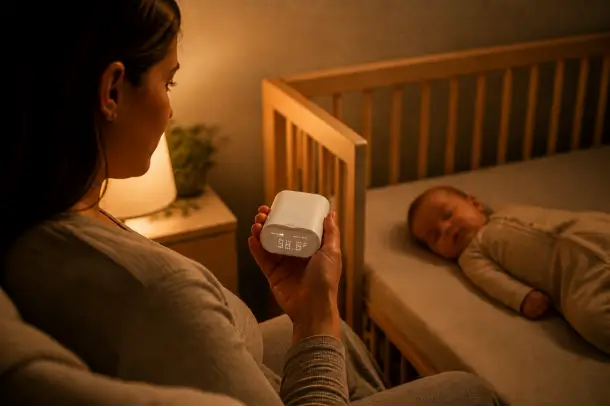
- Placing It Too Close to the Crib: Even a warm glow can bother your baby if it shines directly at their face. Aim the light toward the feeding chair, changing table, or walkway instead of the sleep surface.
- Only Looking at the Shape: A cute or soft design can be a plus, especially for a nursery, but it should still be easy to clean, stable, and comfortable to use during daily care.
For more setup basics, this guide to baby night lights covers useful dos and don'ts for nursery use.
Which Nursery Night Light Type Fits Your Routine?

The best nursery night light type depends on how you use the room at night. Some parents need a small portable light for feeds and diaper changes. Others want a fixed glow that stays out of reach, or a toddler-friendly light that can become part of bedtime.
- For Night Feeds and Diaper Changes: Portable Silicone Egg Lights: A portable silicone egg light is a strong fit if you move between a feeding chair, changing table, crib area, or hallway. Look for a warm glow, adjustable brightness, simple tap or touch controls, and a rechargeable battery.
- For Toddlers: Soft Animal Lights: A soft animal light can feel familiar and comforting for toddlers who like a small glow nearby. For younger babies, check the brightness, materials, and controls first instead of choosing by shape alone.
- For a Fixed Glow: Plug-In Wall Lights: A wall light or plug-in sconce can work well if you want the light out of reach and in one steady place. This type is less flexible for feeds and changes, but it can help mark a hallway or keep a soft background glow in the room.
- For Light and Sound Routines: Multifunctional Night Lights: Some nursery lights combine a dimmable glow with white noise, app controls, schedules, or bedtime routines. These can be useful if you want one device for several parts of bedtime, but they are not necessary for every family.
- For Fear of the Dark: Star Projectors: Star projectors are usually more useful as babies grow into toddlers or young children. They can make bedtime feel more familiar, but they are not the most practical choice for diaper changes or night feeds.
If you like the soft, portable feel of this category, a silicone baby nightlight is often easier to keep near a feeding chair or carry between rooms than a fixed lamp.
Why VAVA Night Light Works Well in a Nursery?

Nighttime care is easier when your light is soft, close by, and simple to adjust. If you are feeding your baby, changing a diaper, or looking for a pacifier in a dim room, you do not want to walk across the room for a bright lamp or tap through confusing settings while your baby is settling.
If that is the kind of nursery light you want, the VAVA Baby Night Light is worth considering. It fits the portable silicone egg-light category, with a soft glow you can keep near the feeding chair, move to the changing table, or carry into the hallway without turning on the overhead light.
Smooth touch control and adjustable brightness help when one hand is busy and you only need a little light for a quick check-in. For diaper changes, you can raise the brightness briefly, then dim it again when the room needs to feel calm.
VAVA also includes 8 color options, a rechargeable battery, and a 1-hour timer. The current product page lists up to 100 hours of battery life and toy-grade materials, which supports everyday nursery use without turning the section into a long feature list.
If your family wants more than one nursery lighting style, VAVA also offers a broader baby night light collection with options for bedside use, portable use, soft handheld use, and light-plus-sound routines.
Conclusion
The best night light for nursery use gives you enough light for feeds, diaper changes, and check-ins without making the room feel bright. Choose a warm, dimmable light with simple controls, easy-to-clean materials, and a design that fits your nighttime routine.
If you want one flexible option, a portable silicone night light is a strong place to start. You can keep it near the feeding chair, move it to the changing table, or take it with you for travel.
VAVA baby night lights fit this kind of routine with soft, rechargeable designs made for everyday nursery use. Choose the style that matches your room, keep the brightness low during sleep hours, and make the light work for your nights instead of the other way around.
FAQs
1. What Color Night Light Is Best for a Nursery?
A dim, warm-toned light is usually best for nursery use. Soft amber, orange, or red tones tend to feel gentler at night than bright white or blue-heavy light. Keep the brightness low for feeds, diaper changes, and check-ins.
2. How Bright Should a Nursery Night Light Be?
A nursery night light should be bright enough to help you see what you are doing, but not so bright that the room feels fully lit. Adjustable brightness is useful because you can keep the light low for feeds and raise it slightly for diaper changes.
3. Where Should I Put a Night Light in the Nursery?
Place the night light near the area where you need visibility, such as the feeding chair or changing station. Avoid putting it inside the crib or shining it directly at your baby's face. A stable surface near the care area usually works better than placing the light near the sleep surface.
4. Is a Portable Night Light Useful for Nursery Care?
Yes. A portable night light is useful if you move between the feeding chair, changing table, hallway, or travel bag. It lets you keep a soft glow nearby without depending on one outlet or turning on the overhead light.
5. What Features Should I Look for in a Nursery Night Light?
Look for a warm glow, adjustable brightness, simple controls, easy-to-clean materials, and a rechargeable design if you want portability. These features make the light easier to use during night feeds, diaper changes, and quick check-ins.
Share: