


A night light for night feeds should help you see your baby and what you’re doing. When you’ve got your baby in your arms, you also want the controls within easy reach. Adjustable brightness helps, too. You can keep the light low for a feed and turn it up when you need a clearer view during a diaper change.
So, which light will work for you? Let’s look at the options, how to choose the color and brightness, and where to put it for feeds and diaper changes.

Which Type of Night Light Works Best for Night Feeds?
A portable rechargeable light works well when you feed and change your baby in different places or don’t have an outlet nearby. A light that stays plugged in can be convenient if you usually use it in one spot with an outlet within reach. Some baby night lights also include built-in sound if you’d like both in one device.
Portable Rechargeable Lights
You might feed beside your bed, then head across the room for a diaper change. A small rechargeable light can come with you, so you don’t need a lamp beside every place you use. Once charged, it can sit where you need it without a power cord tying it to an outlet.
That flexibility is handy away from home, too. In a guest room with unfamiliar switches and furniture, you can bring your usual light and keep it nearby.

Lights That Stay Plugged In
If you usually feed or change your baby in the same spot and have an outlet nearby, a light that stays plugged in can be convenient. You can leave it ready to use without remembering to recharge it.
Where you put it depends on the outlet and how far the cord reaches. If there’s no outlet near your feeding chair or changing table, a rechargeable light gives you more freedom to place it where you need it.
Night Lights with Sound
A night light with white noise can be convenient when you want both light and sound beside the same chair or table. The VAVA Egg Baby Night Light Plus, for example, includes lighting and built-in sound options in one unit.
If you’d rather leave the sound playing while you take the light to the changing area, separate devices give you that flexibility. The VAVA Portable White Noise Machine is an option to pair with your night light. It also lets you add sound if you already have a lamp you like.

What Color and Brightness Should You Use at Night?
The NHS recommends keeping lights low during nighttime care. You don’t have to use the lowest setting on your lamp. Adjust it until you can clearly see your baby and what you’re doing, without lighting up the whole room.
Warm White, Amber, and Red Light
For night feeds and diaper changes, we recommend a dimmable warm-white or amber light. Warm white gives you a familiar, yellowish light for everyday care, while amber is an option if you prefer an orange-toned glow.
Red is another nighttime option, and Cleveland Clinic includes red and amber in its night-light guidance. You don’t need a red-only lamp for this routine, though. A warm-white or amber setting that you can dim gives you a practical place to start.

Enough Light for Feeding and Changing
Being able to find the wipes is one thing; seeing clearly enough to finish cleaning your baby is another. During a change, you need to see the area you’re cleaning and the diaper fastenings, not just the outline of the changing pad.
Small print and bottle markings may need additional light. You can use more light for that part of the job, then lower it again afterward. There’s no need to struggle to read a label just to keep the room dim.
Sometimes the problem is a shadow rather than the brightness setting. If the whole area is hard to see, more light may help. But when your hand or body blocks one spot while everything around it is clear, changing the lamp’s position may give you a better view without making the whole room brighter.
Which Features Make a Night Light Easier to Use?
For night feeds, we recommend a light you can switch on with one hand, without having to reset the brightness each time. A charging indicator helps you see when it needs a charge. An optional timer can be handy, too: you can let the light turn off automatically or keep it on until you’re finished.
Controls You Can Use with One Hand
When one hand is busy holding your baby, you want the other to handle the light without much thought. A clearly defined touch area or an easy-to-find button makes more sense than having to work through several modes.
The VAVA Baby Night Light is a good fit here. In warm-light mode, you can adjust the brightness by touching the top and double-tap to put it into standby. Those simple actions let you adjust the light beside you without reaching for your phone or searching for a small switch.
Touch, squeeze, and button controls can all be practical. When comparing other lamps, notice whether you can operate them where they sit or need to pick them up and turn them over. A product demonstration can tell you more about that than the words “easy to use.”

A Night-Light Mode for Quick Checks
When you just want to check on your baby, a dedicated night-light mode gives you a setting to use without adjusting the brightness each time.
VAVA Baby Night Light lets you activate this mode by holding the top for 1.5 seconds while in warm-light mode. When you need a clearer view for feeding or a diaper change, its adjustable warm lighting lets you choose the brightness that works for you.
Charging, Battery Life, and Timers
It helps to know how long a full charge takes, especially if you plan to plug the lamp in during a daytime break. A visible charging indicator also makes it easier to tell when it’s ready. VAVA Baby Night Light can be used while charging, so you can still use it if you need the light before you’ve finished charging it.
Battery-life figures need a little context. A runtime measured at the dimmest setting won’t tell you how long the lamp lasts at a brighter level. When comparing models, check which brightness or mode each figure refers to.
For automatic shutoff, we’d choose a timer you can turn on when you want it. VAVA’s optional one-hour timer lets you set the light to switch off after 60 minutes. On nights when you’d rather switch it off yourself, you can leave the timer unset.
If your lamp also plays sound, check what the timer turns off. You may want the light to go out while the sound keeps playing.
If you’re new to using white noise for babies, our guide explains how to choose the volume, device placement, and run time.

Where Should You Place the Light for Nighttime Care?
Once you’ve chosen a light, set it up where you’ll actually use it. Start with your usual feeding spot, then check the changing area. A few minutes before bedtime can save you from reaching around for the lamp with your baby in your arms.
If you’re still deciding where the chair and changing table should go, our nursery setup guide covers furniture placement and keeping supplies within reach.
At Your Feeding Chair or Bedside
A stable side table or bedside table is a good starting point. Keep the lamp close enough to reach comfortably from your usual feeding position, with the light falling across your lap and the supplies beside you.
Before the first night, sit down as you would for a feed. Can you reach the controls without leaning or twisting? Is the lamp shining into your eyes? You may find that moving it slightly to one side gives you a more comfortable view. It’s much easier to make that adjustment now than while you’re holding your baby.
At the Changing Table
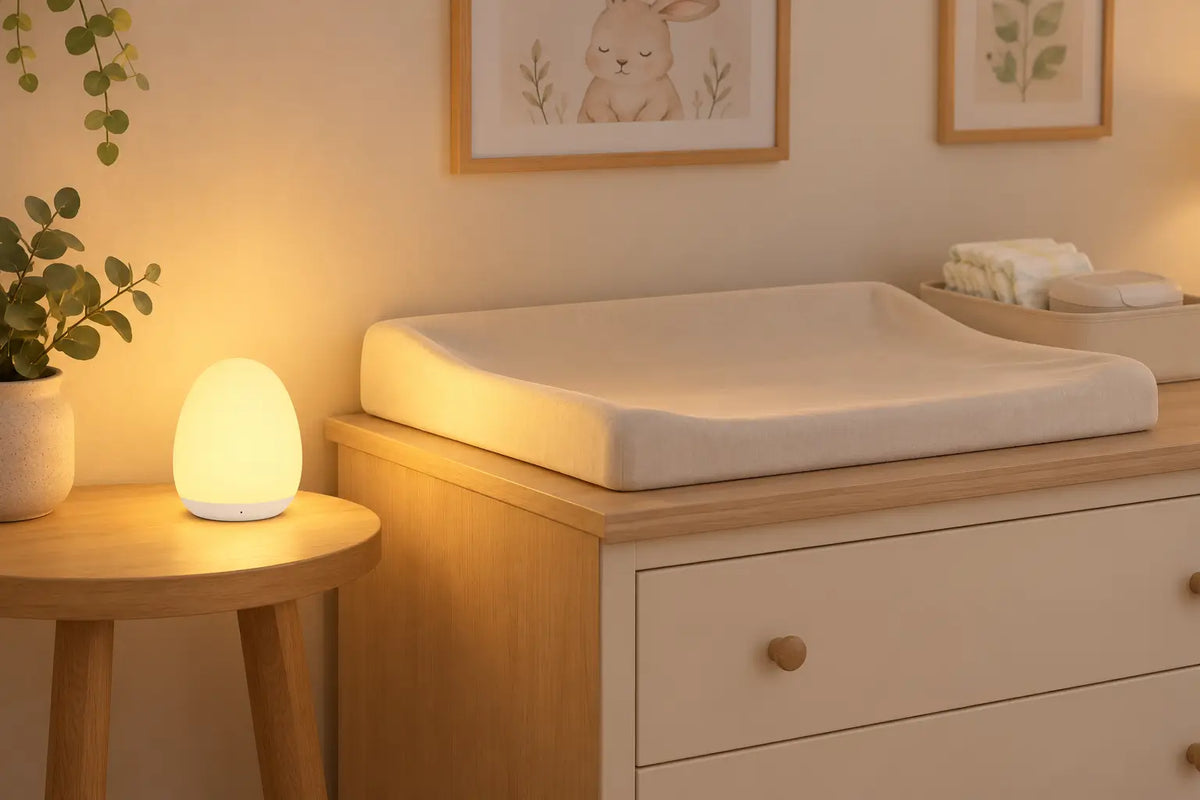
Try placing the lamp to one side of the changing area, where it can light the pad without getting in your way. Directly behind you is often less useful, because your body can block the light when you lean over.
Before bringing your baby over, stand where you normally change them and make sure the changing pad, wipes, and clean diaper are all easy to see. Keep those supplies within your reach but out of your baby’s reach. The American Academy of Pediatrics’ changing table guidance recommends keeping one hand on your baby and never leaving them unattended. If the light needs adjusting during a change, stay with your baby and keep that hand in place.

Keeping the Light and Cords Out of the Sleep Space
Even a small, soft night light belongs outside the crib or bassinet. Following the NIH’s safe sleep guidance, keep your baby’s sleep space clear, with only a fitted sheet covering the firm, flat mattress.
Give the lamp its own stable surface instead of resting it on your bed, feeding cushion, or the changing pad. If it’s plugged in or charging, keep the cord out of your baby’s reach and away from the crib. Keep the lamp away from bedding and curtains, too.

Conclusion
Whether you’re feeding your baby, changing a diaper, or checking on them during the night, you need enough light to see what you’re doing and controls that are easy to reach. The VAVA Baby Night Light brings together rechargeable portability, warm-mode touch dimming, and double-tap standby. You can take it where you need it, keep the glow low for a quick check, and turn it up for a diaper change. When you’re done, a double tap puts it back into standby.
FAQs
1. Do You Need to Leave a Night Light on All Night?
No. Turn it on when you need it and switch it off when you’re finished. If you need a little light to move around between checks, you can leave a dim light on. You don’t need to keep it running simply because your baby may wake again.
2. Can You Use a Phone Flashlight for Night Feeds?
Yes, for occasional use. Try aiming it at a nearby wall rather than directly toward your baby’s face. Holding a phone can become awkward during a feed or diaper change, though. For regular nighttime care, a lamp that stands on its own leaves your hands free.
3. What If the Lowest Brightness Setting Is Still Too Bright?
Try moving the lamp farther away or, if its head adjusts, directing it toward a wall. Don’t cover it with fabric to reduce the light. If it still feels too bright, look for a model with a lower minimum brightness. A lamp can be dimmable and still be brighter than you want at its lowest setting.
4. Is a Motion-Activated Night Light Useful for Nighttime Care?
It can be useful for finding your way through a doorway or hallway. For feeding and changing, we’d choose a light you can also control manually. A motion-only light may switch off when you sit still or turn on when someone walks past, so check whether you can keep it on for as long as you need.
5. Will a Night Light Stop Your Baby from Waking Up?
Don’t expect a night light to prevent night waking. Its job is to help you see when your baby needs attention. Babies wake for many reasons, including feeding, and their sleep patterns change as they grow. The NHS’s baby sleep guidance explains these changes. Choose the light for easier nighttime care rather than a promise of longer sleep.
6. Can You Keep Using the Night Light After Night Feeds End?
Yes. It can still be useful for bedtime stories, nighttime checks, or trips to the bathroom as your child grows. If your child will operate it themselves, check the manufacturer’s age guidance and instructions first. A light marketed for a nursery isn’t automatically intended for children to handle or play with.

Share: