

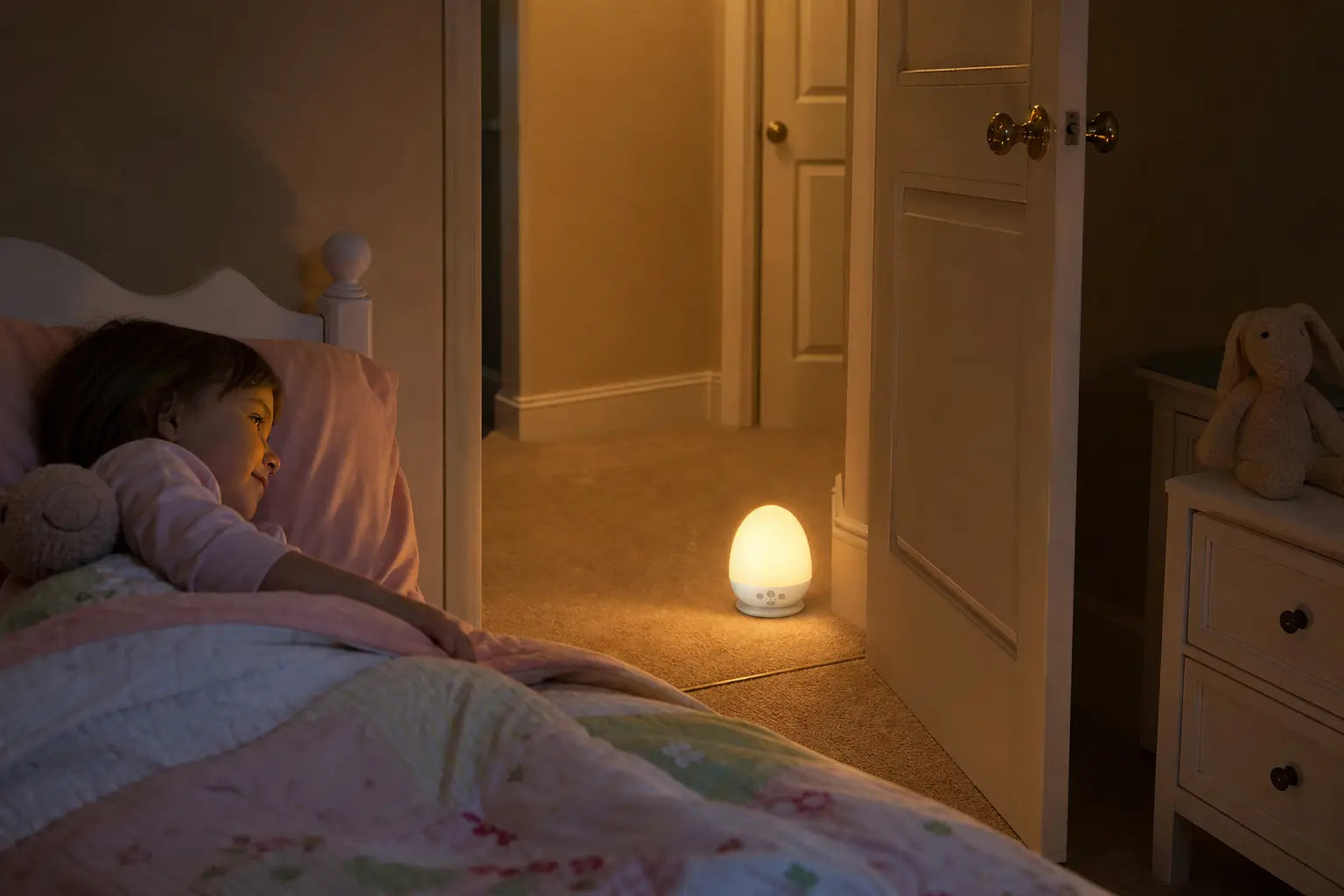
At 2 a.m., you may be trying to read the bottle markings, find a clean diaper, and keep the room from feeling fully awake. A few years later, the hard moment may be a child standing at the bedroom door because the hall looks too dark. For an older child, it may be nothing more dramatic than finding the bathroom without switching on the overhead light. A night light for kids can help with all three moments, but the right setup changes as your child grows.
For a baby, the light is mostly for the adult doing the care. For toddlers and preschoolers, it can be one small, familiar part of settling in for the night. For school-age children, it may simply make a known route easier to see. This guide helps you match the light to the moment, then compare the formats and features that make sense for your home.

What Should a Baby Night Light Help You Do at Night?
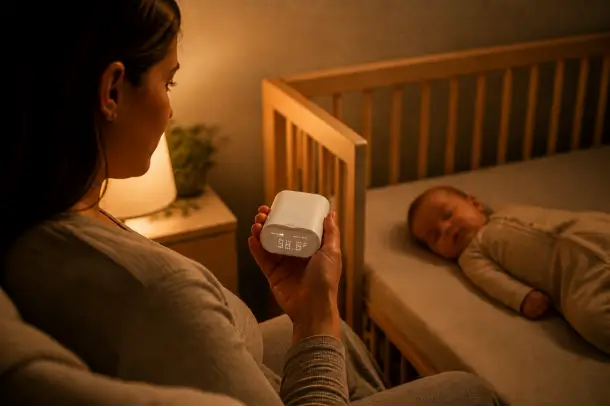
For a baby, a night light should make the adult's shortest overnight tasks less fumbly. That might mean checking a bottle before a feed, finding the wipes during a diaper change, or seeing the edge of a chair as you sit down. The useful choice depends on who is awake and where the supplies are. A parent feeding in one chair may need a light that can be reached without standing up. In a shared room, the priority may be a small, local source rather than light across the whole room. If two adults take turns, controls that make sense when you are half awake can matter more than decorative settings.
For Feeding and Changes: Keep the Light Where Your Hands Are
Start with the care station, not the crib. Place the light where you can see the bottle, diapers, and your path without searching for a switch across the room. The American Academy of Pediatrics recommends keeping overnight feeding and care calm, quiet, and dim. Keep the light at the care spot; the baby's sleep space follows its own safe-sleep guidance. In practice, that makes placement, reach, and simple controls more useful selection criteria than a lamp's shape or a long list of colour modes.
For a related nursery overview, see safe baby sleep environment.

For a Shared Room or Changing Routine: Choose the Simplest Useful Setup
Some families feed in the nursery, then finish settling in a bedroom chair. Others keep the changing supplies in one place but use a hallway light for the walk back. A portable light can fit the first pattern; a fixed light may be easier for the second. The important question is not whether one format is better in general. It is whether the light stays close to the adult's actual task and can be used without adding another step to an already repetitive routine.
If you are also planning for transitioning your baby into their own room, reassess where nighttime care and the return-to-bed route will happen.
If feeds and settling both happen in one spot and you want light and sound controls together, a combined model can be worth considering. Compare the exact model's light controls, sound options, timer settings, and charging method before deciding.
For more nursery-specific placement and feature guidance, see Best Night Light for Nursery: How to Choose the Right One.
Why There Is No One 'Best' Setting for Babies
Research supports being thoughtful about the nighttime environment, but it does not give every family one magic brightness or colour. In a prospective study of 313 infants, a parent-reported non-dark sleep environment at one month was associated with less nighttime sleep at six months; the study cannot show that a particular night light caused that result. A separate 2026 laboratory study of 25 night lights found wide variation across product types and settings. Use those findings as a reason to keep the light task-focused and to check the actual model's controls, placement, and power setup rather than relying on a universal setting.
How Can a Night Light Help a Toddler or Preschooler at Bedtime?
For toddlers and preschoolers, a night light can make one specific part of bedtime feel less daunting: the moment the main light goes off, the dark doorway, or the short space between their bed and the hall. It is an optional comfort tool. The most useful setup gives the child one familiar point of reference without turning bedtime into a brighter, more stimulating activity.
When Darkness Feels Worrying, Give the Child One Familiar Reference Point
A child who calls for you as soon as the room goes dark may not need a lamp beside the bed. The American Academy of Pediatrics suggests a night light in the hall near the door for a child who is fearful of darkness. That placement can make the doorway feel recognizable while keeping the light outside the immediate sleep area.
The concern may also be the room itself rather than the route. Stanford Children's Health includes a nightlight or small lamp among the options for a child who is scared of the dark. Start with the exact moment that is difficult: lights-out, looking toward the doorway, or waiting for a parent to finish the goodnight routine. The answer tells you where the light belongs.
Match the Placement to the Bedtime Problem
If your child watches the bedroom door after you leave, try a small light near the doorway or in the hall. If they become uneasy only during the few minutes between story time and sleep, a dim light that stays in the same place in the bedroom may be enough. If the concern is a bathroom trip, the route - not the bedside - is the place to assess first.
This is why a large projector or a lamp with many colour modes is not automatically the better choice for this age. A simple, fixed light can be easier for a child to recognize and for an adult to keep in the same place every night.
Make the Light Part of a Consistent Goodnight Sequence
The light helps most when it has a clear, repeatable role. The American Academy of Pediatrics recommends a consistent, calm bedtime routine for toddlers. For example: story, goodnight, night light on, then the usual exit from the room. The child learns what to expect, and the parent does not need to decide anew each evening whether to add another lamp, change its colour, or move it closer.
For a broader routine guide, see How to Set a Baby Sleep Schedule and Pattern.
If the fear is growing, changing quickly, or disrupting daytime life as well as bedtime, keep the familiar bedtime routine, then consider discussing the broader concern with the child's pediatrician or another qualified professional.

How Can a Night Light Help a School-Age Child at Night?
For a school-age child, a night light is usually a practical tool for a short, familiar nighttime task: getting to the bathroom, finding a water bottle, or returning to bed without switching on the main room light. At this age, the best choice is less about creating a comforting atmosphere and more about giving the child a route and controls they can use independently.
Start With the Route Your Child Actually Uses
Look at the path from the bed to the place your child goes after lights-out. If it is always the same bathroom door, a fixed light near the bedroom exit or along the hallway may be enough. If the child needs to find something beside the bed, the useful light may be closer to that spot instead.
This distinction prevents an easy mismatch: choosing a bedside lamp when the difficult part is the dark hall, or buying a portable light when a simple, always-on route marker would be easier to find every night.
Choose Controls a Child Can Use Without Help
A school-age child should be able to understand what happens when they press the control. Look for a straightforward on-and-off action, a predictable place for the light, and settings that do not require remembering several steps in the dark.
Before choosing a portable model, ask whether your child really needs to carry it. A portable light can be useful when the task changes between rooms, but it also needs to be returned, charged, and found again. For one regular route, a fixed setup is often simpler for everyone.
Let the Routine Decide When the Light Is Still Useful
Keep the light only while it still solves a real nighttime need. If your child can already get to the bathroom and back without it, you can remove it or move it elsewhere. If they still need a little visibility on one regular route, a simple light in the right place may be enough.

Which Night Light Format Fits Your Child's Age and Routine?
The right format changes as your child grows. For babies, the light is mainly for an adult handling care. For toddlers and preschoolers, it is usually a small, familiar comfort cue. For school-age children, it is more often a simple tool for a known nighttime route.
|
Child's age and main need |
Who uses it |
Format to consider |
What to check |
|
Baby: feeding, changing, or settling at one regular care spot |
Adult |
Fixed bedside or nursery light |
Can you reach the controls from the chair or changing area? Does its power setup work in that location? |
|
Baby: care regularly moves between rooms |
Adult |
Portable rechargeable light |
Is it easy to carry, charge, and place near the supplies or chair you use? |
|
Toddler or preschooler: the dark doorway or lights-out feels worrying |
Child and adult |
Small fixed light near the door, in the hall, or in one consistent bedroom spot |
Does the placement address the difficult moment without adding a bright new focal point to bedtime? |
|
School-age child: a regular trip to the bathroom or water bottle |
Child |
Simple fixed bedroom-exit or hallway light |
Can the child find and operate it without needing to remember several controls? |
|
Baby care routine: you want light and sound controls in one place |
Adult |
Light-and-sound model |
Does the exact model include the brightness, sound, timer, and charging setup you will actually use? |
The format should follow the age-specific job. A portable light can make sense for an adult moving between rooms with a baby, but add little value for a school-age child who follows the same hallway to the bathroom every night. Likewise, a combined light-and-sound model may suit one care station but is unnecessary when an older child only needs a clear route.
For a wider developmental reference, see Baby Sleep Schedule by Age: Nap and Sleep Chart.
When Does a Light-and-Sound Night Light Make Sense for Baby Care?
A light-and-sound model makes sense when overnight feeding, changing, and settling usually happen in one reliable place and the adult wants both controls within reach. It is most relevant for baby care, where a parent may be sitting in the same chair, checking supplies, and settling the baby several times in one night. If you only need to see a hallway or a child's route to the bathroom, a simple light is usually the more relevant format.
Keep Both Controls at the Same Care Spot
Think about the surface beside the feeding chair or changing table. If you already use sound as part of that routine, a combined unit can keep brightness, sound, and timer controls in one place instead of spreading them across separate devices. The practical benefit is fewer separate controls to locate during repeated overnight care.
For example, the VAVA Egg Baby Night Light Plus currently lists adjustable light, 18 built-in sounds, timer settings, and a rechargeable battery. Those details make it relevant to a parent who wants light and sound at one fixed care station. They are features of this specific model, not a standard to assume across all children's night lights.

Check the Features You Will Actually Use
Before comparing combined models, decide what belongs in your routine. A parent who only turns on a low light for diaper changes may not need built-in sounds or multiple timers. A parent who uses both during feeds and settling should check the exact model's brightness controls, sound selection, timer options, charging method, and whether those controls can be reached from the care spot.
This keeps the choice age-appropriate. A combined model can be useful for an adult caring for a baby; it is not automatically a better option for a toddler who needs a familiar light near the doorway or a school-age child who only needs to see the hall.
To compare the broader range by use case, browse VAVA baby night lights.
Before You Buy: One Final Check
Match the light to your child's age and the specific nighttime need, then verify the exact model's controls, charging method, and included features on its current product page.
FAQs
1. Can I use a night light for late-night feeds and diaper changes?
Yes. Put the light where the adult needs to see the bottle, diapers, wipes, or path back to the chair. The American Academy of Pediatrics recommends keeping overnight feeding and care calm, quiet, and dim. Choose a light you can reach from the care spot, while keeping the baby's sleep space separate from the care setup.
2. What should I check before buying a baby night light?
Check where overnight care usually happens first. If feeding and diaper changes stay at one chair or changing table, look for controls you can reach from that spot. If care often moves between rooms, check whether the light is easy to carry, charge, and place near the supplies you use.
3. Where should I place a night light for a child who is scared of the dark?
Start near the bedroom door or in the hall. The American Academy of Pediatrics suggests a hall night light near the door for a child who is fearful of darkness. If the child worries about the doorway, that placement may be more useful than a bright lamp beside the bed.
4. What type of night light is best for each age?
For a baby, choose around the adult's care routine: a fixed light for one regular chair or changing area, or a portable one if care moves between rooms. For a toddler or preschooler, a small fixed light near the doorway or hall may suit a specific fear of darkness. For a school-age child, a simple fixed light can make a regular route to the bathroom easier to see.
5. Should I choose a plug-in or rechargeable night light?
Choose a plug-in or fixed light when it will stay in one reliable place, such as a hallway or beside a regular care station. Choose a rechargeable light when the adult genuinely needs to carry it between rooms. Before buying, check the exact model's charging method and whether it will be easy to return to the same place after use.
6. Can I leave a child's night light on all night?
You can if it serves a consistent purpose, such as giving a toddler a familiar reference point near the door or helping an older child see one regular hallway route. A care light used only for a feed or diaper change does not need to stay on after that task is finished. Match the setup to what the child or adult actually needs overnight.
7. Do all kids' night lights include white noise?
No. Some models provide light only; others combine light, sounds, timers, or other controls. Check the current page for the exact model rather than assuming that a feature listed for another product or collection applies to it.
8. Can a night light make my child sleep better?
A night light may make a particular nighttime moment easier, such as adult care, a dark doorway, or a bathroom route. It should not be treated as a guaranteed sleep solution. In a prospective study of 313 infants, a parent-reported non-dark sleep environment at one month was associated with less nighttime sleep at six months. This was an observational infant study, so it cannot show that a particular night light caused the difference or predict the result for older children.
Share: