


It's 2 a.m., and you're rocking your baby back to sleep for the fourth time tonight. You love the quiet cuddles, but you're also wondering how much longer you can keep this up.
Sleep training is the process of helping your baby learn to fall asleep, and fall back asleep, with less hands-on help from you. It does not guarantee a baby who sleeps twelve hours straight, and it doesn't mean ignoring your baby's needs. It means giving your baby the chance to practice settling, while you stay responsive in a way the whole family can sustain.
This guide walks through when babies are usually ready, five common methods, how to build a plan before night one, what the first two weeks tend to look like, and when to pause or call your pediatrician.

What Does Baby Sleep Training Actually Help With?
Sleep training helps with one specific thing: how your baby moves from awake to asleep. If your baby can only drift off while being rocked, fed, or held, they will usually need the same help every time they surface between sleep cycles at night. That's normal behavior in the early months. Around the middle of the first year, though, many babies become capable of linking those cycles with less help.
In practice, families usually notice three changes. Bedtime gets shorter and calmer, because your baby is no longer waiting for a long wind-down ritual to finish. Night wakings get easier, because your baby can often settle back without a full reset. And evenings get more predictable, which matters a lot when you're running on broken sleep yourself.
What sleep training doesn't do is just as important. It won't stop every night waking. Babies still wake when they're hungry, teething, sick, or in the middle of a developmental leap. It also isn't a test of your parenting, and choosing not to sleep train is a valid choice too. The American Academy of Pediatrics describes learning to fall asleep independently as one part of healthy sleep habits, not a requirement.
When Is a Baby Ready for Sleep Training?
Most families start thinking about sleep training somewhere between 4 and 6 months. That window isn't a deadline. It's simply when many babies begin to develop more regular sleep patterns and can go longer between feeds at night.
Age gives you a rough frame, but your baby's actual patterns matter more. A baby may be ready when bedtime happens at roughly the same time most nights, night feeds have settled into a predictable rhythm, and your baby can sometimes drift off outside your arms, even if it's only once in a while. Just as important: the adults who handle bedtime feel able to follow the same calm response, night after night.
As the NHS points out, newborn sleep is erratic at first, and more regular patterns take time to emerge. If your baby was born prematurely, count from their due date when you think about readiness, and check with your pediatrician first. The same applies if feeding, weight gain, or any health concern is still being watched.
Not sure where your baby's sleep sits right now? A typical newborn sleep schedule shows how patterns usually develop over the first year, which can help you decide whether to start now or wait a few weeks.

Which Baby Sleep Training Method Fits Your Family?
There's no single "best" method. There's the one you can actually repeat calmly at 3 a.m. All five approaches below share the same goal: your baby learns to settle with less help. They differ mainly in how much crying you're comfortable with, and how quickly you want things to change.
Bedtime Fading
You start by putting your baby to bed at the time they naturally fall asleep, then gradually move bedtime earlier in small steps. Because your baby goes down when they're genuinely drowsy, there's often very little crying at the start. It suits families who want the gentlest possible pace and don't mind slower progress.
The Chair Method
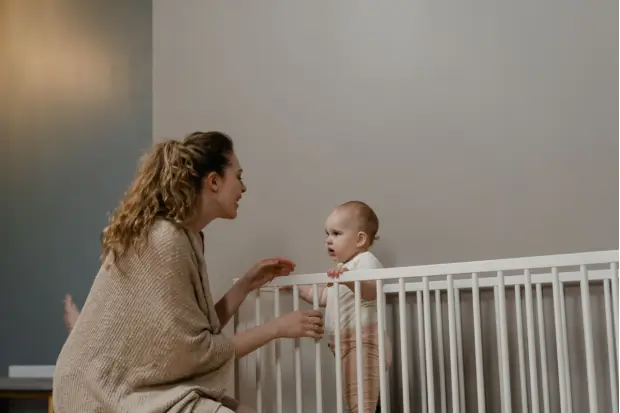
You put your baby down awake, then sit in a chair next to the crib while they fall asleep. Every few nights, you move the chair a little farther away, until you're out of the room. Your presence is the reassurance. It works well for babies who get more upset when you leave, though it asks for real patience, since some babies take a while to fall asleep with a parent sitting nearby.
Pick-Up/Put-Down
When your baby cries, you pick them up and soothe them, then put them back down while they're still awake. You repeat this as many times as needed. It's very hands-on and can feel endless on the first nights, but some parents find it the most comfortable middle ground.
The Ferber Method
You put your baby down awake, say goodnight, and leave the room. If your baby cries, you wait a short, planned interval before going back in for a brief check, a few quiet words without picking up, then leave again. The waiting intervals slowly stretch over the nights. The American Academy of Sleep Medicine counts graduated check-in approaches like this among the behavioral treatments shown to work for bedtime problems and night wakings.
Cry It Out
After your bedtime routine and a final check that your baby's needs are met, you put them down and don't return until the next planned feeding or morning. Of the five, this involves the most crying up front, which is exactly why some families rule it out, and why others choose it: it's usually the fastest, and there's no repeated in-and-out to confuse the baby.

Whichever direction you lean, consistency matters more than the label. Switching methods every few nights tends to confuse babies more than any single approach does.
How Do You Make a Sleep Training Plan Before Night One?
A little preparation makes the hard nights much easier. Before you start, work through these few decisions together.
Pick your start night wisely. Choose a stretch when the next few days look ordinary: no travel, no vaccinations scheduled, no big visitors. Many families do better starting on a weekend, or whenever the morning pressure is lowest.
Agree on the method and the words. Decide which approach you're using, who handles which nights or which wakings, and what your check-in phrase will be. Two different responses on alternate nights can quietly undo each other's work.
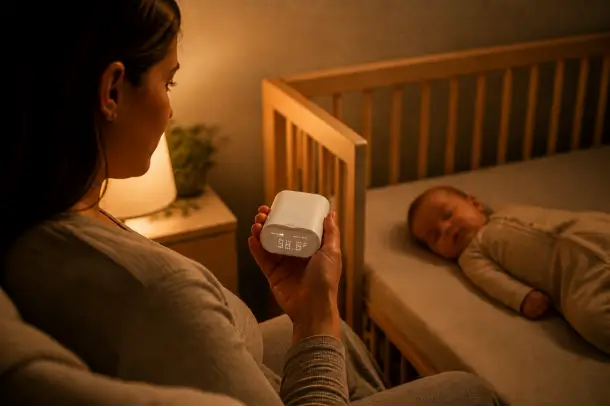
Set up the room. A dark, quiet, comfortably cool room removes a layer of variables you don't want to troubleshoot at midnight. Many families keep a dim, warm baby night light by the changing area for feeds and check-ins, so the room never has to fully light up, plus steady white noise if household sounds are an issue.

Know your baby's daytime rhythm. An overtired baby fights sleep harder at night, so it helps to keep naps and wake windows roughly age-appropriate while you train. A baby sleep schedule by age is a useful reference point while you find your baby's rhythm.
Write the plan down. One page is enough: the method, the check-in intervals if you're using them, who does what, and what counts as a reason to pause. When you're tired and second-guessing yourself, the page decides, not the moment.
What Should You Expect During the First Two Weeks?
The honest answer: progress is rarely a straight line, but there is a common shape.
The first few nights are usually the hardest. Crying often peaks early on as your baby protests a change they don't understand yet. This is the point where most plans fall apart, not because the method isn't working, but because the adults run out of resolve before the learning has had time to happen.
Many families see the first real shift within the first week: bedtime crying shortens, settling takes less time, or a night waking disappears. During the second week, the change usually becomes more consistent. Not perfect, but noticeably easier than where you started.
A few habits help you see what's actually happening:
Watch the trend, not the night. One rough night after three good ones isn't a failure. It's a normal part of learning, and what matters is the direction across the week.
Keep simple notes. Jot down when your baby went down, how long settling took, and how many times they woke. Patterns are much easier to trust on paper than in memory at 4 a.m.
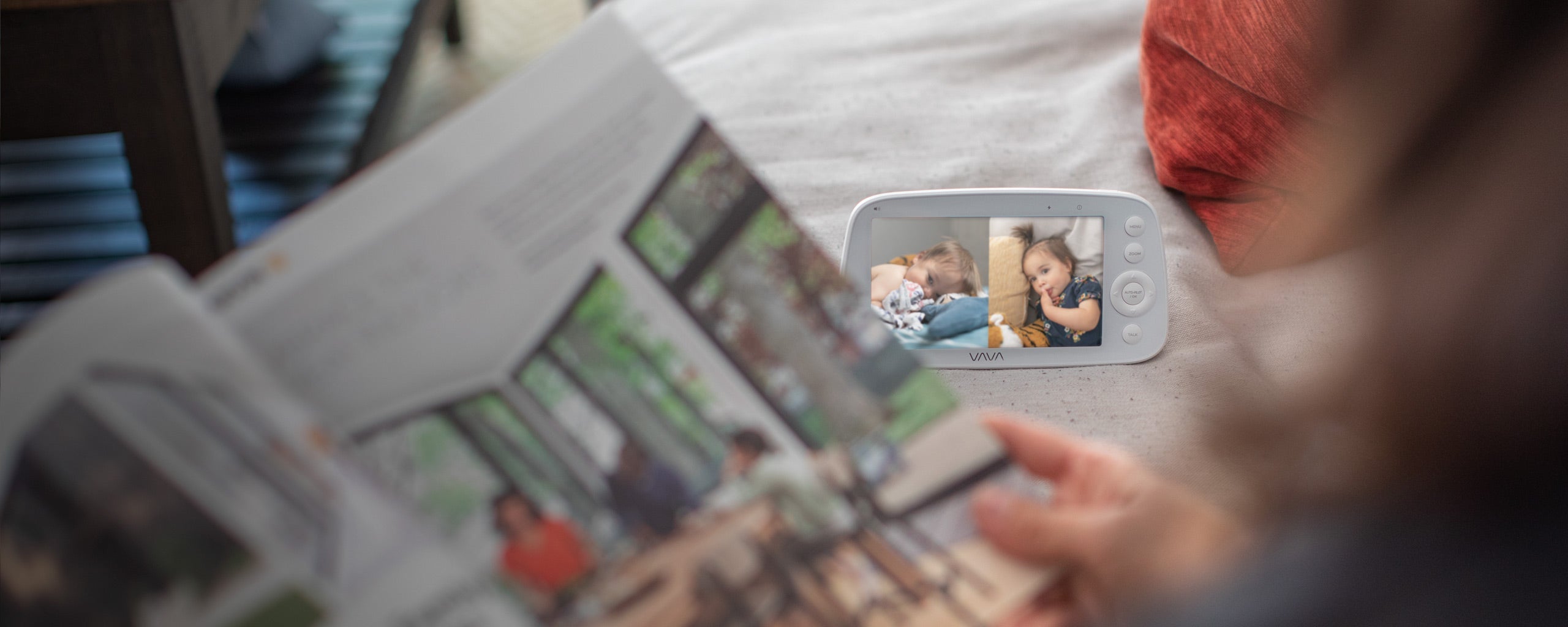
Use your tools. A video baby monitor lets you check that your baby is safe and settling without opening the door and resetting the clock. Here's more on how a baby monitor can help enforce a sleep routine.

Research backs this timeline up. In studies of behavioral sleep methods, most improvement shows up within the first one to two weeks of consistent use. If two consistent weeks bring no change at all, that's useful information too. It usually means something in the plan needs adjusting, not that your baby can't learn.
When Should You Pause, Change the Method, or Call the Pediatrician?
Pause the plan when life gets in the way. Illness, teething pain, travel, or a big routine change can all temporarily wreck good sleep habits. The right move is to respond to your baby, get through the disruption, and restart the plan when things settle. You don't lose the progress you've made.
Change the method when the fit is wrong, not when one night goes badly. Signs of a wrong fit: crying keeps escalating week over week instead of shortening, you dread bedtime so much you can't stay consistent, or the plan regularly falls apart at the first waking. Moving one step gentler, or one step more structured, is an adjustment, not a failure.
Call your pediatrician before or during sleep training if anything sits outside ordinary sleep struggles: poor weight gain or feeding concerns, breathing that sounds labored or unusually noisy at night, possible reflux or allergy issues, or crying that seems like pain rather than protest. Loud, persistent snoring or pauses in breathing are worth mentioning specifically. The AAP recommends asking about them, since sleep-disordered breathing needs its own evaluation.
What Safe-Sleep Rules Still Apply During Sleep Training?
All of them. Sleep training changes how your baby falls asleep. It doesn't change where, or on what, they should sleep.
The CDC's safe-sleep guidance stays exactly the same during training: place your baby on their back for every sleep, on a firm, flat mattress in a crib or bassinet, with no loose blankets, pillows, bumpers, or soft toys in the sleep area. Room-sharing without bed-sharing remains the recommended setup for at least the first six months.
Two practical points matter once training starts. First, "drowsy but awake" means putting your baby down awake enough to notice where they are. That's the whole mechanism, and they still go down on their back, every time. Second, if your baby falls asleep during a feed or in your arms during a night waking, just move them back to their own sleep surface when you can. Perfection isn't the standard. The safe setup is.
Does Sleep Training Harm Attachment?
This is the worry that keeps many parents from ever starting, so it deserves a direct answer: the research we have does not show that sleep training harms babies or the bond you share with them.
In a randomized controlled trial published in Pediatrics, babies whose families used graduated check-ins fell asleep faster and woke less at night, and their mothers' stress levels improved, with no differences in infant stress markers or attachment measures compared with the untrained group. A five-year follow-up of a similar trial found no lasting differences between children who had been sleep trained as babies and those who hadn't, in behavior, sleep, or the parent-child relationship. A broader 2022 review of infant sleep interventions reached the same overall conclusion: these methods improve infant sleep without evidence of harm.

It's also worth remembering what attachment is actually built from: thousands of warm, responsive moments across the whole day. Feeding, playing, comforting, talking. A bedtime routine where your baby learns a new skill, with a parent who is calmer and better rested during the day, fits inside that picture.
Conclusion: Start With One Sustainable Change
If you've read this far, you're probably more tired than you'd like to admit, and quietly hoping someone will tell you it's okay to want sleep. It is.
Sleep training isn't about being tough on your baby. It's about deciding that your whole family deserves rest, and giving your child the chance to discover they can do something new. Some nights will test your resolve. Most will be easier than you feared. And one evening soon, you'll put your baby down, say goodnight, and walk out while they settle themselves, and it will feel ordinary, which is exactly the point.
Start small. Pick the method you can actually stay calm through, set up the room tonight, and give the plan a fair week. A baby monitor to check in without opening the door, and a warm night light for the feeds that remain, are small tools that make the long nights shorter.
You've already done the hard part: you care enough to get this right.
FAQs
1. Do both parents need to use the same method?
Yes, at least for the same stretch of nights. Babies learn from patterns, and two different responses teach two different lessons. If one of you finds the crying hard to handle, it usually works better to split nights or wakings than to each do bedtime your own way.
2. What if check-ins seem to make my baby more upset?
That happens for some babies. Seeing you leave again can be harder than not seeing you at all. If brief check-ins reliably wind your baby up instead of reassuring them, a more hands-off approach may actually be kinder for your child. It's a common reason families shift from Ferber-style check-ins toward the chair method or a cleaner break.
3. Should I start with naps or with bedtime?
Bedtime, almost always. Sleep pressure is highest at night, the environment is darkest and quietest, and success there usually spills over into naps on its own. Trying to train naps first tends to frustrate everyone.
4. What if my baby falls asleep during the bedtime feed?
Just wake them gently, a diaper change or a few words usually does it, and put them down awake enough to notice the crib. It won't be perfect every night, and that's fine. You're aiming for a pattern, not a flawless record.
5. We had to stop for illness or travel. Do we start over?
You restart the plan, but it rarely feels like day one again. Babies who already learned the skill usually get it back within a few nights. Go back to your original method and hold it steady.
6. What should I actually write down each night?
Four things are enough: what time your baby went down, how long settling took, how many times they woke, and roughly how long you spent responding. That's all you need to see a trend, and a trend is what keeps you going.
7. Can I sleep train while room-sharing?
Yes. Room-sharing is recommended for at least the first six months, and sleep training can still work in the same room. It can be a little harder, since your baby knows you're right there, so many parents in this situation prefer gentler methods like the chair approach, where your presence is part of the plan.
Resources
- HealthyChildren.org (AAP): Getting Your Baby to Sleep
- HealthyChildren.org (AAP): Sleep Apnea Detection
- CDC: Safe Sleep for Babies
- NHS: Helping Your Baby to Sleep
- AASM: Practice Parameters for Behavioral Treatment of Bedtime Problems and Night Wakings
- AASM: Sleep Health Advisory on Insomnia in Children
- Pediatrics (2016): Behavioral Interventions for Infant Sleep Problems, Randomized Trial
- Pediatrics (2012): Five-Year Follow-Up of Infant Sleep Training
- 2022 Review: Behavioral Interventions for Infant Sleep
Share: