

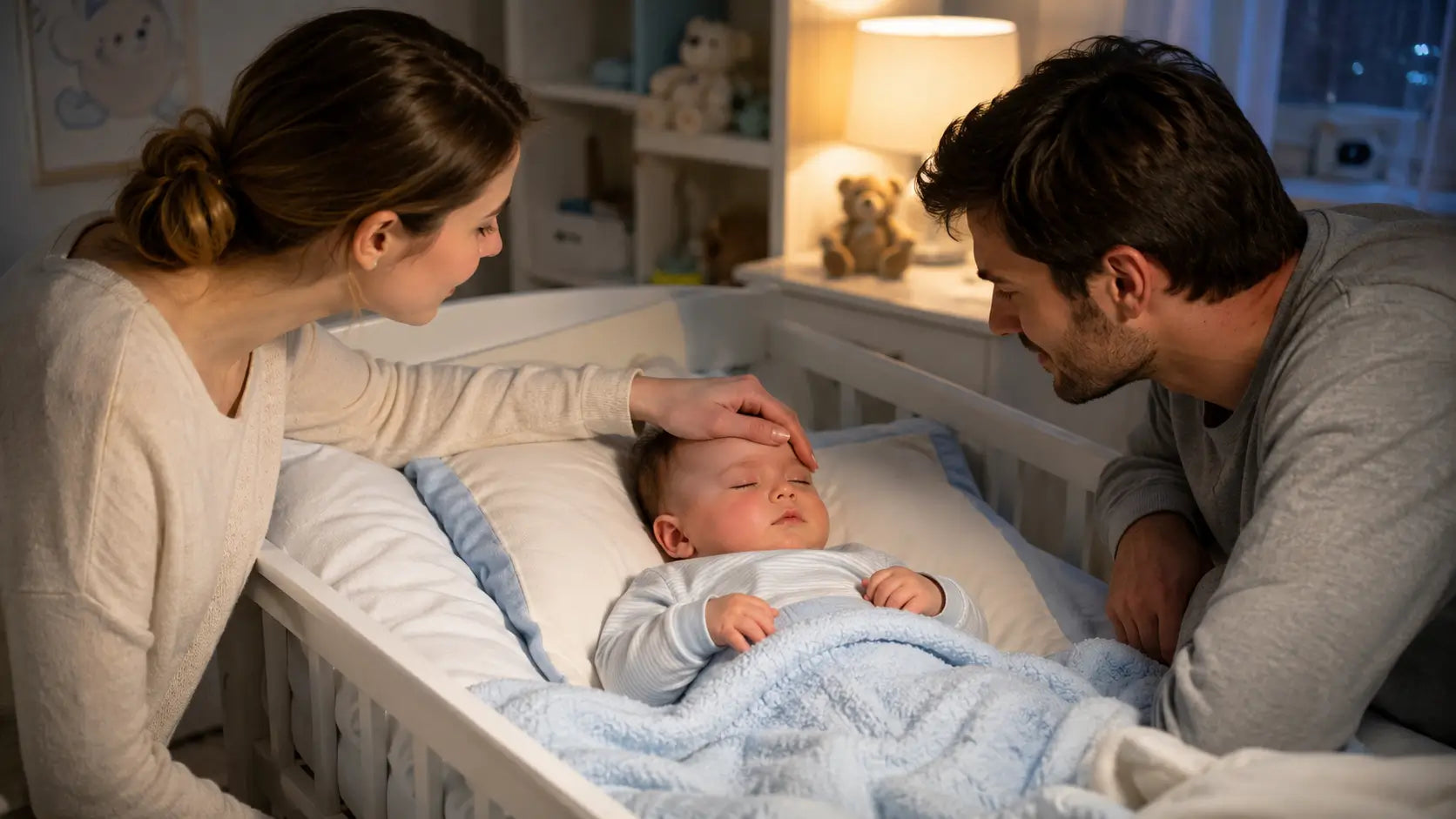
You finally got your baby back to sleep after a long fever fuss. Now you need to check their temperature again , but one beep, one light, or one cold hand on their forehead could start the whole cycle over.
The best thermometer for night monitoring depends on the job you need it to do. A non-contact forehead thermometer works well for a fast, low-disruption spot check. A wearable thermometer is a better fit for continuous overnight tracking with fewer room visits.
This guide covers what to look for in a nighttime thermometer, how the main types compare for after-dark use, and which option fits different family situations best.

Why Is Nighttime Temperature Checking So Stressful for Parents?
Nighttime temperature checks are stressful because you are trying to get a clear reading without fully waking your baby.
During the day, you usually have better light, more patience, and a baby who may already be awake. At night, the same simple check feels different. You are half-asleep, the room is dark, and your baby may have just settled down after a long stretch of soothing.
That is why the best thermometer for night monitoring should be easy to read, easy to handle, and low-disruption.
Sleep Disruption During Fever Checks
A baby who finally falls asleep during a fever may wake more easily than usual. One forehead touch, one thermometer beep, or one light from a screen can be enough to disturb them.
When that happens, the check itself is no longer the hard part. The hard part is getting your baby back to sleep. You may spend another 20, 30, or even 45 minutes feeding, rocking, or soothing them again.
Repeated Checks and Parent Anxiety
Repeated checks can also make the night feel longer. Each check means waking up, finding the thermometer, getting close enough to take a reading, and deciding whether the number is high enough to take the next step.
That is especially tiring when you are checking every 1–2 hours. You are not only tracking a number. You are also trying to remember the last reading, watch the trend, and decide whether the fever is rising, holding steady, or going down.
Small Nighttime Frictions
Even with a backlit screen, nighttime use can still feel awkward. You may need to find a small power button, check the mode icon, aim the sensor at the right distance, or read the number before the display dims.
Those are small details during the day. At 2 a.m., they can feel much harder. A good nighttime thermometer should remove steps, not add them.
Why Is Nighttime Temperature Checking So Stressful for Parents?
Nighttime temperature checks are stressful because you are trying to get a clear reading without fully waking your baby.
During the day, you usually have better light, more patience, and a baby who may already be awake. At night, the same simple check feels different. You are half-asleep, the room is dark, and your baby may have just settled down after a long stretch of soothing.
That is why the best thermometer for night monitoring should be easy to read, easy to handle, and low-disruption.
Sleep Disruption During Fever Checks
A baby who finally falls asleep during a fever may wake more easily than usual. One forehead touch, one thermometer beep, or one light from a screen can be enough to disturb them.
When that happens, the check itself is no longer the hard part. The hard part is getting your baby back to sleep. You may spend another 20, 30, or even 45 minutes feeding, rocking, or soothing them again.
Repeated Checks and Parent Anxiety
Repeated checks can also make the night feel longer. Each check means waking up, finding the thermometer, getting close enough to take a reading, and deciding whether the number is high enough to take the next step.
That is especially tiring when you are checking every 1–2 hours. You are not only tracking a number. You are also trying to remember the last reading, watch the trend, and decide whether the fever is rising, holding steady, or going down.
Small Nighttime Frictions
Even with a backlit screen, nighttime use can still feel awkward. You may need to find a small power button, check the mode icon, aim the sensor at the right distance, or read the number before the display dims.
Those are small details during the day. At 2 a.m., they can feel much harder. A good nighttime thermometer should remove steps, not add them.

What Should You Look for in a Thermometer for Night Monitoring?
Choosing a thermometer for nighttime use is not just about accuracy in the abstract. It is about finding a tool that works in the dark, keeps your baby asleep, and gives you a clear answer without repeated effort. These are the baby thermometer features that carry the most weight after bedtime.
Low-Disruption Use
The best nighttime thermometer is one your baby does not notice. Non-contact infrared forehead thermometers let you scan from a short distance without touching your baby's skin. A forehead thermometer is helpful for quick checks, especially when your baby is asleep. Wearable options take a different approach , they stay on the baby's body so you do not need to enter the room at all for a reading.
Silent Operation
A single beep in a dark nursery can wake a light sleeper. Look for a thermometer with a mute or silent mode. If the device has an alarm, check whether it sends the alert to a separate receiver or parent unit rather than beeping next to the baby. Sound control is a practical nighttime need, not a luxury add-on.
Backlit Visibility
You need to read the result without turning on the overhead light or reaching for your phone flashlight. A backlit display with clear, large numbers lets you see the reading at a glance. The LED-backlit display is easy to read and showcases the thermometer's battery level, the charging case's battery level, and either body or ambient temperature. If you have to squint or re-scan, the thermometer is adding steps instead of removing them.
Fast Readings and Easy Handling
Speed matters at night because every extra second increases the chance of waking your baby. A forehead thermometer usually gives a result in 1–3 seconds. A wearable thermometer skips this step entirely because it is already reading. Either way, look for a design you can operate with one hand, half-awake, without instructions.
Alerts and Temperature Trend Tracking
Fever alerts help when you do not want to check on a fixed hourly schedule. VAVA makes overnight temperature monitoring easier by reducing the need for repeated manual checks.
After you place the soft underarm patch on your baby, the thermometer tracks body temperature in real time for up to 24 hours.
When the temperature goes above the preset fever threshold, the receiver sends audio and visual alerts, so you do not have to keep waking up just to check the number.

How Do Different Thermometer Types Compare for Night Monitoring?
Different thermometer types work better for different nighttime situations.
Some are great for one fast reading. Others are better for longer monitoring. Here is a practical comparison:
|
Thermometer Type |
Disturbance Level |
Speed |
Continuous Monitoring |
Best Nighttime Use Case |
|---|---|---|---|---|
|
Non-contact forehead |
Very low |
1–3 seconds |
No |
Quick spot checks |
|
Wearable (underarm patch) |
Very low after placement |
Ongoing |
Yes |
All-night tracking |
|
Ear (tympanic) |
Moderate |
1–2 seconds |
No |
Awake checks only |
|
Standard digital (underarm) |
High |
30–60+ seconds |
No |
Daytime backup |
|
Rectal |
Very high |
10–30 seconds |
No |
Fever confirmation only |
Non-Contact Forehead Thermometers
These are the fastest option for a single check. You hold the sensor near your baby's forehead and get a result in seconds , no touch needed. Most models have a mute button and a lit screen. The downside: you still need to walk into the room and stand close enough to scan. Forehead thermometers are a strong convenience choice. They are quick, easy to use on a sleeping baby, and much less stressful than rectal readings during routine checks. The trade-off is that they are more sensitive to skin condition and environment.
Wearable Thermometers
A wearable thermometer attaches to your baby's body , usually under the arm , and tracks temperature continuously. A wearable thermometer is a body-worn device that tracks temperature over time instead of giving only one quick reading. You place it before bedtime and monitor readings from a separate receiver or display without re-entering the nursery. This format is designed for overnight use, especially during active fevers. It works best for younger babies who are not yet mobile enough to pull it off.
Ear Thermometers
Ear thermometers are fast, but they are not ideal for young babies. Small ear canals can make placement harder, and major pediatric sources generally recommend ear thermometers only for older babies.
Standard Digital Underarm Thermometers
A standard underarm thermometer takes 30–60 seconds to register and requires you to hold your baby's arm down. That is too much contact and too much time for a sleeping infant. These are useful as daytime backups, not as nighttime tools.
Rectal Thermometers
Rectal thermometers remain the gold standard for accuracy, especially in babies under 3 months. A rectal temperature of 100.4°F (38°C) or higher in a baby under 3 months needs prompt medical guidance. But they require full waking, undressing, and holding the baby still. Save this method for fever confirmation when the reading may change what you do next , not for routine nighttime checks.
Which Thermometer Is the Best Choice for Night Monitoring?
Choose the thermometer based on how often you need to check and how much disruption you want to avoid.
For Quick Spot Checks
A non-contact forehead thermometer is the simplest choice.
Keep it nearby, turn on mute mode, and scan your baby’s forehead when you need one quick reading. It is fast, low-contact, and easy to use when you only need to check once or twice.
This is the best fit if your baby rarely gets fevers or you only need occasional readings.
For Continuous Overnight Monitoring
A wearable thermometer is the better fit when you want ongoing visibility.
The VAVA Smart Baby Thermometer is built around this use case. It uses a soft silicone patch placed under your baby’s arm and a separate display unit for body-temperature readings. Its official page lists 24-hour real-time monitoring, audio and visual fever alerts, 24-hour battery life, a 1.5-hour charging time for the patch, and a 15 m / 49 ft stable connection.
For Medical Confirmation
Follow your pediatrician’s recommended method.
This is especially important for babies under 3 months or when the reading affects whether you need urgent care. A wearable or forehead thermometer can help you monitor, but it should not replace the confirmation method your doctor recommends.
How Can You Check a Baby's Temperature at Night With Less Disruption?
Here are two practical routines you can put in place tonight.
Low-Sound Forehead Thermometer Routine
Follow these steps before you walk into the nursery:
- Mute the Beep: Switch the thermometer to silent or mute mode before entering the room.
- Pre-Position Yourself: Stand close to the crib without leaning over or touching the rail.
- Scan and Leave: Hold the sensor near your baby's forehead, wait for the result on the backlit screen, and step out. Read and record the number in the hallway.
- Track on Paper or Phone: Write down the reading and time so you can see the trend without relying on memory.
Wearable Monitor Setup Before Sleep
Setting up a wearable thermometer before bedtime means fewer decisions at 2 a.m. Here is how to prepare:
- Charge First: Make sure the patch and receiver are fully charged before bedtime. The VAVA Smart Baby Thermometer battery allows for 24 hours of continuous use.
- Apply During Last Feeding: Attach the silicone patch to your baby's armpit during the last feeding or diaper change of the evening, when your baby is already being handled.
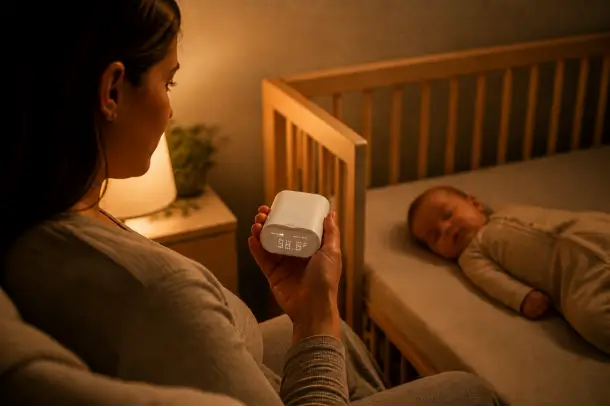
- Place the Receiver on Your Nightstand: Keep the display unit where you can see it from bed so you can glance at the number without getting up.
- Trust the Alert: Let the fever alarm do the checking for you. If the temperature stays below the preset alert threshold, you can stay in bed.
Why Consider the VAVA Smart Baby Thermometer for Night Monitoring?
A wearable thermometer makes more sense when you need to follow your baby’s temperature for several hours, not just take one quick reading.
The VAVA Smart Baby Thermometer uses a soft underarm patch and a separate parent unit. Once the patch is in place, it can show body temperature in real time for up to 24 hours. That means you can glance at the receiver instead of scanning your baby’s forehead again and again through the night.
This format is most useful during fever nights, after vaccinations, or any time you want closer overnight observation. The audio and visual alerts also help parents notice when the temperature rises above the preset fever threshold, without checking on a fixed hourly schedule.

Conclusion
The best thermometer for night monitoring is the one that matches the overnight job. A non-contact forehead thermometer handles quick, low-disruption spot checks. A wearable thermometer, like the VAVA Smart Baby Thermometer, supports continuous tracking with fewer room visits and built-in fever alerts.
Your choice depends on how often you need to check, how easily your baby wakes, and whether you prefer one fast reading or ongoing monitoring throughout the night. Parents who want fewer manual checks and more overnight awareness will typically find wearable monitoring the better path.
Frequently Asked Questions
1. Can room temperature affect a forehead thermometer reading at night?
Yes. A forehead thermometer can be affected by skin condition and the surrounding environment.
At night, the reading may be less consistent if your baby has been under heavy blankets, has a sweaty forehead, or has just moved from a warmer or cooler room. HealthyChildren also notes that direct sunlight and cold outdoor temperatures can affect forehead readings.
For a more consistent result, scan the forehead the same way each time, keep the sensor at the recommended distance, and recheck if the number does not match how your baby looks or feels.
2. What should I do if a thermometer alert goes off while my baby is sleeping?
Check the reading first, then check your baby’s overall condition.
Look at your baby’s breathing, comfort, skin color, feeding, and alertness. If the reading reaches your pediatrician’s action level, or if your baby is under 3 months old with a fever, follow your doctor’s guidance right away.
A fever alert helps you notice a temperature change sooner, but the next step should depend on your baby’s age, symptoms, and your pediatrician’s advice.
3. Are wearable thermometers only helpful for babies with fevers?
No. Wearable underarm monitors are also useful for trend tracking. Some parents use them to monitor baseline temperature patterns overnight during illness recovery or after vaccinations. Wearable thermometers are most useful when you want to watch body temperature changes over time, such as during illness recovery or after vaccinations. Learn more about what a wearable thermometer is and how it works.
4. How can I tell if a thermometer is truly night-friendly before buying it?
Look for 3 features: low sound, easy nighttime reading, and low-disruption use.
A good nighttime thermometer should have a mute mode or quiet operation, a display you can read in the dark, and a format that does not require too much handling. That could mean a no-touch forehead thermometer for quick checks or a wearable underarm thermometer for longer overnight monitoring.
The easier it is to use while half-asleep, the more useful it will be during a real fever night.
5. Who else can benefit from nighttime temperature monitoring?
Nighttime temperature monitoring can also help caregivers who need to watch temperature changes in babies, older adults, or people recovering from illness.
For elderly family members, repeated manual checks at night can disturb rest and make caregiving more tiring. A wearable thermometer can make the process easier by showing the current body temperature on a receiver, so caregivers do not need to wake the person for every check.
In home care or recovery settings, this kind of real-time monitoring is useful when temperature changes need closer attention. It helps caregivers stay aware during the night while keeping the person more comfortable.
Share: