


You bought the thermometer for your baby. Now you are the one feeling feverish, and it is the only thermometer within reach. Can you use it too?
Usually, yes. Many baby thermometers also work for adults. Check whether the model covers adults or all ages and whether it uses a measurement site an adult can use. If it has child and adult modes, choose the adult setting. The main exceptions are easy to recognize: a pacifier thermometer is only for babies, and a thermometer used rectally must never be used by mouth.

Can Adults Use a Baby Thermometer?
Adults can use many digital stick, forehead, ear, and wearable thermometers sold for babies. The table below gives the useful answer without making you decode the product name.
Here is a simple way to tell the difference:
|
Thermometer Type |
Can an Adult Use It? |
What to Check |
|---|---|---|
|
Digital stick thermometer |
Often |
Approved body sites and whether it has ever been used rectally |
|
Forehead thermometer |
Often |
Supported ages, body mode, and any child or adult setting |
|
Ear thermometer |
Often |
Supported ages, probe fit, and correct placement |
|
Pacifier thermometer |
No |
It is shaped and intended for a baby's mouth |
|
Bath thermometer |
No |
It measures water, not body temperature |
|
Wearable thermometer, such as VAVA |
Yes, when designed for all ages |
VAVA uses the same underarm placement from newborns through seniors |
If a different model is labeled only for babies or children, do not use it for an adult unless its instructions say adult use is supported.
Is a Baby Thermometer Different From an Adult Thermometer?
Baby and adult thermometers measure the same thing, but babies cannot use every adult measurement method. An adult can hold a probe correctly under the tongue. A baby cannot, which is why the American Academy of Pediatrics generally recommends oral measurement from around age 4.
Body size matters for some methods too. The American Academy of Pediatrics advises against ear thermometers for babies under 6 months because their ear canals are too narrow for a reliable reading. A pacifier thermometer has the opposite limitation: its shape makes sense for a baby but not for an adult.
Some forehead thermometers also use age settings to decide how a reading is categorized or when an alert appears. That is a programming difference, not a different kind of temperature.
None of these differences prevents a thermometer from working across ages when it is designed that way. The VAVA Smart Baby Thermometer uses continuous underarm contact, a measurement position that can be used from the newborn stage through adulthood.
Parents can use the same familiar sensor and receiver for themselves or an older relative without buying another thermometer simply because the word “baby” appears in the product name.

How Can Adults Use the Main Types of Baby Thermometers?
The safest method is the one approved for that particular thermometer. A shape that fits under the tongue may also fit under an arm, but that does not mean the model was designed for both locations.
Digital Stick Thermometers
For an adult oral reading, place the tip under the tongue in the position shown in the instructions and keep the mouth closed until the thermometer signals that it has finished. Food and drinks can change the temperature inside the mouth, so allow the recommended waiting time before measuring.
An armpit reading needs direct skin contact. Place the sensing tip in the center of a clean, dry armpit and let the arm rest against the body until the reading is complete.
Keep the measurement site consistent when following a fever. There is no dependable number that can be added to an armpit result to turn it into an oral or rectal result.
Forehead and Ear Thermometers
A forehead thermometer for adults needs a clean, dry, uncovered forehead. With a noncontact model, use the distance specified for that device. Room temperature, direct sunlight, a heater, sweat, and incorrect positioning can all affect a reading.
Ear thermometers can work well for adults when the probe is positioned correctly. Earwax and a poor angle may affect the result. If the device has disposable probe covers, use a fresh one as directed, then clean the thermometer according to its care instructions.
Wearable Underarm Thermometer
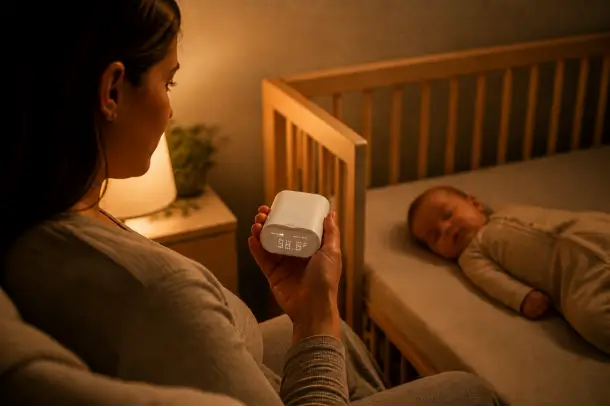
An adult wears the VAVA sensor in the same underarm position used for a baby. Once it is attached, the temperature remains visible on the receiver while the person sleeps or rests. This is particularly useful when a parent or older relative is ill and the family expects to check the temperature throughout the night.

Can Adults and Babies Share the Same Thermometer?
Some thermometers can be shared safely. Before sharing one, consider whether it touches the body, where it has been used, and how the product instructions say to clean it.
A noncontact forehead thermometer designed for all ages is often the simplest device to share. Each family member still needs the correct mode and placement, and the sensor should be kept clean and dry.
The VAVA sensor can also move from one family member to another. Clean it as directed and use a fresh adhesive before placing it on the next person.
Keep Oral and Rectal Thermometers Separate
One rule should never depend on memory. A thermometer used rectally must not later be used orally, even after cleaning. Keep separate devices and label them clearly as “oral” and “rectal.”
This matters most during a tired, hurried moment. When a child is crying or an adult wakes with chills in the night, a visible label removes the need to remember who used which thermometer and where.
Give Every Thermometer a Clear Home
Store each contact thermometer in its own labeled case or bag. Keep the cleaning directions nearby, especially when grandparents, babysitters, or other caregivers may need to use it.
If the household uses more than one measurement method, note the body site whenever a temperature is written down. “100.4°F by mouth at 9:00 p.m.” is much more useful than “fever at 9:00 p.m.”
Does the Same Temperature Mean the Same Thing for Adults and Babies?
No. The number may look identical, but age, body site, symptoms, and medical history can change what it means and what should happen next.
The NHS describes 100.4°F (38°C) or above as a high temperature in adults. An adult may still feel hot, cold, or shivery with a lower reading, so pay attention to symptoms as well as the screen.
Young babies require more urgent age specific care. The American Academy of Pediatrics advises calling the pediatrician immediately when a baby 3 months old or younger has a rectal temperature of 100.4°F (38°C) or higher, even when the baby otherwise seems comfortable.
If another age appropriate method shows a concerning temperature in a young infant, report the number and measurement site promptly and follow the pediatrician's advice. Do not keep repeating measurements while waiting for several devices to agree.
Keep the Body Site Beside the Number
Oral, forehead, ear, armpit, and rectal readings are not interchangeable. Avoid adding or subtracting a fixed number to convert one site into another.
When speaking to a healthcare professional, share the person's age, the temperature, the time, the thermometer type, and the body site. Also mention symptoms such as breathing difficulty, unusual sleepiness, confusion, dehydration, severe pain, or a rash.
What If a Reading Looks Wrong?
Check the unit, age mode, placement, and surrounding conditions. Make sure the forehead or armpit is dry and that the sensor has not shifted. If there is no urgent age or symptom concern, repeat once using the same thermometer and the same body site.
Do not average two different readings. Record them with their times and methods. If the person looks seriously unwell, seek medical help instead of trying to produce a perfect set of matching numbers. The guide to reading a thermometer correctly covers common placement and setting problems in more detail.
When Is One Thermometer Enough for the Family?
One thermometer can be enough when it covers every age in the household. The VAVA Smart Baby Thermometer is designed for newborns, children, adults, and seniors, so there is no need to buy a second wearable thermometer solely because the person being cared for is an adult. The sensor uses the same underarm position for each age group.
That can make one purchase useful in several chapters of family life. It may first be used during a baby's fever night, then for an older child who will not stay still for repeated checks, a parent recovering from an illness, or a grandparent resting in another room. The receiver and alerts remain familiar to whoever is caring for the family member that day.
A separate thermometer is still necessary when the measurement roles conflict. A digital thermometer reserved for a baby's rectal temperature should not be used for an adult's oral temperature. A baby only pacifier thermometer also cannot become a general household device. In those cases, separate products protect hygiene or provide a measurement method the other person can actually use.
For a family that wants continuous underarm monitoring, the same VAVA thermometer can follow the baby into childhood and remain useful for parents and grandparents too.

What Does VAVA Monitoring Look Like for an Adult?
Consider an ordinary sick night. The VAVA thermometer may have been used for the baby months earlier, but tonight a parent has the flu. The soft sensor can remain under the adult's arm while the receiver stays on the bedside table, so checking the temperature does not require setting up another measurement each time.
The reading remains visible while the wearer tries to sleep. If the temperature reaches the alert level, the receiver provides an audio and visual signal. It works without keeping a phone or app open.
When an Older Family Member Needs Care
The same routine can help when an older parent is tired, sleeping, or uncomfortable. The food grade silicone sensor is held under the arm with a hypoallergenic adhesive strip, allowing it to keep the same placement while the person rests.
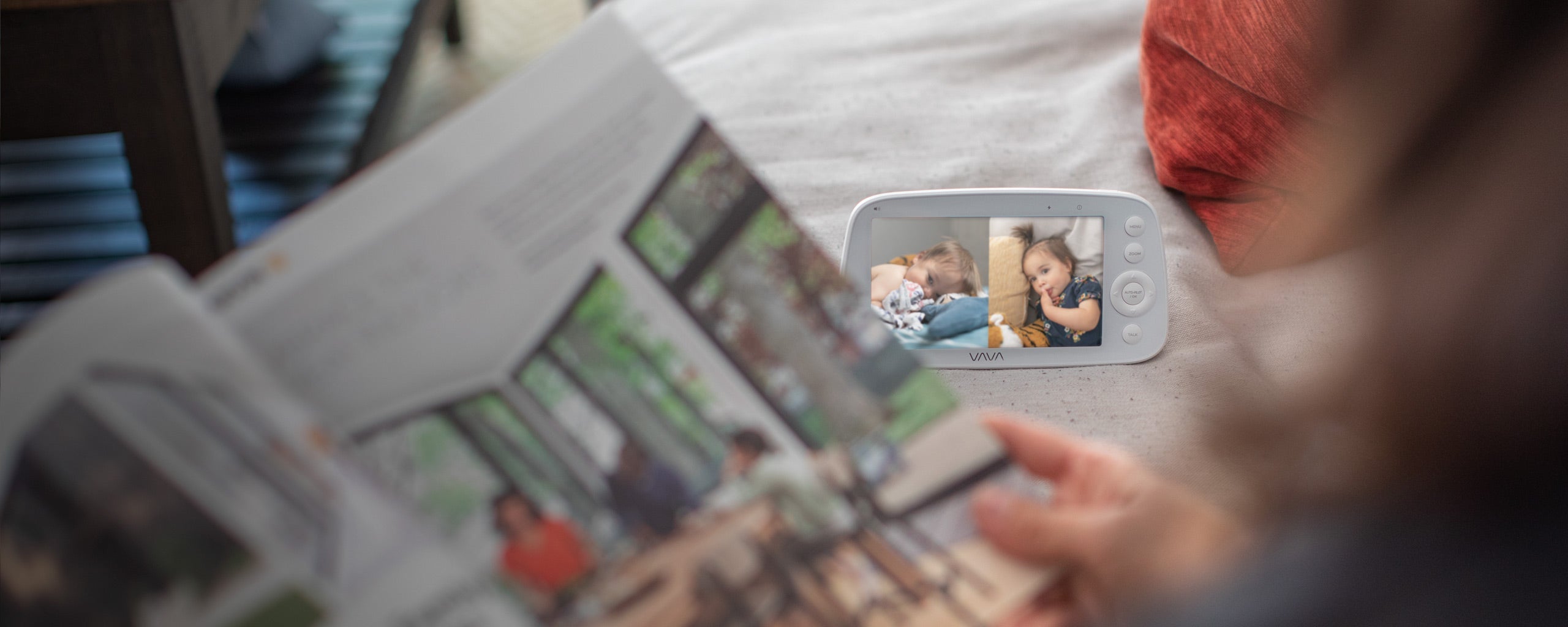
The separate receiver can stay with the person responsible for the next check. Its connection works up to 15 m or 49 ft, and the sensor supports up to 24 hours of continuous use. When responsibility changes hands, the receiver can pass to the next family member along with the update on symptoms and medication.
For an adult, place the sensor flat against clean, completely dry skin under the arm and secure it with a fresh adhesive strip. If the strip loosens or the reading changes unexpectedly, check the contact and placement. Replace the adhesive and clean the reusable sensor as directed before another family member wears it.
When recording a reading for a healthcare professional, describe it as an underarm measurement and include the time. Continuous monitoring makes the pattern easier to follow, but medical decisions still depend on the person's age, symptoms, history, and the advice of a healthcare professional.

Which Thermometer Fits Your Family's Routine?
The right thermometer is the one that fits both the person and the moment.
A digital stick or forehead thermometer may be all a family needs for occasional checks. Clearly labeled separate devices make sense when oral and rectal measurements are both used. A wearable thermometer can be especially helpful when a baby, adult, or older relative is likely to need attention over several hours and rest is already hard to come by. Families still choosing a device can compare age range, measurement method, and daily routine in this guide to choosing a baby thermometer.
If you already own VAVA, you do not need to stop using it when the person with a fever is an adult. Clean the sensor, apply a fresh adhesive, and it is ready for the next family member.
FAQs
1. What if the thermometer has a child mode but no adult mode?
Do not select child mode simply because it is the only option shown. Check whether the thermometer is intended only for children or whether one mode covers every age. If adult use is not included, choose a general household thermometer.
2. Can an adult use a baby pacifier thermometer?
No. A pacifier thermometer is shaped for a baby's mouth and is not an appropriate way to measure an adult's temperature. Use an oral thermometer intended for adults.
3. Can a baby bath thermometer measure an adult's body temperature?
No. A bath thermometer measures water temperature. It is not designed to identify a fever, even if its display includes values close to normal body temperature.
4. Can you tell whether an adult has a fever by touching the forehead?
Touch may suggest that someone feels warmer than usual, but it cannot provide a dependable temperature. Use a body thermometer when the number will affect what you do next.
5. Does a new probe cover make a shared thermometer safe?
A fresh probe cover helps limit direct contact, but it does not replace the cleaning steps for that model. It also does not make a thermometer reserved for rectal use suitable for oral use.
6. What should an adult record with a temperature reading?
Record the temperature, time, body site, and thermometer type. Add important symptoms and any fever medicine taken, including the time and dose, so the next caregiver or healthcare professional has a clearer picture.
Resources
- Mayo Clinic: Thermometers, Understand the Options
- FDA: Noncontact Infrared Thermometers
- American Academy of Pediatrics: How to Take Your Child's Temperature
- American Academy of Pediatrics: Fever and Your Baby
- NHS: High Temperature in Adults

Share: