

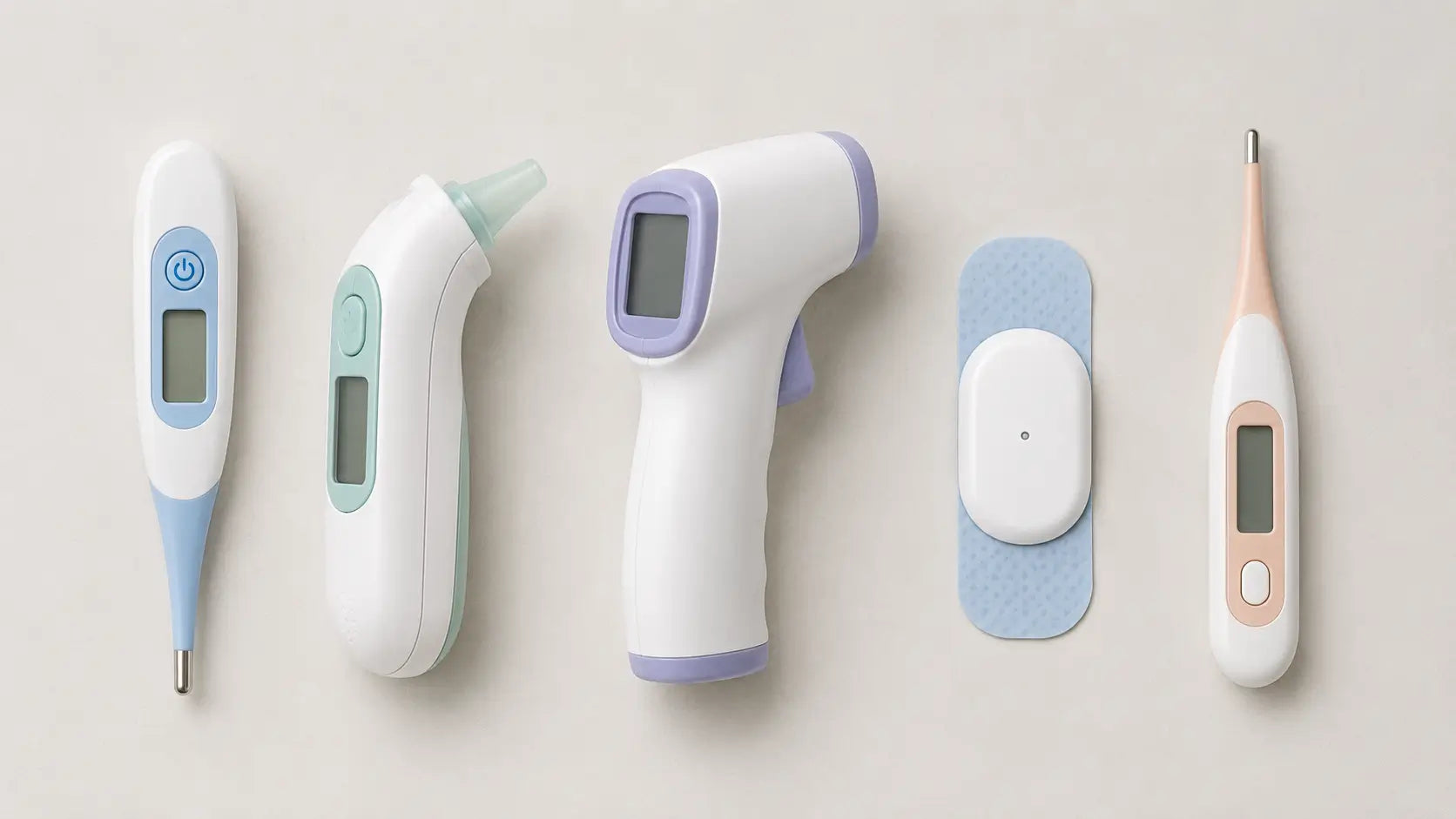

There is no single body thermometer that works best for every person, every age, and every situation. The right choice depends on who you are measuring, where the temperature is taken, and whether you need a quick check or ongoing monitoring. A thermometer that works well for a school-age child may be the wrong tool entirely for a two-week-old newborn.
Types of Body Thermometers: How to Choose the Right One for Your FamilyIn this guide, we’ll compare digital stick, wearable, rectal, oral, underarm, forehead, and ear thermometers so you can choose the right setup for your family.
What Are the Different Types of Body Thermometers Used For?
Different types of body thermometers help you check for fever, track temperature changes, and decide when a reading needs a second look. The best option depends on whether you need a quick check, a more precise reading, or overnight monitoring.
Checking for Fever at Home
The most common reason families reach for a thermometer is to check for fever. Knowing whether a temperature reading crosses a threshold helps parents decide whether to wait, monitor, or act. The tool you use and where you measure directly affects how reliable that reading is.
Tracking Temperature Changes Over Time
A single reading gives you a snapshot. Tracking temperature over several hours tells a more complete story, whether a fever is climbing, stabilizing, or coming down. This requires a thermometer that is easy to use repeatedly without disturbing a sleeping or resting child.
Supporting Baby and Child Care Decisions
Temperature readings are one input among several when parents are deciding what to do next. A thermometer does not make decisions. It gives you information. The more accurate and consistent the reading, the better that information is.
What Are the Main Types of Body Thermometers?
The main types of body thermometers are digital stick, wearable, oral, rectal, underarm, forehead, and ear thermometers. Each type works best for a different age group or use case, so it helps to compare them before choosing one.
|
Thermometer Type |
Best For |
Main Limitation |
|
Digital Stick Thermometer |
Oral, underarm, or rectal spot-checks |
The child needs to stay still during the reading |
|
Wearable Thermometer |
Overnight temperature tracking |
Best for monitoring trends over time |
|
Oral Thermometer |
Older children and adults |
Not suitable for babies or toddlers |
|
Rectal Thermometer |
Newborns and young infants |
Requires careful placement |
|
Underarm Thermometer |
Quick, gentle checks for any age |
Usually less precise than oral or rectal readings |
|
Forehead Thermometer |
Fast checks, including while a child is resting |
Sweat, cold air, and technique can affect results |
|
Ear Thermometer |
Older babies and children |
Not reliable for very young babies |
Digital Stick Thermometers
Digital stick thermometers are affordable, easy to find, and useful for oral, underarm, or rectal readings. They can be accurate when placed correctly, but young children may have trouble staying still long enough for a clear reading.
Wearable Thermometers
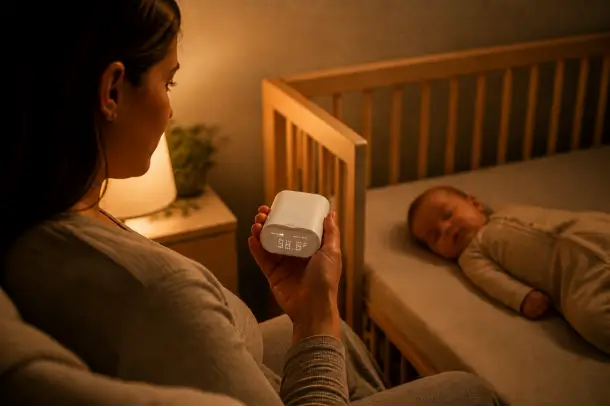
Wearable thermometers track temperature over time, often while a baby or toddler sleeps. They are useful for overnight monitoring because parents can follow temperature changes without repeated manual checks.
The VAVA Smart Baby Thermometer is one example of this category. It monitors a baby's temperature continuously and sends real-time alerts to a parent's phone, which removes the need to disturb a sleeping infant every time you want a reading. For parents managing a sick baby through the night, this kind of passive monitoring is a meaningful practical advantage over taking manual readings repeatedly.

Oral Thermometers
Oral thermometers work well for adults and children around age 4 or older. The child needs to keep the thermometer under the tongue and keep their mouth closed until the reading is complete.
Rectal Thermometers
Rectal thermometers are commonly used for newborns and young babies because they give a close reading of core body temperature. They require careful use and should be clearly labeled for rectal use only.
Underarm Thermometers
Underarm thermometers are gentle and easy to use, but they are usually less precise. They work well for a quick first check, especially when you do not want to disturb a child too much.
Forehead Thermometers
Forehead thermometers are fast and easy to use, especially with sleeping children. For the best result, use them when the forehead is dry and the child has been indoors for a while.
Ear Thermometers
Ear thermometers give quick readings and work well for older babies and children. They are not the best choice for newborns because a small ear canal can make placement less reliable.
Which Body Thermometer Type Fits Each Age Group?
Choose a body thermometer by age first, then choose by use case. Age matters because babies, toddlers, and older children cannot all use the same thermometer in the same way.
|
Age Group |
Best Choice |
Good Backup Option |
Avoid or Use With Care |
|
Newborns Under 3 Months |
Rectal digital thermometer |
Wearable thermometer for overnight tracking |
Ear thermometers |
|
Babies 3–6 Months |
Rectal digital thermometer |
Forehead or underarm thermometer for screening |
Ear thermometers |
|
Babies and Toddlers 6 Months–3 Years |
Rectal, forehead, or ear thermometer |
Wearable thermometer for sick nights |
Oral thermometers |
|
Children Age 4+ |
Oral thermometer |
Forehead or ear thermometer |
Readings right after eating or drinking |
Newborns Under 3 Months
For newborns, rectal measurement gives the most reliable spot-check. But overnight temperature changes are easy to miss with occasional manual checks. A wearable thermometer helps parents follow temperature trends while the baby sleeps, with fewer interruptions during sick nights.
Babies and Toddlers
Once your baby is older, forehead and ear thermometers become more practical. They are faster, easier, and less disruptive than rectal checks.
Still, use common sense. If the number looks strange or your child seems much sicker than the reading suggests, take a second reading with another method.
Children Age 4 and Older
Most children around age 4 can use an oral thermometer if they can keep it under the tongue and keep their mouth closed. Forehead and ear thermometers are still useful when you need a faster check.
How Should You Use a Body Thermometer Correctly?
Correct Placement
Each measurement site has a specific placement requirement:
- Oral: Tip placed under the tongue, toward the back, with lips closed
- Rectal: Probe inserted no more than half an inch to one inch, with the child lying face down or on their back with knees bent
- Axillary: Probe centered in the armpit with the arm held flat against the body
- Ear: Probe sealed gently into the ear canal, directed toward the eardrum — not just the outer ear
- Forehead: Scan from the center of the forehead to the hairline on the side, at the right distance for the model being used
Incorrect placement is the most common reason for inaccurate home readings.
Stable Measuring Conditions
Temperature readings can be affected by external conditions. Do not measure immediately after a child has been running, crying, bathed, or exposed to cold outdoor air. Wait at least 15 to 20 minutes for the body to stabilize before taking a reading when any of these factors apply. For forehead thermometers especially, avoid measuring a sweaty forehead or right after outdoor exposure, both will produce a falsely low result.
Cleaning and Labeling
Clean the probe before and after each use with the method specified in your thermometer's instructions. If you use one thermometer for multiple measurement sites across family members, label it clearly so it is never used for the wrong purpose.
How Do You Choose the Right Thermometer for Your Family?
The decision comes down to three practical factors. You can read a more detailed breakdown of these considerations in this guide on how to choose the best baby thermometer.
Age and Measuring Site Come First
The age of the person you are measuring eliminates most of the options immediately. Newborns need rectal measurement. Toddlers rule out oral thermometers. Older children open up more methods. Start with age, narrow from there.
Use Case Decides the Thermometer Role
A quick check before a school pickup is a different task from monitoring a sick infant through the night. Match the tool to the task:
- Speed and convenience: Forehead or ear thermometer
- Maximum accuracy for infants: Rectal digital stick
- Overnight continuous monitoring: Wearable thermometer
- Routine checks for older children and adults: Oral or forehead thermometer
Many Families Benefit from More Than One Type
This is not a one-thermometer situation for most households. A digital stick thermometer for rectal use, a forehead or ear thermometer for quick daily checks, and a wearable option for sick nights covers the full range of what most families encounter. The cost of having two or three thermometers is small compared to the difference in reliability.
When Should You Double-Check a Temperature Reading?
The Number Does Not Match How the Child Seems
Numbers are useful, but they are one data point. If a child has a temperature reading that seems normal but is clearly unwell, or vice versa, take a second reading with a different method or placement. A reading that does not match observed symptoms is worth verifying before acting on it.
The First Reading Had Placement or Timing Problems
If the thermometer was not placed correctly, if the child was moving, or if the measurement was taken right after outdoor activity or a bath, that reading is unreliable. Wait for stable conditions and remeasure with correct placement.
Surprising Quick-Check Readings May Need a Second Look
Forehead and ear thermometers are fast, but speed comes with more points of failure — technique, sweat, ear canal fit, ambient temperature. If a quick-check reading is unexpectedly high or low, confirm it with a digital stick thermometer before treating the number as definitive.
Frequently Asked Questions
Q1: Are Mercury Thermometers Still Recommended for Home Use?
No. We recommend replacing mercury glass thermometers with digital thermometers. Mercury can be hazardous if the glass breaks, and digital models are safer and easier to use at home.
Q2: Can I Use the Same Thermometer for a Baby and an Adult?
You can use the same thermometer type across ages, but do not use the same physical thermometer for both rectal and oral readings. If you use a digital stick thermometer rectally, label it and keep it only for that purpose.
Q3: How Can a Wearable Thermometer Help at Night?
A wearable thermometer helps you monitor your baby’s temperature while they sleep, without repeated manual checks. The VAVA Smart Baby Thermometer tracks temperature continuously and sends real-time alerts to your phone, making overnight fever monitoring easier for parents.
Q4: Why Is an Underarm Reading Lower?
An underarm reading measures skin temperature more than core temperature. That is why it often reads lower than rectal or oral measurements. Use it as a quick screen, not your only reading when accuracy is important.
Q5: Can I Use a Forehead Thermometer Right After My Child Comes Inside?
It is better to wait 15–20 minutes. Cold air, sweat, crying, or a recent bath can affect skin temperature and make a forehead reading less reliable.
Conclusion
The best thermometer is not the one with the most features — it is the one that fits the job your family actually needs it to do. Different thermometer types serve different purposes. Rectal measurement is most accurate for newborns. Wearable thermometers serve overnight monitoring needs. Forehead and ear thermometers are built for speed. Oral thermometers work well once a child is old enough to cooperate.
Correct placement and stable measuring conditions affect every reading, regardless of which type you use. And most families are better served by two or three thermometers that each do their job well than by one thermometer trying to do everything.
Know your age group, match the tool to the use case, and verify readings that do not match what you are seeing. That is the practical frame for every thermometer decision.


Share: