


A home medical kit earns its place on the day someone needs it. A child comes in with a scraped knee, a baby feels warmer than usual at bedtime, or an older relative cannot remember the name of a prescription. The useful supplies and information should already be easy to find.
That does not mean putting every bandage, medicine, and medical device into one crowded box. The simplest setup has three parts: shared first-aid supplies, securely stored medicines, and a small amount of personal information for each family member.
This guide shows you what to include in a home medical kit for newborns, children, adults, and older adults, how to organize a practical thermometer setup, and when it is time to stop treating the problem at home and call for help.

Source: pexels.com
What Should a Family Home Medical Kit Include?
A practical family kit covers the minor injuries that happen most often, such as cuts, scrapes, splinters, and bumps. It should also hold the emergency contacts and personal details another caregiver may need in a hurry.
Medicines belong in the family plan too, but not necessarily in the same easy-to-open box. In a home with children, first-aid supplies should be easy for an adult to reach while medicines stay secured and out of sight.
Build the Shared First-Aid Supplies
The supplies below are adapted from the American Red Cross family-of-four checklist. Adjust the quantities to match the size of your household and how often the kit is used.
|
Category |
What to Include |
|---|---|
|
Bandages and dressings |
25 adhesive bandages in assorted sizes; two 5-by-9-inch absorbent compress dressings; five 3-by-3-inch sterile gauze pads; five 4-by-4-inch sterile gauze pads; 3-inch and 4-inch roller bandages; two triangular bandages; adhesive cloth tape |
|
Cleaning and protection |
Antiseptic wipes; antibiotic ointment packets; hydrocortisone ointment packets; two pairs of nonlatex gloves |
|
Basic tools |
Tweezers; rounded-tip scissors; an instant cold compress; a non-mercury, nonglass digital thermometer |
|
Emergency support |
An emergency blanket; a breathing barrier with a one-way valve; written first-aid instructions |
You do not have to recreate the list down to the last bandage. A family with active children may go through adhesive bandages and cold packs quickly, while another household may need fewer. What matters is being able to open the kit and find clean, usable supplies instead of an empty wrapper left from the last time someone needed help.
Keep product labels and directions with medicated products such as antibiotic or hydrocortisone ointment. Use them only for the minor conditions described on the label, and ask a clinician or pharmacist when age, allergies, skin sensitivity, or the type of injury makes you unsure.
Add the Information People Need in a Hurry
Imagine a grandparent or babysitter opening the kit while you are not in the room. A short information card can answer the questions they should not have to guess.
Include:
- Emergency services: 911
- Poison Help: 1-800-222-1222
- Your family doctor or pediatrician
- Important allergies and medical conditions
- Current prescription medicines
- An emergency contact outside the home
- The location of any personal item a healthcare professional has advised someone to keep available
This is not meant to be a complete medical record. It is a quick reference that helps the next person make the right call and describe what is happening.
Give Medicines Their Own Secure Place
When someone cuts a finger, an adult should be able to reach the gauze without unlocking the entire medicine cabinet. Medicines need a different kind of access: easy for the responsible adult to find, but out of children's sight and reach.
Keep each medicine in its original container with the Drug Facts or pharmacy label, expiration date, child-resistant cap, and matching dosing device. Avoid collecting loose tablets, unmarked bottles, or several oral syringes in one drawer. When people are tired or worried, clear labels matter.
What Should You Add for a Newborn or Baby?
The newborn section of a home medical kit can stay small. The most useful additions are a thermometer you already know how to use, your pediatrician's contact details, and a written plan for what to do if your baby has a fever.
Choose a Temperature Method Before the Baby Feels Warm
The middle of the night is not the best time to open a new thermometer, look for batteries, and work out which button to press. Choose your temperature method in advance, keep the instructions nearby, and show the other regular caregivers where everything is stored.
For babies under 3 months, a rectal temperature is generally considered the most reliable. The American Academy of Pediatrics also advises against ear thermometers before 6 months because the ear canal is too small for an accurate reading. Underarm measurement is convenient, especially when a baby is resting; note the method when you share the result with a healthcare professional. See the AAP's current guidance on fever and temperature methods for babies.
If one digital thermometer is reserved for rectal use, label it clearly so it is never used orally. VAVA's guide to which thermometer type is best for newborns can help you compare the common options before choosing a setup.
Put the Fever Rule Beside the Thermometer
For a baby 3 months old or younger, a rectal temperature of 100.4°F (38°C) or higher is a reason to call the pediatrician immediately, even if the baby otherwise seems comfortable, according to the American Academy of Pediatrics.
Write that rule on a small card and add:
- The pediatrician's daytime number
- The after-hours number or instructions
- The baby's date of birth
- The temperature and the time it was taken
- The measurement method used
Now the caregiver holding the thermometer also has the information needed for the call. There is no need to search through old messages while everyone is anxious.
Add Baby Medicine Only With a Clear Plan
A general family checklist may mention acetaminophen or other over-the-counter medicine, but a newborn kit should not be filled from a generic shopping list. Ask your pediatrician what, if anything, they want you to keep at home for your baby and when it should be used.
If a medicine has been recommended, keep the original bottle, label, expiration date, and its own dosing device together in the secure medicine area. Do not leave it in an open nursery basket simply because it is used for the baby.
Keep the Baby Items Together
You only need one clearly labeled place for:
- An age-appropriate digital thermometer
- The device instructions and recommended cleaning supplies
- A label showing the intended measurement site, when needed
- The written fever action rule
- Pediatrician and after-hours contact information
- The matching dosing device for any medicine specifically recommended for the baby
The goal is not a picture-perfect nursery organizer. It is knowing exactly where to reach when the baby wakes warm and unsettled.
What Changes for Toddlers, Children, and Teens?
As children start climbing, riding, playing sports, and spending more time outside, the shared first-aid supplies tend to work harder. Their medicine plan also needs to be clear enough that two adults will not accidentally give the same ingredient or use the wrong measuring tool.
Prepare for the Injuries That Happen During Play
A scraped knee after a bike ride or a splinter from the backyard does not require a separate child-only kit. It does mean the bandages that fit small fingers and knees should be easy to find.

Source: pexels.com
Keep these shared supplies stocked:
- Adhesive bandages in several sizes
- Sterile gauze and tape for areas a small bandage will not cover
- An instant cold pack
- Tweezers for visible splinters
- Rounded-tip scissors
- Nonlatex gloves
- Saline wound wash, if your family chooses to keep it
If you regularly need first aid at sports practice or the playground, keep a small pouch of nonmedicine supplies in the bag that already goes with you. Refill it when you get home, while you still remember what was used.
Keep Every Medicine With Its Measuring Tool
Children's liquid medicines do not all use the same cup or syringe. The markings on one device may not match the dose for another product.
Keep the original bottle or package, Drug Facts label, expiration date, and supplied cup or oral syringe together. If the package does not include a suitable device, ask a pharmacist for one rather than reaching for a kitchen spoon.
When more than one adult is caring for a sick child, write down what was given, how much, and at what time. A quick note on paper or in a shared message can prevent a second caregiver from repeating a dose.
Check the Active Ingredient, Not Just the Brand
Two products with different names can contain the same active ingredient. A multi-symptom cold medicine may also include a fever or pain medicine that was already given separately.
Before each dose, check:
- Is this product appropriate for the child's age?
- What is the active ingredient?
- Has another product with the same ingredient already been given?
- What amount does the label or healthcare professional specify?
- When was the last dose?
Keeping the boxes and labels visible makes this easier than relying on bottle color or memory.
Keep Aspirin and Salicylates Out of the Child Section
Do not place aspirin or another salicylate-containing product in the child medicine area unless a doctor has specifically directed its use. Salicylates can also appear in products that do not say “aspirin” prominently on the front, including some stomach medicines and oil of wintergreen.
A simple label makes the rule visible to grandparents, babysitters, and visiting caregivers: “No aspirin or salicylate-containing product unless directed by the child's doctor.”
Plan for a Possible Medicine Exposure
Toddlers climb. Older children may mistake a gummy vitamin or medicine for something familiar. Purses, backpacks, bedside tables, and a visitor's coat pocket can all put medicine within reach even when the main cabinet is locked.
If you think a child may have swallowed a medicine, vitamin, or chemical, do not wait for symptoms and do not try to make the child vomit. In the United States, call Poison Help at 1-800-222-1222. Keep the product container nearby so you can describe exactly what may be involved.
What Should Adults and Older Adults Add?
Adults and older adults usually need better personal information, not another copy of every bandage. A current medicine list and a consistent place for prescribed rescue medicines or monitoring devices can be more useful than adding more products to the shared box.
Keep a Current Medicine and Allergy List
“The small white pill” is not enough information during a phone call or emergency. Create a separate, easy-to-read record for each adult who regularly takes medicine.

Source: pexels.com
Include:
- Medicine name and active ingredient, when listed separately
- Dose and usual time
- Reason it is taken
- Important allergies and health conditions
- Prescribing doctor
- Usual pharmacy
- Emergency contact
Include prescription medicines, over-the-counter products, vitamins, and supplements. Keep one copy near the person's medicine and another with the family's emergency information. Update both when something starts, stops, or changes.
Add the Personal Supplies That Actually Matter
One adult may have a prescribed rescue medicine or monitoring device. Another may need nothing beyond the shared first-aid kit. Build around the person's real routine rather than a generic “senior kit” list.
Ask:
- Is there an item they may need quickly?
- Does another caregiver know where it is?
- Are the instructions current?
- Does it need refrigeration, protection from light, or another specific storage condition?
If an item belongs in the refrigerator or another controlled location, leave it there and write its location on the emergency card. Convenience should not override the product's storage instructions.
Prescription medicine remains assigned to the person named on the label. Keeping the family's information together does not make the medicine shareable.
Make Labels Easy to Read at a Glance
Small print becomes even harder to manage in a dim room or when someone is worried. Keep medicines in their original labeled containers, and add a large-print information sheet if that helps a family member follow the routine.
Make sure similar bottles are separated, expiration dates stay visible, and frequently used items always return to the same place. A pill organizer can support an established routine, but the original containers and current medicine list should remain available so every pill can still be identified.
Do Not Treat Aspirin as a Universal Adult Item
Some general first-aid lists include aspirin. That does not mean every adult should automatically use it. If aspirin is already part of an adult's clinician-directed plan, store it in its original package with that person's medicine. If it is not, do not add it simply to make the box look complete.
What Kind of Thermometer Setup Does Your Family Need?
Most families benefit from thinking in terms of situations. A spot-check digital thermometer works well for a single reading. A wearable thermometer is an optional addition for times when a baby, child, or other family member is resting and you want to follow temperature changes.
Match the Thermometer to the Kind of Check
|
Family Need |
Useful Setup |
What It Makes Easier |
|---|---|---|
|
One quick temperature reading |
An age-appropriate digital thermometer |
Checking someone who suddenly feels warm |
|
A planned method for a very young baby |
A clearly labeled digital thermometer for that measurement site |
Acting confidently when a newborn has a fever |
|
Repeated checks during sleep or rest |
A wearable thermometer with a separate display |
Following the temperature without restarting the whole process each time |
|
Different methods for different family members |
Clearly labeled thermometers with their own instructions |
Avoiding mix-ups between devices and measurement sites |
If you are still comparing formats, VAVA's guide to how to choose the best baby thermometer walks through the options by age and use case.
Make Repeated Temperature Checks Less Disruptive
One reading is simple. The harder part begins when you want to check again before bed, during the night, and first thing in the morning.
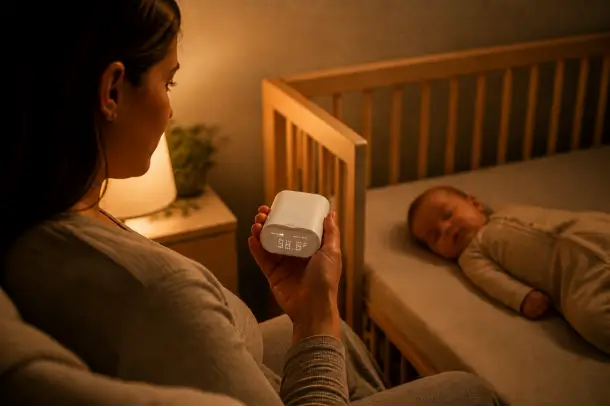
With a spot-check thermometer, every check means finding the device, positioning it again, waiting for the result, and trying not to wake a baby who has finally settled. A wearable thermometer stays in place under the arm, so the caregiver can follow the current reading from the receiver while the person rests.
That changes the feel of the night. You can notice whether the temperature is steady or changing without turning on the light, walking back into the room for every check, or beginning a new measurement from scratch.
Keep Ongoing Checks Off Your Phone
The VAVA Smart Baby Thermometer pairs a soft underarm sensor with a separate receiver. It shows real-time readings, provides audio and visual fever alerts, supports up to 24 hours of continuous use, and has a stated stable connection range of up to 15 meters or 49 feet.

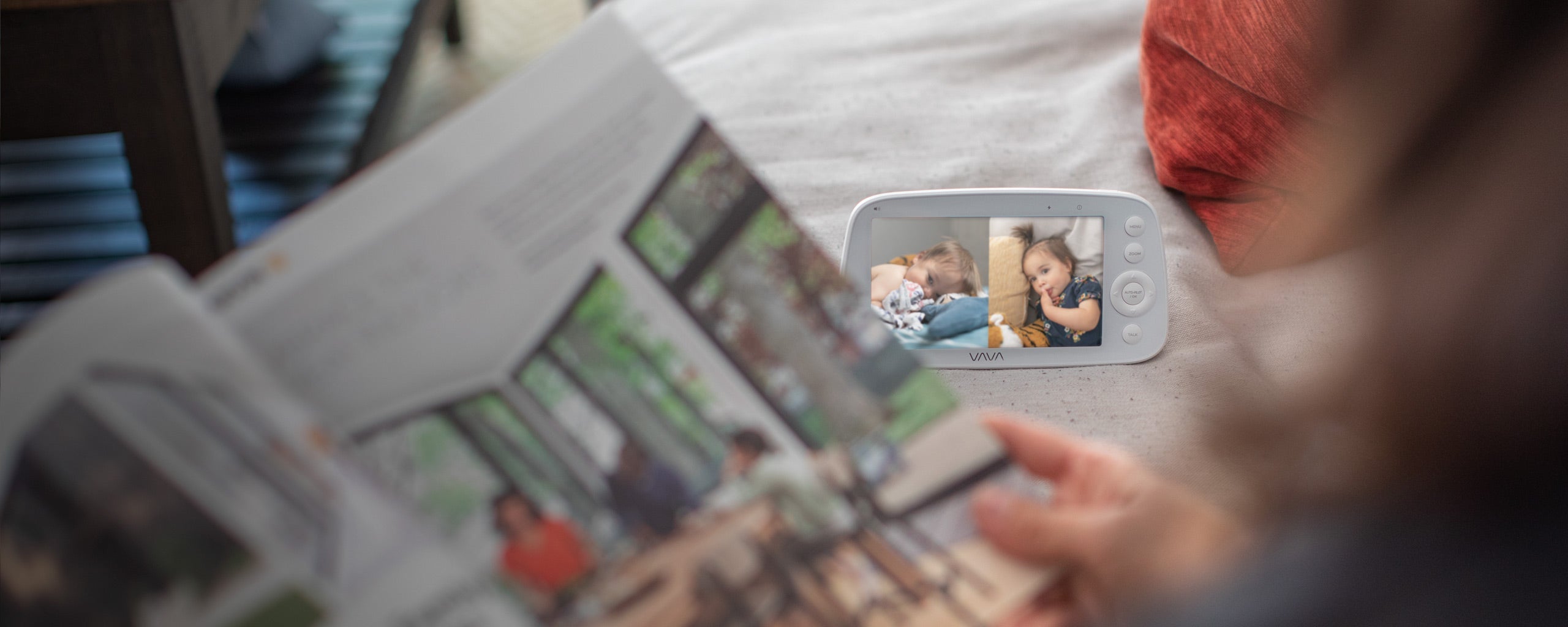
Because the receiver does not depend on a phone, app, Bluetooth pairing, or account, it can stay beside the bed or move with the caregiver who is on duty. One parent can rest while the other carries the display into the kitchen or living room. A grandparent or babysitter can use the same receiver without installing anything on a personal phone.
It is especially practical when:
- A baby is sleeping in the nursery after feeling unwell
- A child has finally settled for the night
- An adult is resting in another room
- An older family member needs closer observation for part of the day
Instead of watching the screen constantly, the caregiver can keep the receiver nearby and let the alerts draw attention when needed. It makes the most sense on nights when one spot check is unlikely to be the last.
Prepare the Thermometer Before Anyone Needs It
During a regular kit check:
- Confirm that each thermometer turns on
- Replace or recharge batteries as needed
- Keep the instructions nearby
- Label any thermometer reserved for rectal use
- Store VAVA adhesive patches with the wearable sensor
- Keep the VAVA sensor, receiver, charger, and patches together
- Show another caregiver where the setup is kept
- Clean each device according to its instructions
If your family uses more than one measurement site, note the method beside each result. That gives your healthcare provider clearer information if you need to call.
For more detail, see VAVA's baby temperature guide.
Should You Buy a Pre-Made Kit or Build Your Own?
A pre-made kit gets the basics into the house quickly. A DIY kit gives you control over quantities, labels, and family-specific items. For many households, the most practical answer is a combination: buy a solid basic kit, then make it fit the people who live in your home.
|
What Matters |
Pre-Made Kit |
DIY Kit |
|---|---|---|
|
Setup |
Ready faster |
Takes more time to assemble |
|
Contents |
Covers many basics, but quantities can be uneven |
Lets you choose each item and quantity |
|
Organization |
Includes a case and fixed compartments |
Can follow your household's routine |
|
Family needs |
Usually lacks personal and age-specific information |
Can include baby, child, adult, and older-adult details |
|
Restocking |
Replacement items may not fit the original case |
Individual items are usually easier to replace |
Look Past the Total Item Count
A “100-piece” kit may contain dozens of small bandages and wipes but only a few gauze pads, gloves, or larger dressings. Open the contents list and compare it with the shared first-aid core above.
Also check whether the case opens clearly, whether supplies can be removed without spilling everything else, and whether the items you use most can be replaced individually.
Build Around Your Household
A family with active children may want extra bandages, gauze, and cold packs. A household with a newborn needs a temperature plan. An older adult may need an easy-to-read medicine list and a note showing where a personal device is stored.
These are the details a pre-made kit cannot know. Add them after the basic supplies are in place rather than trying to buy one enormous kit that promises to cover every age and situation.
How Should You Organize, Store, and Check the Kit?
Keep first-aid supplies together in a place an adult can reach quickly. Keep medicines in a separate secure location. Then choose a simple restocking routine so neither area quietly fills with empty wrappers or expired products.
Separate First Aid From Medicine Storage
Bandages, gauze, gloves, and a cold pack should be easy to find after a minor injury. Medicines, vitamins, and supplements should stay out of children's sight and reach and be put away after every use.
The two areas can still work as one system. Put a card in the first-aid kit that shows where the secured medicines, personal medical items, and medicine lists are kept. This gives caregivers a clear next step without putting every bottle into the same box.
Remove Anything You Cannot Identify or Safely Use
|
Remove or Replace |
Why It Should Not Stay |
|---|---|
|
Expired medicine |
The family should not rely on a product after its labeled expiration date |
|
Mercury thermometer |
Broken glass can release mercury; replace it with a digital thermometer |
|
Syrup of ipecac |
Poison Control no longer recommends keeping or using it at home to cause vomiting |
|
Loose or unlabeled medicine |
No one can confirm the product, ingredient, dose, or expiration date |
|
Open or damaged sterile packaging |
The contents are no longer sealed for later use |
|
Depleted or opened single-use supplies |
Disposable instant cold packs, gloves, wipes, and dressings should be replaced after use |
|
Old instructions |
Directions for a product no longer in the home can be mistaken for current guidance |
Restock While You Still Remember
After using the kit, add the missing item to the shopping list before closing the case. That ten-second habit is more reliable than hoping someone notices the empty compartment months later.
Tie a fuller review to a date your household already remembers, such as the beginning of the year, a seasonal home check, or preparation for regular travel. Open the case and check packaging, dates, thermometer power, VAVA adhesive patches, contact cards, and personal medicine lists.
Dispose of Old Medicine Safely
The FDA recommends using a drug take-back location or mail-back option for most unused or expired medicines. If that is not readily available, check the product instructions and the FDA flush list. Do not flush medicine unless it appears on that list.
For most medicines that are not on the flush list, follow the FDA's household-trash directions: mix the medicine with an unappealing substance such as dirt, cat litter, or used coffee grounds; seal the mixture in a container; and remove personal information from the empty packaging. Local and product-specific instructions still apply.
When Is a Home Medical Kit Not Enough?
A good kit helps with small injuries and gives you the information needed for the next decision. It is not a reason to delay care when a young baby has a fever, someone may have been poisoned, or a family member has life-threatening symptoms.
Call Your Baby's Doctor for a Young Infant's Fever
The American Academy of Pediatrics advises calling the pediatrician immediately if a baby 3 months old or younger has a rectal temperature of 100.4°F (38°C) or higher, even if the baby otherwise appears comfortable.
Share the temperature, the measurement method, the time it was taken, and whether the baby is feeding and waking normally. Do not wait for another reading before making the call.
Call Poison Help After a Possible Exposure
In the United States, call Poison Help at 1-800-222-1222 after a possible poison exposure. Outside the United States, use your local poison service or emergency number.
Do not wait for symptoms or try to make the person vomit. Poison Control no longer recommends keeping ipecac at home. Keep the packaging nearby so the specialist can identify the product and give situation-specific instructions. For a baby younger than 6 months, call the telephone service rather than relying on the automated online tool.
Call 911 for Life-Threatening Symptoms
In the United States, call 911 immediately if someone collapses, has a seizure, has trouble breathing, or cannot be awakened. Elsewhere, call the local emergency number. Do not lose time searching through the kit or calling another service first.
Put the pediatrician's number and Poison Help number on the emergency card, and save them in the phones of the adults who regularly care for your family.
Keep Your Family Medical Kit Ready
The best home medical kit is not the biggest one. It is the setup your family can actually use: first-aid supplies in one known place, medicines stored securely, age-specific information written down, and a thermometer ready before someone feels unwell.
For occasional temperature checks, keep an age-appropriate digital thermometer within reach. If repeated checks are common in your household, decide in advance whether a wearable option would make those nights easier and store its parts together.
Once the kit is assembled, make it part of the household routine: replace what you use, review it regularly, and make sure another caregiver could find everything without asking you first.
FAQs
1. Should I Keep a Second First-Aid Kit in the Car?
A small vehicle kit can help if your family regularly travels, attends sports activities, or spends time away from home. Focus it on nonmedicine basics such as bandages, gauze, tape, gloves, tweezers, and rounded-tip scissors, and follow each item's labeled storage limits.
2. Does a Multistory Home Need More Than One Kit?
Not every floor needs a complete medical kit. If the main supplies take too long to reach, keep a small set of bandages, gauze, gloves, and other nonmedicine items in a second labeled location. Medicines can remain together in one secure place that the adults know how to find.
3. How Much Should I Buy for My Family?
Begin with a family-sized first-aid list, then adjust it based on what you use. A larger household or a family with active children may need extra bandages, gauze, gloves, and cold packs. Avoid buying so much that products expire before anyone checks them.
4. What Should a Babysitter or Visiting Caregiver Know?
Show them where the first-aid supplies and secured medicines are stored. Point out the emergency card, pediatrician's number, Poison Help number, allergy information, fever rule for a young baby, and any instructions that apply to a particular family member. If you use a wearable thermometer, show them how to read the receiver and where the sensor supplies are kept.
Resources
- American Red Cross: Make a First Aid Kit
- HealthyChildren.org: Fever and Your Baby
- HealthyChildren.org: How to Take a Child's Temperature
- CDC: Medication Safety
- FDA: Where and How to Dispose of Unused Medicines
- Poison Control: Ipecac: Don't Use It
Share: